THE CLASSIC COLLECTION✦The stone age in North America, vol. 2 of 2CLASSIC FREE BOOKS
The stone age in North America, vol. 2 of 2
Warren K. (Warren King) Moorehead
THE CLASSIC COLLECTION · 1914
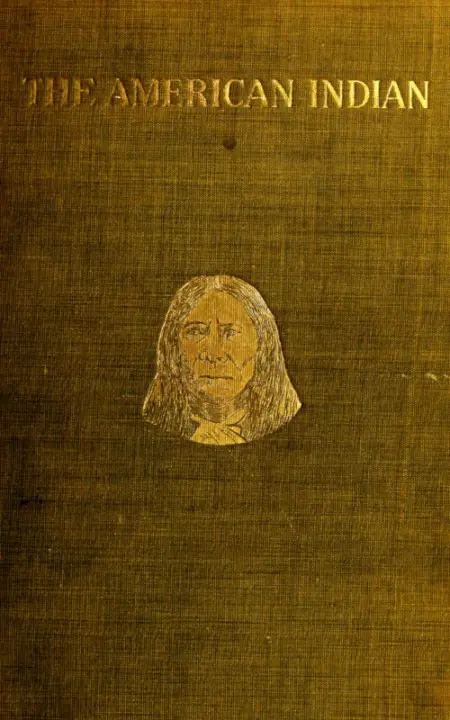
"The American Indian in the United States, Period 1850-1914" by Warren K. Moorehead is a historical account written in the early 20th century. This work examines the conditions, political history, and cultural transitions of Native Americans over a critical period in U.S. history. The author aims to shed light on the challenges faced by the American Indian as they navigate the pressures of assimilation and the loss of their ancestral lands. At the start of the book, Moorehead introduces the current plight of American Indians during a transformative era between 1850 and 1914. He emphasizes the need for a humanitarian approach to understanding their conditions, rather than relying solely on scientific studies of the past. The opening portion discusses the shift from tribal life to individual citizenship, revealing the complexities and struggles faced by modern Indians who are increasingly subject to exploitation and disempowerment. The author argues that the responsibility for the future of these communities lies with the broader American society, advocating for a more just and informed response to the ongoing issues affecting Native Americans.
Introduction adapted from the source catalogue; source summaries may be automatically generated.
Free to read · English · 158,555 words · No account needed
MAKE TIME FOR A GOOD BOOK
On by default. Untick to stop anonymous reading totals. Each page counts after 10 seconds in view. How this works.
Anonymous counting is on unless you have switched it off.
Indian School, Chilocco, Oklahoma, Some History and Work of the.—Indian School Journal, June, 1914. pp. 791 and 553.
Indian Day School. Purpose and Results. Table giving location, capacity, enrolment, and average attendance of Government day schools during fiscal year ended June 30, 1904.—Report of the Department of the Interior, 1904 P. 41.
Indian Education, Interesting facts concerning.—Indian School
Journal, June, 1914. P. 518.
Indian Education, Present and Future.—H. B. Peairs. The Red Man.
Feb., 1914. P. 211.
Indian Education, Some Facts and Figures on.—Laura C. Kellogg.
Quarterly Journal Society of American Indians. Jan.-April, 1913. P.
36.
A Reorganized School in the Five Tribes.—Gabe E. Parker.
Twenty-eighth Annual Report of the Lake Mohonk Conference, 1910. P.
51.
The Reorganized Schools in the Five Tribes.—J. B. Brown.
Twenty-eighth Annual Report of the Lake Mohonk Conference, 1910. P.
79.
Educational Conditions in the Five Civilized Tribes.—John B. Brown, Supervisor, United States Indian Service. Thirty-first Annual Report of the Lake Mohonk Conference, 1913. P. 24.
Flandreau Indian School, A Little History of the.—Indian School Journal, April, 1914. P. 356.
The Fort McDermitt Indian Day School—Illustrated.—The Indian School Journal, March, 1914. P. 298.
Haskell Institute, Lawrence, Kansas. Table showing location, date of opening, capacity, attendance, etc., of non-reservation schools during fiscal year ended June 30, 1904.—Report of the Department of the Interior, 1904. P. 39.
Higher Education for the Indian.—Joseph M. Burnett. Quarterly
Journal of the Society of American Indians. July-September, 1913. P.
285.
Industrial Education for the Indian.—Charles Doxon. Twenty-fourth Annual Report of the Lake Mohonk Conference. 1906. P. 37.
Educational Activities in the Indian Service.—H. B. Peairs.
Twenty-ninth Annual Report of the Lake Mohonk Conference, 1911. P.
36.
Mt. Pleasant Indian School, A Short History of the.—Indian School Journal, May. 1914. P. 445.
Moral Education, Vital Interest in.—Milton Fairchild. The Indian School Journal, September, 1913. P. 7.
Moral Education in Indian Schools.—Milton Fairchild. The Red Man.
December, 1912. P. 157.
Educating the Morals, Colonel Roosevelt on.—Indian School Journal,
March, 1914. P. 310.
Indians in Public Schools.—Peton Carter, Indian Office. The Red
Man. June, 1914. P. 427.
Report of School Taxation in Indian Territory. House of
Representatives, Doc. No. 34. Fifty-eighth Congress 3d Session, Dec.
6, 1904.
A Segregated Indian University Unnecessary.—M. Friedman, Litt. D. The Red Man. January, 1914. P. 182.
Footnote 41:
The Vanishing Race, page 93.
Your reading position is saved on this browser. Take it to another device with a library code. Reading pages adapt to text, rather than matching a printed edition.
Warren K. (Warren King) Moorehead
Warren K. (Warren King) Moorehead
BEHIND THE BOOK
This eBook is for the use of anyone anywhere in the United States and most other parts of the world at no cost and with almost no restrictions whatsoever. You may copy it, give it away or re-use it under the terms of the Project Gutenberg License included with this eBook or online at www.gutenberg.org. If you are not located in the United States, you will have to check the laws of the country where you are located before using this eBook. Read the source licence.
The original source file, including credits and licence, is retained by this library. Request an original-format copy at no charge. Please include the book title and Project Gutenberg identifier #57709.
KEEP YOUR CURIOSITY GOING
Cécile Tormay

Moritz Busch
John L. Ransom
Frances Wright
Cécile Tormay

Mabel Potter Daggett