THE CLASSIC COLLECTION✦Hawthorne (English Men of Letters Series)CLASSIC FREE BOOKS
Hawthorne (English Men of Letters Series)
Henry James
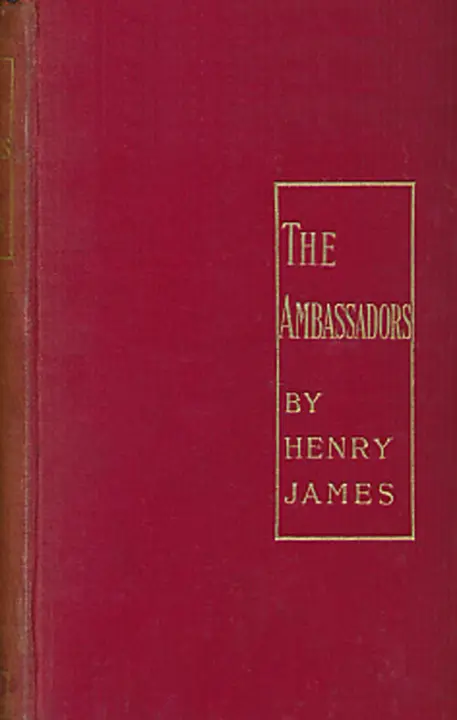
THE CLASSIC COLLECTION · 1903
"The Ambassadors" by Henry James is a novel written in the early 20th century. This work delves into themes of personal transformation and the search for meaning against the backdrop of Europe, particularly Paris, as seen through the eyes of its protagonist, Lambert Strether. He embarks on a journey that challenges his perceptions and ultimately forces him to confront his past and the choices he has made. The opening of "The Ambassadors" introduces us to Lambert Strether as he arrives in Chester, England, to reconnect with his friend Waymarsh. Initially relieved at having a moment of solitude, Strether reflects on the personal freedom he feels in Europe, contrasting it with his previous life in Woollett, Massachusetts. His encounter with Maria Gostrey—a woman he recognizes from a previous meeting—creates a dynamic where he feels both drawn to and apprehensive about the social interactions that await him. The narrative hints at Strether's complexity, revealing that he grapples with deeper emotions and a sense of detachment as he begins to navigate this new social landscape, all while reflecting on the nature of life and missed opportunities.
Introduction adapted from the source catalogue; source summaries may be automatically generated.
Free to read · English · 168,822 words · No account needed
MAKE TIME FOR A GOOD BOOK
On by default. Untick to stop anonymous reading totals. Each page counts after 10 seconds in view. How this works.
Anonymous counting is on unless you have switched it off.
The remark had been at first surprising and our friend’s private thought, under the influence of it, temporarily blighted; yet we are able to add that he presently recovered his inward tone and that many a fresh flower of fancy was to bloom in the same air. Little Bilham—since little Bilham was, somewhat incongruously, expected—appeared behindhand; a circumstance by which Strether was to profit. They came back into the room together after a little, the couple on the balcony, and amid its crimson-and-gold elegance, with the others still absent, Strether passed forty minutes that he appraised even at the time as far, in the whole queer connexion, from his idlest. Yes indeed, since he had the other day so agreed with Maria about the inspiration of the lurid, here was something for his problem that surely didn’t make it shrink and that was floated in upon him as part of a sudden flood. He was doubtless not to know till afterwards, on turning them over in thought, of how many elements his impression was composed; but he none the less felt, as he sat with the charming girl, the signal growth of a confidence. For she was charming, when all was said—and none the less so for the visible habit and practice of freedom and fluency. She was charming, he was aware, in spite of the fact that if he hadn’t found her so he would have found her something he should have been in peril of expressing as “funny.” Yes, she was funny, wonderful Mamie, and without dreaming it; she was bland, she was bridal—with never, that he could make out as yet, a bridegroom to support it; she was handsome and portly and easy and chatty, soft and sweet and almost disconcertingly reassuring. She was dressed, if we might so far discriminate, less as a young lady than as an old one—had an old one been supposable to Strether as so committed to vanity; the complexities of her hair missed moreover also the looseness of youth; and she had a mature manner of bending a little, as to encourage and reward, while she held neatly together in front of her a pair of strikingly polished hands: the combination of all of which kept up about her the glamour of her “receiving,” placed her again perpetually between the windows and within sound of the ice-cream plates, suggested the enumeration of all the names, all the Mr. Brookses and Mr. Snookses, gregarious specimens of a single type, she was happy to “meet.” But if all this was where she was funny, and if what was funnier than the rest was the contrast between her beautiful benevolent patronage—such a hint of the polysyllabic as might make her something of a bore toward middle age—and her rather flat little voice, the voice, naturally, unaffectedly yet, of a girl of fifteen; so Strether, none the less, at the end of ten minutes, felt in her a quiet dignity that pulled things bravely together. If quiet dignity, almost more than matronly, with voluminous, too voluminous clothes, was the effect she proposed to produce, that was an ideal one could like in her when once one had got into relation. The great thing now for her visitor was that this was exactly what he had done; it made so extraordinary a mixture of the brief and crowded hour. It was the mark of a relation that he had begun so quickly to find himself sure she was, of all people, as might have been said, on the side and of the party of Mrs. Newsome’s original ambassador. She was in his interest and not in Sarah’s, and some sign of that was precisely what he had been feeling in her, these last days, as imminent. Finally placed, in Paris, in immediate presence of the situation and of the hero of it—by whom Strether was incapable of meaning any one but Chad—she had accomplished, and really in a manner all unexpected to herself, a change of base; deep still things had come to pass within her, and by the time she had grown sure of them Strether had become aware of the little drama. When she knew where she was, in short, he had made it out; and he made it out at present still better; though with never a direct word passing between them all the while on the subject of his own predicament. There had been at first, as he sat there with her, a moment during which he wondered if she meant to break ground in respect to his prime undertaking. That door stood so strangely ajar that he was half-prepared to be conscious, at any juncture, of her having, of any one’s having, quite bounced in. But, friendly, familiar, light of touch and happy of tact, she exquisitely stayed out; so that it was for all the world as if to show she could deal with him without being reduced to—well, scarcely anything.
Your reading position is saved on this browser. Take it to another device with a library code. Reading pages adapt to text, rather than matching a printed edition.
Henry James
Henry James
Henry James

Henry James
BEHIND THE BOOK
This eBook is for the use of anyone anywhere in the United States and most other parts of the world at no cost and with almost no restrictions whatsoever. You may copy it, give it away or re-use it under the terms of the Project Gutenberg License included with this eBook or online at www.gutenberg.org. If you are not located in the United States, you will have to check the laws of the country where you are located before using this eBook. Read the source licence.
The original source file, including credits and licence, is retained by this library. Request an original-format copy at no charge. Please include the book title and Project Gutenberg identifier #432.
KEEP YOUR CURIOSITY GOING
Coulson Kernahan

Maurice Baring
Frances Wright
Cécile Tormay

Frederic Jesup Stimson

W. H. P. (William Henry Pope) Jarvis