THE CLASSIC COLLECTION✦Hawthorne (English Men of Letters Series)CLASSIC FREE BOOKS
Hawthorne (English Men of Letters Series)
Henry James
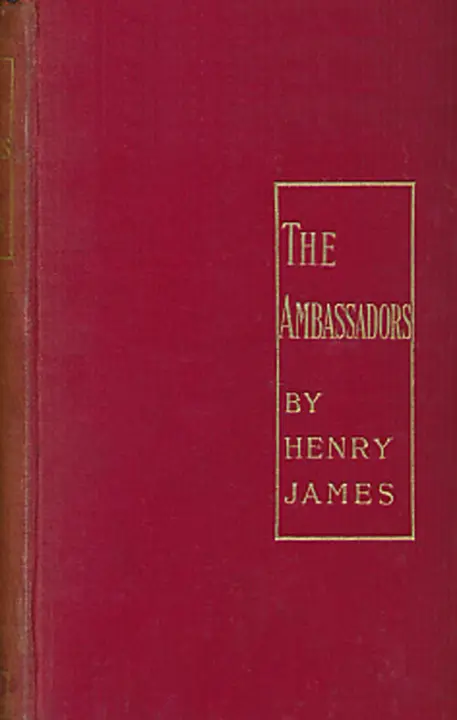
THE CLASSIC COLLECTION · 1903
"The Ambassadors" by Henry James is a novel written in the early 20th century. This work delves into themes of personal transformation and the search for meaning against the backdrop of Europe, particularly Paris, as seen through the eyes of its protagonist, Lambert Strether. He embarks on a journey that challenges his perceptions and ultimately forces him to confront his past and the choices he has made. The opening of "The Ambassadors" introduces us to Lambert Strether as he arrives in Chester, England, to reconnect with his friend Waymarsh. Initially relieved at having a moment of solitude, Strether reflects on the personal freedom he feels in Europe, contrasting it with his previous life in Woollett, Massachusetts. His encounter with Maria Gostrey—a woman he recognizes from a previous meeting—creates a dynamic where he feels both drawn to and apprehensive about the social interactions that await him. The narrative hints at Strether's complexity, revealing that he grapples with deeper emotions and a sense of detachment as he begins to navigate this new social landscape, all while reflecting on the nature of life and missed opportunities.
Introduction adapted from the source catalogue; source summaries may be automatically generated.
Free to read · English · 168,822 words · No account needed
MAKE TIME FOR A GOOD BOOK
On by default. Untick to stop anonymous reading totals. Each page counts after 10 seconds in view. How this works.
Anonymous counting is on unless you have switched it off.
That this was moreover what Chad shrewdly suspected was clear from a word that next dropped from him. “They’re children; they play at life!”—and the exclamation was significant and reassuring. It implied that he hadn’t then, for his companion’s sensibility, appeared to give Mrs. Newsome away; and it facilitated our friend’s presently asking him if it were his idea that Mrs. Pocock and Madame de Vionnet should become acquainted. Strether was still more sharply struck, hereupon, with Chad’s lucidity. “Why, isn’t that exactly—to get a sight of the company I keep—what she has come out for?”
“Yes—I’m afraid it is,” Strether unguardedly replied.
Chad’s quick rejoinder lighted his precipitation. “Why do you say
you’re afraid?”
“Well, because I feel a certain responsibility. It’s my testimony, I imagine, that will have been at the bottom of Mrs. Pocock’s curiosity. My letters, as I’ve supposed you to understand from the beginning, have spoken freely. I’ve certainly said my little say about Madame de Vionnet.”
All that, for Chad, was beautifully obvious. “Yes, but you’ve only
spoken handsomely.”
“Never more handsomely of any woman. But it’s just that tone—!”
“That tone,” said Chad, “that has fetched her? I dare say; but I’ve no quarrel with you about it. And no more has Madame de Vionnet. Don’t you know by this time how she likes you?”
“Oh!”—and Strether had, with his groan, a real pang of melancholy. “For all I’ve done for her!”
“Ah you’ve done a great deal.”
Chad’s urbanity fairly shamed him, and he was at this moment absolutely impatient to see the face Sarah Pocock would present to a sort of thing, as he synthetically phrased it to himself, with no adequate forecast of which, despite his admonitions, she would certainly arrive. “I’ve done this!”
“Well, this is all right. She likes,” Chad comfortably remarked, “to be
liked.”
It gave his companion a moment’s thought. “And she’s sure Mrs. Pocock
will—?”
“No, I say that for you. She likes your liking her; it’s so much, as it were,” Chad laughed, “to the good. However, she doesn’t despair of Sarah either, and is prepared, on her own side, to go all lengths.”
“In the way of appreciation?”
“Yes, and of everything else. In the way of general amiability, hospitality and welcome. She’s under arms,” Chad laughed again; “she’s prepared.”
Strether took it in; then as if an echo of Miss Barrace were in the air: “She’s wonderful.”
“You don’t begin to know how wonderful!”
Your reading position is saved on this browser. Take it to another device with a library code. Reading pages adapt to text, rather than matching a printed edition.
Henry James
Henry James
Henry James

Henry James
BEHIND THE BOOK
This eBook is for the use of anyone anywhere in the United States and most other parts of the world at no cost and with almost no restrictions whatsoever. You may copy it, give it away or re-use it under the terms of the Project Gutenberg License included with this eBook or online at www.gutenberg.org. If you are not located in the United States, you will have to check the laws of the country where you are located before using this eBook. Read the source licence.
The original source file, including credits and licence, is retained by this library. Request an original-format copy at no charge. Please include the book title and Project Gutenberg identifier #432.
KEEP YOUR CURIOSITY GOING
Coulson Kernahan

Maurice Baring
Frances Wright
Cécile Tormay

Frederic Jesup Stimson

W. H. P. (William Henry Pope) Jarvis