THE CLASSIC COLLECTION✦Hawthorne (English Men of Letters Series)CLASSIC FREE BOOKS
Hawthorne (English Men of Letters Series)
Henry James
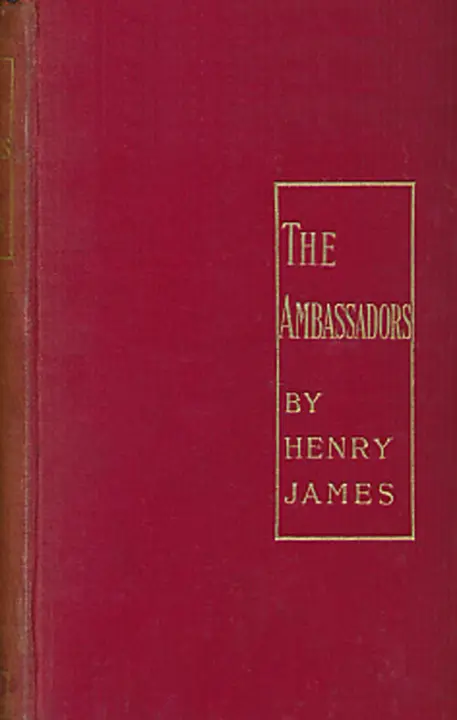
THE CLASSIC COLLECTION · 1903
"The Ambassadors" by Henry James is a novel written in the early 20th century. This work delves into themes of personal transformation and the search for meaning against the backdrop of Europe, particularly Paris, as seen through the eyes of its protagonist, Lambert Strether. He embarks on a journey that challenges his perceptions and ultimately forces him to confront his past and the choices he has made. The opening of "The Ambassadors" introduces us to Lambert Strether as he arrives in Chester, England, to reconnect with his friend Waymarsh. Initially relieved at having a moment of solitude, Strether reflects on the personal freedom he feels in Europe, contrasting it with his previous life in Woollett, Massachusetts. His encounter with Maria Gostrey—a woman he recognizes from a previous meeting—creates a dynamic where he feels both drawn to and apprehensive about the social interactions that await him. The narrative hints at Strether's complexity, revealing that he grapples with deeper emotions and a sense of detachment as he begins to navigate this new social landscape, all while reflecting on the nature of life and missed opportunities.
Introduction adapted from the source catalogue; source summaries may be automatically generated.
Free to read · English · 168,822 words · No account needed
MAKE TIME FOR A GOOD BOOK
On by default. Untick to stop anonymous reading totals. Each page counts after 10 seconds in view. How this works.
Anonymous counting is on unless you have switched it off.
“There must have been stuff in him? Oh yes, there was stuff indeed, and much more of it than ever showed, I dare say, at home. Still, you know,” the young man in all fairness developed, “there was room for her, and that’s where she came in. She saw her chance and took it. That’s what strikes me as having been so fine. But of course,” he wound up, “he liked her first.”
“Naturally,” said Strether.
“I mean that they first met somehow and somewhere—I believe in some American house—and she, without in the least then intending it, made her impression. Then with time and opportunity he made his; and after that she was as bad as he.”
Strether vaguely took it up. “As ‘bad’?”
“She began, that is, to care—to care very much. Alone, and in her horrid position, she found it, when once she had started, an interest. It was, it is, an interest, and it did—it continues to do—a lot for herself as well. So she still cares. She cares in fact,” said little Bilham thoughtfully “more.”
Strether’s theory that it was none of his business was somehow not damaged by the way he took this. “More, you mean, than he?” On which his companion looked round at him, and now for an instant their eyes met. “More than he?” he repeated.
Little Bilham, for as long, hung fire. “Will you never tell any one?”
Strether thought. “Whom should I tell?”
“Why I supposed you reported regularly—”
“To people at home?”—Strether took him up. “Well, I won’t tell them
this.”
The young man at last looked away. “Then she does now care more than
he.”
“Oh!” Strether oddly exclaimed.
But his companion immediately met it. “Haven’t you after all had your impression of it? That’s how you’ve got hold of him.”
“Ah but I haven’t got hold of him!”
“Oh I say!” But it was all little Bilham said.
“It’s at any rate none of my business. I mean,” Strether explained, “nothing else than getting hold of him is.” It appeared, however, to strike him as his business to add: “The fact remains nevertheless that she has saved him.”
Little Bilham just waited. “I thought that was what you were to do.”
But Strether had his answer ready. “I’m speaking—in connexion with her—of his manners and morals, his character and life. I’m speaking of him as a person to deal with and talk with and live with—speaking of him as a social animal.”
“And isn’t it as a social animal that you also want him?”
Your reading position is saved on this browser. Take it to another device with a library code. Reading pages adapt to text, rather than matching a printed edition.
Henry James
Henry James
Henry James

Henry James
BEHIND THE BOOK
This eBook is for the use of anyone anywhere in the United States and most other parts of the world at no cost and with almost no restrictions whatsoever. You may copy it, give it away or re-use it under the terms of the Project Gutenberg License included with this eBook or online at www.gutenberg.org. If you are not located in the United States, you will have to check the laws of the country where you are located before using this eBook. Read the source licence.
The original source file, including credits and licence, is retained by this library. Request an original-format copy at no charge. Please include the book title and Project Gutenberg identifier #432.
KEEP YOUR CURIOSITY GOING
Coulson Kernahan

Maurice Baring
Frances Wright
Cécile Tormay

Frederic Jesup Stimson

W. H. P. (William Henry Pope) Jarvis