THE CLASSIC COLLECTION✦Hawthorne (English Men of Letters Series)CLASSIC FREE BOOKS
Hawthorne (English Men of Letters Series)
Henry James
THE CLASSIC COLLECTION · 1903
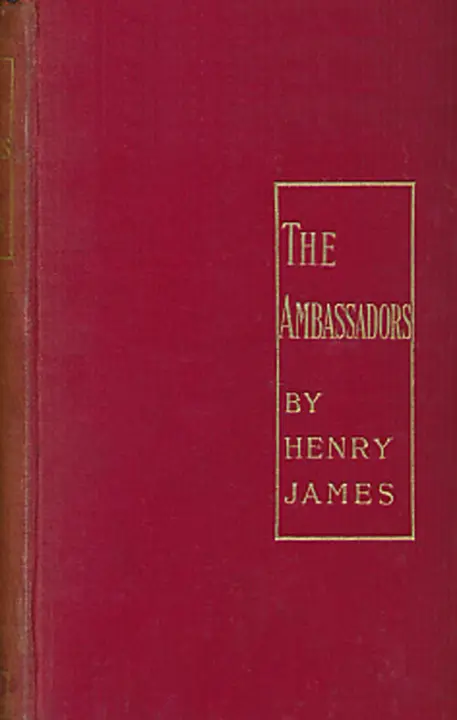
"The Ambassadors" by Henry James is a novel written in the early 20th century. This work delves into themes of personal transformation and the search for meaning against the backdrop of Europe, particularly Paris, as seen through the eyes of its protagonist, Lambert Strether. He embarks on a journey that challenges his perceptions and ultimately forces him to confront his past and the choices he has made. The opening of "The Ambassadors" introduces us to Lambert Strether as he arrives in Chester, England, to reconnect with his friend Waymarsh. Initially relieved at having a moment of solitude, Strether reflects on the personal freedom he feels in Europe, contrasting it with his previous life in Woollett, Massachusetts. His encounter with Maria Gostrey—a woman he recognizes from a previous meeting—creates a dynamic where he feels both drawn to and apprehensive about the social interactions that await him. The narrative hints at Strether's complexity, revealing that he grapples with deeper emotions and a sense of detachment as he begins to navigate this new social landscape, all while reflecting on the nature of life and missed opportunities.
Introduction adapted from the source catalogue; source summaries may be automatically generated.
Free to read · English · 168,822 words · No account needed
MAKE TIME FOR A GOOD BOOK
On by default. Untick to stop anonymous reading totals. Each page counts after 10 seconds in view. How this works.
Anonymous counting is on unless you have switched it off.
“No, not a bit”—Miss Barrace was prompt. “She makes nothing of him. She’s bored. She won’t help you with him.”
“Oh,” Strether laughed, “she can’t do everything.
“Of course not—wonderful as she is. Besides, he makes nothing of her. She won’t take him from me—though she wouldn’t, no doubt, having other affairs in hand, even if she could. I’ve never,” said Miss Barrace, “seen her fail with any one before. And to-night, when she’s so magnificent, it would seem to her strange—if she minded. So at any rate I have him all. Je suis tranquille!”
Strether understood, so far as that went; but he was feeling for his clue. “She strikes you to-night as particularly magnificent?”
“Surely. Almost as I’ve never seen her. Doesn’t she you? Why it’s for
you.”
He persisted in his candour. “‘For’ me—?”
“Oh, oh, oh!” cried Miss Barrace, who persisted in the opposite of that
quality.
“Well,” he acutely admitted, “she is different. She’s gay.”
“She’s gay!” Miss Barrace laughed. “And she has beautiful shoulders—though there’s nothing different in that.”
“No,” said Strether, “one was sure of her shoulders. It isn’t her
shoulders.”
His companion, with renewed mirth and the finest sense, between the puffs of her cigarette, of the drollery of things, appeared to find their conversation highly delightful. “Yes, it isn’t her shoulders.”
“What then is it?” Strether earnestly enquired.
“Why, it’s she—simply. It’s her mood. It’s her charm.”
“Of course it’s her charm, but we’re speaking of the difference.” “Well,” Miss Barrace explained, “she’s just brilliant, as we used to say. That’s all. She’s various. She’s fifty women.”
“Ah but only one”—Strether kept it clear—“at a time.”
“Perhaps. But in fifty times—!”
“Oh we shan’t come to that,” our friend declared; and the next moment he had moved in another direction. “Will you answer me a plain question? Will she ever divorce?”
Miss Barrace looked at him through all her tortoise-shell. “Why should
she?”
It wasn’t what he had asked for, he signified; but he met it well
enough. “To marry Chad.”
“Why should she marry Chad?”
“Because I’m convinced she’s very fond of him. She has done wonders for
him.”
“Well then, how could she do more? Marrying a man, or woman either,” Miss Barrace sagely went on, “is never the wonder for any Jack and Jill can bring that off. The wonder is their doing such things without marrying.”
Your reading position is saved on this browser. Take it to another device with a library code. Reading pages adapt to text, rather than matching a printed edition.
Henry James
Henry James
Henry James

Henry James
BEHIND THE BOOK
This eBook is for the use of anyone anywhere in the United States and most other parts of the world at no cost and with almost no restrictions whatsoever. You may copy it, give it away or re-use it under the terms of the Project Gutenberg License included with this eBook or online at www.gutenberg.org. If you are not located in the United States, you will have to check the laws of the country where you are located before using this eBook. Read the source licence.
The original source file, including credits and licence, is retained by this library. Request an original-format copy at no charge. Please include the book title and Project Gutenberg identifier #432.
KEEP YOUR CURIOSITY GOING
Coulson Kernahan

Maurice Baring
Frances Wright
Cécile Tormay

Frederic Jesup Stimson

W. H. P. (William Henry Pope) Jarvis