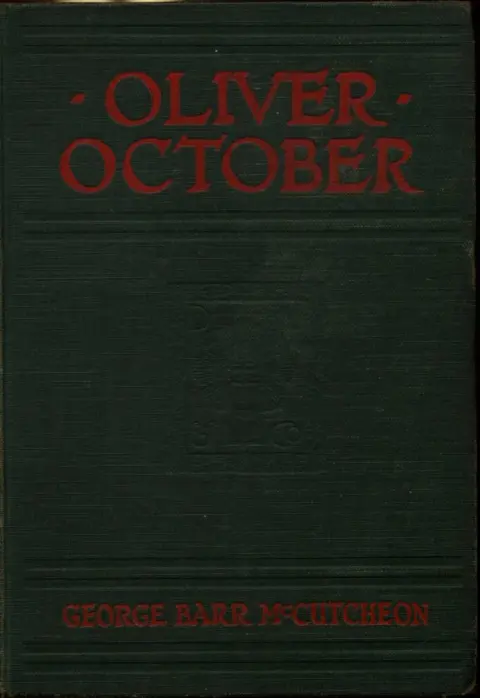
Oliver October
George Barr McCutcheon
THE CLASSIC COLLECTION · 1909
"The Alternative" by George Barr McCutcheon is a novel written in the early 20th century. The story centers around Bosworth Van Pycke, a young man from a distinguished but financially struggling family, who finds himself navigating the complex social circles of New York City. As he attempts to define what it means to be a gentleman in a world where wealth and titles often dictate social standing, the narrative unfolds to explore themes of class, ambition, and the expectations placed upon him by both his father and society. At the start of the novel, we are introduced to a cold, blustery night in New York City, where two elderly gentlemen converse in a club about the weather and the dynamic of their society. Bosworth, the son of Mr. Van Pycke, arrives at the club, serving as a character caught between family expectations and his desire for autonomy. The opening delves into Bosworth's lack of direction and the pressure to marry into wealth as a means of securing his future, setting the stage for the conflicts and comedic misunderstandings that arise from social expectations. Notably, the interaction between Bosworth and his father highlights the generational divide and the absurdities of high society, foreshadowing the humorous and chaotic scenarios to come as Bosworth contemplates marriage amid the blizzard.
Introduction adapted from the source catalogue; source summaries may be automatically generated.
Free to read · English · 29,880 words · No account needed
MAKE TIME FOR A GOOD BOOK
On by default. Untick to stop anonymous reading totals. Each page counts after 10 seconds in view. How this works.
Anonymous counting is on unless you have switched it off.
So she went to bed, thinking of him--as she had been doing for an hour or more before his amazing second appearance.
"He was such a shy boy," she reflected. "But he was the best looking thing. Dear me, how long ago it seems! And those silly love letters I wrote to him and never mailed. What funny things children are!"
At nine o'clock the next morning she was called to the telephone. She was at breakfast, and her bag was ready for the train. An early glance from the window had filled her with misgivings. The street was absolutely impassable, it seemed to her.
"I won't talk to the reporters," she said to Stokes.
"It isn't a reporter, Miss. It's a gentleman."
"Don't be a snob, Stokes. Who is it?"
"It's Mr. Van Pycke, Miss."
She started. Then she flushed warmly.
"Say to him, Stokes, that I have gone," she said, after a moment.
"Very good, Miss. Anything else?"
She pondered. "Yes, Stokes. Ask him to hold the wire."
"Hold the wire, Miss?"
"Yes, while you run to the door to call me back."
A moment later she was in the telephone room, quite out of breath.
"Who is it?" she called. She compelled him to repeat the name four times. Eventually he got her serious attention.
"No trains until this afternoon?" she cried despairingly. "Why, the children will be at the station to meet me."
"Trains all snowbound," he announced quite cheerfully. "I've been
telephoning."
"It's awfully good of you. I'll call up the Pennsylvania--"
"Don't bother," he called. "I've seen to all that. There's only one thing to do. Go to the ferry at one o'clock and wait. They'll get a train out as soon as possible. I'm glad it's to be no earlier than one. This is my busy day, you see."
"What has that to do with it?"
"I think I can be at liberty at one o'clock, that's all. I'm at my rooms now, writing letters of resignation to eleven clubs and declining invitations to four Christmas house parties on Long Island. I'm going down to see Thrush and Wrenn, the publishers, at eleven."
"Indeed?"
"Yes. I'm thinking of writing a book exposing New York society. They're all the rage now. This will be the literary remains of a fizzle."
"Are you jesting?"
"It depends," he said. "At ten I am to see George P. Krosson, the capital king. You see I have been telephoning. I got him out of bed at seven-thirty. He says he didn't know I had it in me to be so energetic. He's an old friend, however, so it's all right. He--"
Your reading position is saved on this browser. Take it to another device with a library code. Reading pages adapt to text, rather than matching a printed edition.
George Barr McCutcheon
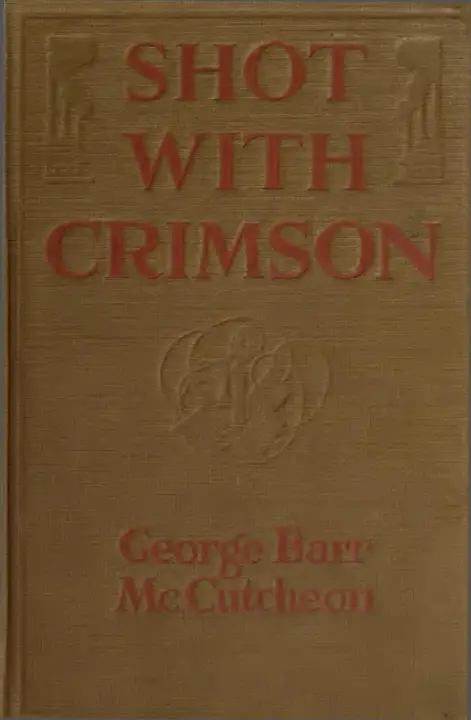
George Barr McCutcheon
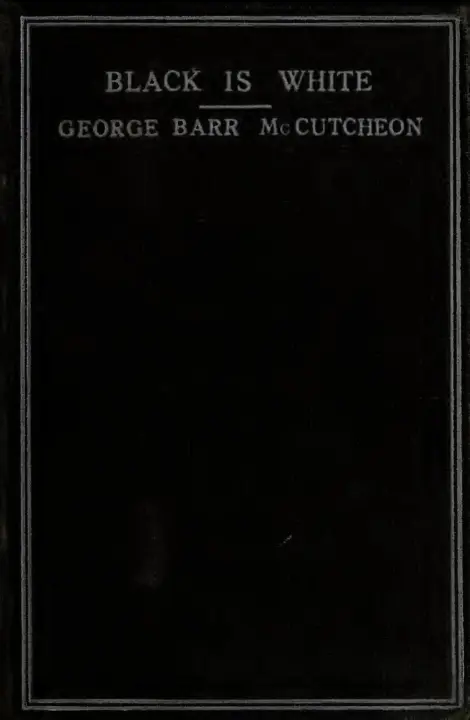
George Barr McCutcheon
George Barr McCutcheon
BEHIND THE BOOK
This eBook is for the use of anyone anywhere in the United States and most other parts of the world at no cost and with almost no restrictions whatsoever. You may copy it, give it away or re-use it under the terms of the Project Gutenberg License included with this eBook or online at www.gutenberg.org. If you are not located in the United States, you will have to check the laws of the country where you are located before using this eBook. Read the source licence.
The original source file, including credits and licence, is retained by this library. Request an original-format copy at no charge. Please include the book title and Project Gutenberg identifier #43071.
KEEP YOUR CURIOSITY GOING
Coulson Kernahan

Maurice Baring
Frances Wright
Cécile Tormay

Frederic Jesup Stimson

W. H. P. (William Henry Pope) Jarvis