THE CLASSIC COLLECTION✦Poems, Scots and EnglishCLASSIC FREE BOOKS
Poems, Scots and English
John Buchan
THE CLASSIC COLLECTION · 1903
"The African Colony: Studies in the Reconstruction" by John Buchan is a historical account written in the early 20th century. The work focuses on the political and social complexities of South Africa, particularly in the aftermath of the Boer War and the challenges of rebuilding a nation. The author aims to explore the intricacies of South African politics, the historical contexts leading to the colonial struggles, and the various dynamics between different societal groups in the region. The opening of the book provides a retrospective on the conclusion of the Boer War, emphasizing both the devastation caused and the beginning of a significant reconstruction period. Buchan discusses the establishment of a new government and the various challenges faced during resettlement, illustrating this through his observations of the political landscape and the diverse populations that inhabit South Africa. He notes that while history will take time to properly document the reconstruction efforts, the initial steps towards resuming civil administration are evident, necessitating a closer examination of the prevailing issues and ideals guiding the nation’s progress.
Introduction adapted from the source catalogue; source summaries may be automatically generated.
Free to read · English · 121,740 words · No account needed
MAKE TIME FOR A GOOD BOOK
On by default. Untick to stop anonymous reading totals. Each page counts after 10 seconds in view. How this works.
Anonymous counting is on unless you have switched it off.
Such was one element in the race of border farmers--a substratum of desperate lawlessness. But there were other elements, many of them noble and worthy. Their morals were less bad than peculiar; their lawlessness rather an inability to understand restrictions than an impulse to disorder. They had their own staunch loyalties, their own strict code of honour. They had the self-confidence of a people whose dogmatic foundations are unshaken, and who are in habitual intercourse with an inferior race. In a rude way they were kindly and hospitable. They had a courage so unwavering that it may be called an instinct, and the bodily strength which comes from bare living and constant exertion. "Simple" and "pastoral" used to be words of praise. During the late war they became a sneer; but it is well to recognise that while they may comprise the gravest faults they must denote a few sterling virtues.
When Pieter Retief left Graaff-Reinet in 1837, he issued an ingenious proclamation which contains his justification of the Great Trek. He complains of the unnecessary hardships attending the emancipation of the slaves, the insecurity of life and property caused by the absence of proper vagrancy laws, and the disaster certain to attend Lord Glenelg's reversal of British policy on the Kaffir border. Retief was a man of high and conscientious character, and his profession of faith is valuable as showing the view of current politics held by the better class of the voortrekkers. They did not defend slavery--Retief expressly repudiates it; but they objected to the method of its abolition, and the lack of precautions for future public safety which the event demanded. Lord Glenelg's withdrawal from the eastern border to the boundary of the Keiskama and Tyumie rivers, as fixed by Lord Charles Somerset in 1819, appeared to them a flagrant piece of weakness which sooner or later must make life on that border impossible. They saw no hope of redress from the imperial Government, which seemed to be dominated by philanthropic hysteria. It is a grave indictment, and worth examination. The slavery question stands in the foreground. The ocean slave-trade was suppressed in 1807, and the English abolitionists had leisure to turn their minds to South Africa. The first progressive enactment came in 1816, when the registration of slaves and slave-births was made compulsory in every district. In 1823 a series of laws were passed restricting slave labour on the Sabbath, giving slaves the right of owning property, and limiting the punishments to which they were liable. In 1826 officials were appointed in country districts to watch over slave interests, and see that the protective enactments were carried out. The famous Fiftieth Ordinance of 1828 gave the Hottentots the same legal rights as the white colonists. Meanwhile for years a great missionary agitation for total abolition had been going on, which was powerfully supported by the Whig party in England. The Dutch saw clearly the trend of events, and, in what is known as the "Graaff-Reinet proposals," attempted to procure gradually the emancipation which they realised was bound to come. They proposed, unanimously, that after a date to be fixed by Government all female children should be free at birth, and, by a majority, that all male children born after the same date should also be free. I cannot find in these proposals the insidious attempt to defeat the movement which some writers have discerned: they seem to me to be as fair and reasonable an offer as we could expect a slave-holding class to make. But the British attitude is also perfectly clear. Slave-holding had been condemned as a crime by the national conscience, and there could be no temporising with the evil thing. Here, again, a certain kind of education was necessary to appreciate the point of view. The farmers of Graaff-Reinet had not listened to the harangues of Wilberforce and Fowell Buxton; Zion Chapel and its all-pervading atmosphere of mild brotherly love were not within the compass of their experience. England was right, as she generally is in policies which are inspired by a profound popular conviction; but she could hardly expect men of a very different training to fall in readily with her views. In any case the working out of the policy was attended by many blunders. The Emancipation Act took effect in Cape Colony from the 1st of December 1834. L1,200,000 seems a rather inadequate compensation for 35,000 slaves, and as each claim had to be presented before commissioners in London, the farmer had perforce to employ an agent, who bought up his claims at a discount of anything from 18 to 30 per cent.
Your reading position is saved on this browser. Take it to another device with a library code. Reading pages adapt to text, rather than matching a printed edition.
John Buchan
John Buchan
John Buchan
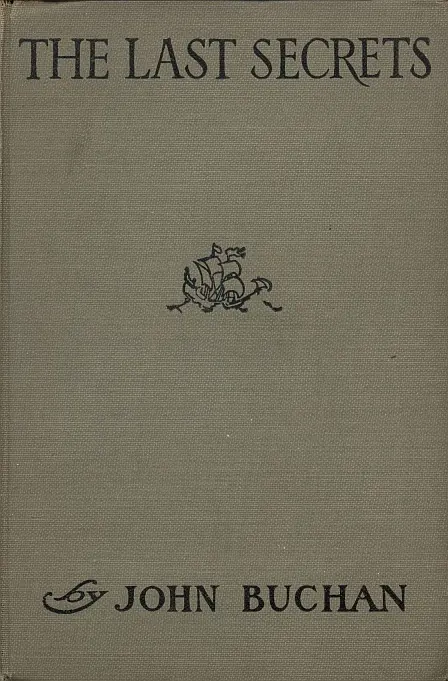
John Buchan
BEHIND THE BOOK
This eBook is for the use of anyone anywhere in the United States and most other parts of the world at no cost and with almost no restrictions whatsoever. You may copy it, give it away or re-use it under the terms of the Project Gutenberg License included with this eBook or online at www.gutenberg.org. If you are not located in the United States, you will have to check the laws of the country where you are located before using this eBook. Read the source licence.
The original source file, including credits and licence, is retained by this library. Request an original-format copy at no charge. Please include the book title and Project Gutenberg identifier #34548.
KEEP YOUR CURIOSITY GOING
Wilfrid Scawen Blunt
Wilfrid Scawen Blunt

E. W. (Edgar Watson) Howe
Cécile Tormay

Moritz Busch
John L. Ransom