THE CLASSIC COLLECTION✦The WesternersCLASSIC FREE BOOKS
The Westerners
Stewart Edward White
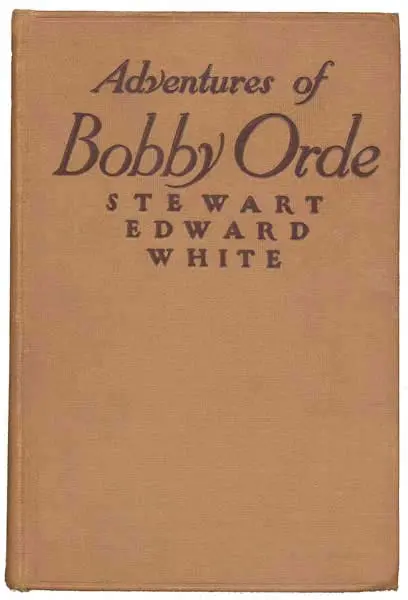
THE CLASSIC COLLECTION · 1911
"The Adventures of Bobby Orde" by Stewart Edward White is a novel written in the early 20th century. This coming-of-age story follows a young boy named Bobby Orde as he navigates childhood adventures, friendships, and the complexities of growing up amidst the backdrop of river life and logging activities. The narrative is rich with details of early 20th-century life, showcasing Bobby’s innocent curiosity and the imaginative world he inhabits. At the start of the book, Bobby Orde is introduced as a vibrant, inquisitive boy, enchanted by the workings of the river and the lumber industry where his father works. His journey begins when he explores his father’s office and the nearby lumber yards, revealing his fascination with the equipment and the bustling life that surrounds him. Bobby’s adventures take him to the booms where logs are collected and sorted, where he experiences the thrill of the water and nature’s wonders. He is accompanied by his dog, Duke, and later befriends a charming girl named Celia, setting the stage for explorations that blur the lines between play, discovery, and early emotional experiences. These formative encounters hint at the deeper themes of friendship and childlike wonder that will unfold throughout the story.
Introduction adapted from the source catalogue; source summaries may be automatically generated.
Free to read · English · 65,104 words · No account needed
MAKE TIME FOR A GOOD BOOK
On by default. Untick to stop anonymous reading totals. Each page counts after 10 seconds in view. How this works.
Anonymous counting is on unless you have switched it off.
"Hullo," said Morris, "Grab a mallet, and come on."
Bobby liked Morris, who was a short, redheaded boy of jolly aspect. Gerald, a youth of perhaps twelve years of age, rather tall and slender, of very dark, clear, pale complexion, nodded carelessly. Bobby took an immediate distaste for him. He looked altogether too superior, and sleepy and distinguished--yes, and stylish. Bobby was very young and inexperienced; but even he could feel that Gerald's round straw hat, and norfolk-cut jacket, and neat, loose, short trousers buckled at the knee contrasted a little more than favourably with his own chip hat, blue blouse and tight breeches. Also he was already dusty, while Gerald was immaculate.
As to Kitty and Margaret, they were nice, neat, clean, pretty little
girls--but not like Celia!
Bobby found a mallet and ball in the long wooden case, and joined the game. He was not skilful at it, and soon fell behind the others in the progress through the wickets. Indeed, when, after two strokes, he had at last gained position for the "middle arch," he met Gerald coming the other way. Gerald shot for his ball; hit it; and then, with a disdainful air, knocked Bobby away out of bounds across the lawn. This was quite within the rules, but it made Bobby angry just the same. As he trudged doggedly away after his ball, he felt himself very much alone under what he thought must be the derisive eyes of all the rest. The game ended before he had gained the turning stake.
"Skunked," remarked Morris cheerfully.
Gerald said nothing, did not even look; but Bobby liked Morris's comment better than Gerald's assumed indifference.
"Let's have another game--partners," suggested Gerald to Celia.
But Bobby, to his own great surprise, found courage to speak up.
"Let's not play croquet any more," said he. "Let's have a game of
Hi-Spy."
"It's too hot," interposed Gerald quickly.
The others said nothing, but with the child's keen instinct for the drama, had drawn aside in favour of the principal actors. Gerald stood by the stake, leaning indolently on his mallet, his long black lashes down-cast over the dark pallor of his cheeks, very handsome, very graceful. Bobby had drawn near on Celia's other side. The comparison showed all his freckles and the unformed homeliness of his rather dumpy, sturdy figure; it showed also the honest dull red of his cheeks and the clear unfaltering gray of his eyes. Celia, between them, looked down, tapping her croquet ball with the tip of her shoe.
"I don't think it's very hot," she said at last, looking up. "Let's play
Hi-Spy."
Your reading position is saved on this browser. Take it to another device with a library code. Reading pages adapt to text, rather than matching a printed edition.
Stewart Edward White
Stewart Edward White
Stewart Edward White
Stewart Edward White
BEHIND THE BOOK
This eBook is for the use of anyone anywhere in the United States and most other parts of the world at no cost and with almost no restrictions whatsoever. You may copy it, give it away or re-use it under the terms of the Project Gutenberg License included with this eBook or online at www.gutenberg.org. If you are not located in the United States, you will have to check the laws of the country where you are located before using this eBook. Read the source licence.
The original source file, including credits and licence, is retained by this library. Request an original-format copy at no charge. Please include the book title and Project Gutenberg identifier #25506.
KEEP YOUR CURIOSITY GOING
Coulson Kernahan

Maurice Baring
Frances Wright
Cécile Tormay

Frederic Jesup Stimson

W. H. P. (William Henry Pope) Jarvis