THE CLASSIC COLLECTION✦A dead man’s diaryCLASSIC FREE BOOKS
A dead man’s diary
Coulson Kernahan
THE CLASSIC COLLECTION · 1812
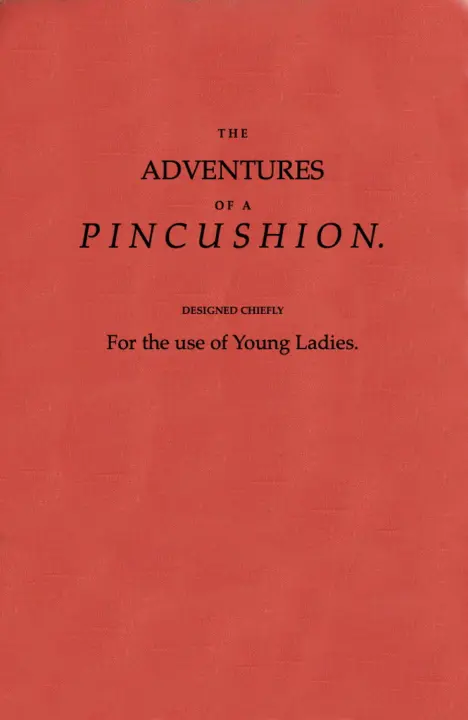
"The Adventures of a Pincushion, Designed Chiefly for the Use of Young Ladies" is a children's fictional narrative written in the late 18th or early 19th century. The story is crafted to entertain and instruct young readers, particularly young girls, offering moral lessons through the amusing events that befall a sentient pincushion. As such, it is a whimsical exploration of childhood experiences and domestic life. At the start of the story, we meet Mrs. Airy and her two daughters, Martha and Charlotte, who engage in sewing and sibling antics. Martha successfully completes a pincushion, setting the stage for the pincushion's adventures as it narrates its own experiences from a first-person perspective. The opening introduces themes of family relationships, responsibility, and proper behavior, especially for young girls, providing an engaging mix of lightheartedness and moral instruction that characterizes the book's approach to education through storytelling.
Introduction adapted from the source catalogue; source summaries may be automatically generated.
Free to read · English · 18,530 words · No account needed
MAKE TIME FOR A GOOD BOOK
On by default. Untick to stop anonymous reading totals. Each page counts after 10 seconds in view. How this works.
Anonymous counting is on unless you have switched it off.
Sally knew she durst not reply to this positive speech; and fearing her uncle should become more angry, she promised to behave better, and walked up stairs to Hannah, who was dusting the furniture in her own room. To her she related the above particulars, with the tears running down her cheeks, and with the most dismal sobs of distress and passion. My good-natured mistress compassionately kissed her, and wept to see her disturbance; but indeed, my dear Sally, said she, I wish you would try to exert yourself, and as you cannot be a lady you had better endeavour to please my father. You see, we all live very happily, and I am sure I would do all in my power to make you do so too: so cheer up your spirits, and do not weep so sadly. “I cannot, replied Sally, very crossly! indeed you may, who have never seen any higher life: but where I was at school do you think any of the ladies scoured the rooms, or milked the cow, or went to such work as washing and ironing? O! Hannah, had you seen the caps, and feathers, and muslin and gauze frocks, which they used to wear on a dancing day, and how smart they looked in their silk shoes, or else red morocco ones, you would not wonder that I do not like these great black leather things, (and she scornfully tossed out her foot as she spoke.) Indeed, Hannah, I could cry, whenever I see you and your sisters cloathed in such coarse gowns, with your black worsted stockings, and with that check handkerchief on your neck, and your round cloth caps, with that piece of linen for a ribbon. I cannot bear it! and I wish I was any thing, but what I am.” O, fie, Sally! said Hannah, that is quite ungrateful for the good things which you are blessed with, to talk in such a manner as that. “What good things? retorted the haughty girl raising her voice, and growing more angry. Do you call this dowlass shift, this coarse apron, this linsey woolsey gown, good things? Or do you call the brown bread we eat, or the hard dumplings you were making just now, good things? And, pray this old worm-eaten bed without any curtains to it, and this little widow which is too small to admit one’s head out, and what little hole there is, quite crammed full of honeysuckles; or this propped up chest of drawers, or that good for nothing chair with a great hole in the bottom, which you know Bet nearly fell through yesterday, when she got upon it to reach the box which holds her Sunday straw hat, do you call these good things? because if you do, I am sorry you know no better.” I should be sorry indeed, rejoined Hannah, with rather more displeasure than was usual to her, if I knew so much of high life, as to be discontented with what my father and mother can afford. I think our bread is as good as any body need wish for? and I am sure the dumplings you so scornfully mention, will be very well tasted and wholesome. As to the furniture, if it is old, I will answer for its being clean, Sally; and my father says, he can nail a piece of board over that chair, which will last as many years as the back does. And as to our cloaths, I am sure they are whole and tight; for I would work my fingers to the bone, before I would see them otherwise. They are coarse to be sure; but they are as good as our neighbours, and many a one would be thankful to have such to put on: and though you speak so proudly of the house and every thing in it, I have seen the ladies at Oakly Hall, who are worth as much money as would buy all the villages for twenty miles round, come as kindly and sit down in my mother’s room, and take hold of my hand, and my sisters, and speak as prettily as if I had been a lady too; without looking at the chairs, or finding fault with the bed. And Miss Goodhall, although she is dressed so handsomely, never seems to think about it; and the last time she stopt here took the loaf out of my father’s hand, and said, let me cut Mrs. Mindful a piece of bread and butter! I can do it very well, and it shall be thin, such as I know she can eat. And she brought with her a cannister of sago, and went herself to the fire, and poured the water to mix it, and put some wine into it, which she brought with her; and showed me the way to do it; with so much good-nature, that I do not think you need be so very proud, Sally, and look so unhappy about your situation. And I assure you, she has sometimes eaten our bread, and always said it was very good. Hannah was here interrupted by one of her sisters, who came to call her to assist her mother who was going to get up. She attended her immediately, and taking me out of her pocket, into which she hastily put me at the conclusion of the above conversation, she placed me on the table, while she assisted Mrs. Mindful in putting on a clean cap and bed-gown: and after she had helped her to an old elbow chair, she made the bed; which, as soon as she had finished, she went into the garden, and returning with a nice nosegay of flowers, placed them in a little white stone mug upon the table, in order, by their sweetness, to refresh and please her mother, as she was very fond of them. She then kissed her with great tenderness, and begged her to take an egg beat up with some milk, which she immediately got ready. These little services were all performed with so much alacrity and good-nature, and such visible pleasure in her countenance, as doubled the merit of all her actions. It was impossible indeed to see her, without thinking how very agreeable it is in the power of good-nature and industry, to make those who have no other advantages to recommend them.
Your reading position is saved on this browser. Take it to another device with a library code. Reading pages adapt to text, rather than matching a printed edition.
BEHIND THE BOOK
This eBook is for the use of anyone anywhere in the United States and most other parts of the world at no cost and with almost no restrictions whatsoever. You may copy it, give it away or re-use it under the terms of the Project Gutenberg License included with this eBook or online at www.gutenberg.org. If you are not located in the United States, you will have to check the laws of the country where you are located before using this eBook. Read the source licence.
The original source file, including credits and licence, is retained by this library. Request an original-format copy at no charge. Please include the book title and Project Gutenberg identifier #63541.
KEEP YOUR CURIOSITY GOING
Coulson Kernahan

Maurice Baring
Frances Wright
Cécile Tormay

Frederic Jesup Stimson

W. H. P. (William Henry Pope) Jarvis