The castaways
James Otis
THE CLASSIC COLLECTION · 1893
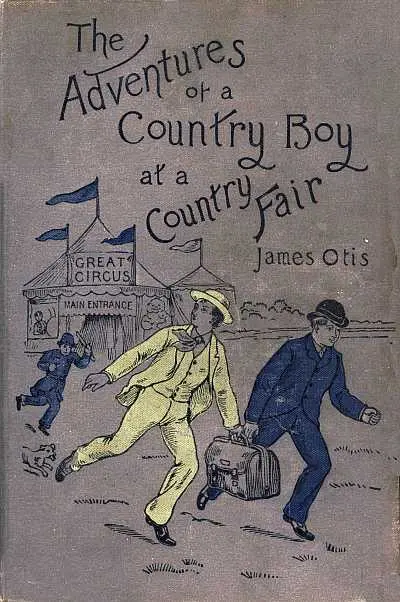
"The Adventures of a Country Boy at a Country Fair" by James Otis is a children's novel written in the late 19th century. The story revolves around a young boy named Teddy Hargreaves who dreams of running his own booth at the local fair to help pay off his family’s debts. Throughout the narrative, Teddy navigates the challenges of entrepreneurship, friendships, and encounters with dubious characters. At the start of the story, Teddy expresses excitement about running a cane and knife board at the Peach Bottom fair, eagerly seeking financial help from his Uncle Nathan. Despite initial skepticism from his family, Teddy is determined to succeed. However, his plans quickly unravel when he becomes embroiled in a more complex situation involving a thief and a con artist who steals his money. As the story unfolds, Teddy illustrates his bravery and resourcefulness, ultimately striving to clear his name while helping others, setting the stage for a series of adventures that blend both humor and wit.
Introduction adapted from the source catalogue; source summaries may be automatically generated.
Free to read · English · 62,701 words · No account needed
MAKE TIME FOR A GOOD BOOK
On by default. Untick to stop anonymous reading totals. Each page counts after 10 seconds in view. How this works.
Anonymous counting is on unless you have switched it off.
Now that Phil was awake, he did not lose any further time in talking, but ran out to where he could command a view of the creek, and once more Sam had an opportunity for escape which he did not dare to embrace.
"Come back here, an' don't make a fool of yourself," Jim's partner cried, angrily, as he saw the man pulling leisurely from the bank.
"What's crawlin' on you? Don't I know my business?"
"Not if you count on goin' up there before dark."
"That's jest what I intend to do, so don't screech so much."
"Come back, I tell you, or it'll be all up for both of us!"
"I've been in this business long enough to know it," was the reply, as Jim continued to row, increasing each instant the distance between himself and the shore.
"Now, don't spoil a good thing," Phil said, pleadingly, and, understanding that this conversation might be continued for a short time, Sam plucked up sufficient courage to make an attack upon the provisions.
He took from the general store a large piece of cheese, some crackers and as much meat as he believed would suffice to make a hearty meal, after which he hid the lot near the tree behind which he was hiding.
Then he crept back to his former position, and listened to the
conversation between his captors.
Phil alternately coaxed and threatened his partner; but all to no purpose, as could be told by the tones of the latter's voice while he pulled up stream, and the baffled burglar returned to the camping place absolutely furious with rage.
"This comes of my bein' so foolish as to bring that fool liquor," he said half to himself. "It's mighty lucky he didn't know I had more than one bottle."
Then he took from one of his pockets a second flask, refreshing himself with a portion of the contents before asking:
"What did he say to you?"
"Nothin' except that he was goin' up to the fair," Sam replied, timidly.
"But what made him tell you to waken me?"
"I s'pose that was so I couldn't have a chance to run away."
"What else did he say?"
"That I was to tell him jest how you took his leavin'."
"Well, if he's lucky enough to get back, tell him I said he was the biggest fool that ever walked on two legs. Them chums of your'n are sure to spot him, an' it's ten to one he's pinched before sunset."
Sam did not understand what the man meant by the term "pinched," but under the circumstances he hardly thought it safe to inquire, and the angry burglar continued:
Your reading position is saved on this browser. Take it to another device with a library code. Reading pages adapt to text, rather than matching a printed edition.
BEHIND THE BOOK
This eBook is for the use of anyone anywhere in the United States and most other parts of the world at no cost and with almost no restrictions whatsoever. You may copy it, give it away or re-use it under the terms of the Project Gutenberg License included with this eBook or online at www.gutenberg.org. If you are not located in the United States, you will have to check the laws of the country where you are located before using this eBook. Read the source licence.
The original source file, including credits and licence, is retained by this library. Request an original-format copy at no charge. Please include the book title and Project Gutenberg identifier #37647.
KEEP YOUR CURIOSITY GOING
Coulson Kernahan

Maurice Baring
Frances Wright
Cécile Tormay

Frederic Jesup Stimson

W. H. P. (William Henry Pope) Jarvis