THE CLASSIC COLLECTION✦In furthest IndCLASSIC FREE BOOKS
In furthest Ind
Sydney C. Grier
THE CLASSIC COLLECTION · 1912
"The Advanced-Guard" by Sydney C. Grier is a novel written in the early 20th century. This book is set during the period of British colonial rule in India, and it explores themes of military duty, personal relationships, and the complexities of life in a frontier outpost. The central characters include Lady Haigh, a determined and resourceful woman, her husband Sir Dugald Haigh, and Major Keeling, who acts as a commanding officer—each grappling with their personal dilemmas amidst the backdrop of the socio-political landscape. The opening of the novel introduces readers to the newly established port of Bab-us-Sahel, highlighting the challenges and dangers of colonial life in Khemistan. Lady Haigh's strong personality is immediately evident as she engages in a spirited discussion with her husband about the implications of their roles in this harsh environment. Their conversation revolves around Lady Haigh's kind intentions to bring a friend to the frontier, which leads to tension with Major Keeling, who is not inclined to include women in military affairs. The dynamics between the characters hint at deeper themes of love, sacrifice, and the challenges of maintaining personal morals in a tumultuous colonial setting.
Introduction adapted from the source catalogue; source summaries may be automatically generated.
Free to read · English · 112,638 words · No account needed
MAKE TIME FOR A GOOD BOOK
On by default. Untick to stop anonymous reading totals. Each page counts after 10 seconds in view. How this works.
Anonymous counting is on unless you have switched it off.
His journey to Gamara seemed to justify him in this opinion, for it was a triumph of what a later age has learnt to call bluff. Taking with him only his personal servants, he attached himself, for the greater part of the way, to a trading caravan, and speedily made himself the chief person in it. It could only be some very important man, with unlimited power behind him, who would dare to adopt such an insolent demeanour, and bully his travelling companions so unconcernedly, thought the merchants. Somewhat sulkily they accepted him at his own valuation, and the marches and halting-places came to be settled by reference to him. He it was also who rebuked the guides when it was necessary, bringing those haughty mountaineers to reason by displaying a proficiency in many-tongued abuse which astonished them, and who forced the headmen of inhospitable villages to turn out of their own houses for his accommodation. True, the merchants sometimes looked forward with misgiving to the next time they would traverse these regions, when there would be no champion to help them; but such a splendid opportunity of paying off old grudges was not to be let slip, and the caravan led by the overbearing Farangi was long a proverb on the route.
When the mountains had been crossed, and the irrigated plains of Gamara were in view, the caravan broke up into several portions, and Ferrers pursued his way to the city in company with one of these. His heart was high, for his reputation had preceded him, and the villagers received him with marked respect. It was clear, he thought, that the men who went before him had failed by going to work too gently, and truckling to the prejudices of the people. The right thing was to go on one’s way regardless of opposition, to browbeat the haughty and meet the insolent with an insolence greater than their own, and in general to act as no sane man, alone and without support in a hostile country, could be expected to act. The natives, like his fellow-travellers, would conclude that he had some mysterious reserve of strength, or he could never be so bold. Thus he saw without misgiving the distant masses of green which marked the neighbourhood of the city, and rode calmly along the narrow dikes, which were the only roads between the sunken fields, without a thought of turning back while there was time. Dimly seen through their screen of trees, the brick towers and earthen ramparts of Gamara had nothing very terrible about them, and was not Ferrers entering the place as an accredited envoy, with permission from the Khan to reside there until the business on which he came was done? Even the contemptible little dispute into which he was forced by the action of the officials at the gate, who wished to make him dismount from his horse, did not trouble him. What did it signify that the law of Gamara forbade a Christian to ride in her streets? He, at least, was going to ride where he liked, and ride he did. It was when he had passed triumphantly through the gate that he was first conscious of a sense of uneasiness, of a feeling that a net was closing round him. The city boasted flourishing bazaars, and streets bordered by canals of clear water and shaded by trees, but his way did not lie through them. Possibly by reason of his self-assertion at the gate, or merely in order to avoid the crowds which thronged the business part of the town, he was led through the dullest bylanes of the residential quarter. The narrow alleys through which he passed looked absolutely blank, the houses on either side presenting nothing but high bare walls to the public eye. Their roofs were flat, and such windows as there were looked into the inner courtyards. It was like passing a never-ending succession of prison-walls with occasional doors. Where the line was broken by a mosque, which generally served also as a college, there was some little relief in the shape of stately dome and lofty minaret, and occasional dashes of colour produced by the use of enamelled tiles; but it gave forth a throng of young fanatics clad in black, who made outrageous remarks about the Kafir, which were as audible to their object as they were intended to be. For convenience’ sake, and to avoid attracting a crowd round him by his mere presence, Ferrers had made the journey in native dress; but he had not attempted to alter his appearance in any other respect, and his fair colouring rendered him distinguishable at once.
Your reading position is saved on this browser. Take it to another device with a library code. Reading pages adapt to text, rather than matching a printed edition.
Sydney C. Grier

Sydney C. Grier
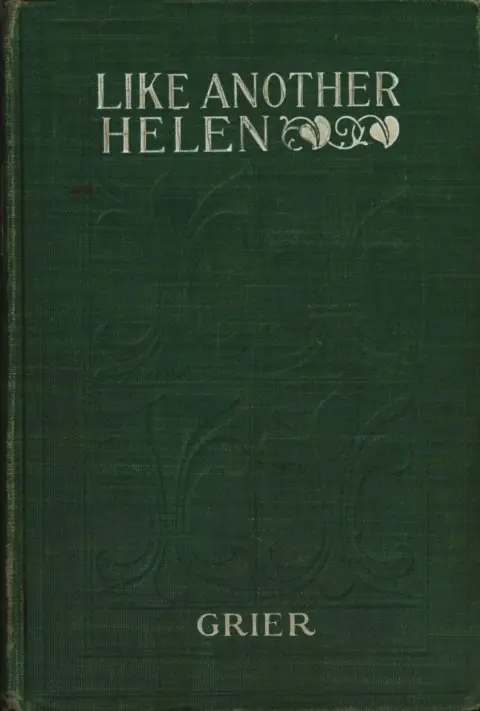
Sydney C. Grier
Sydney C. Grier
BEHIND THE BOOK
This eBook is for the use of anyone anywhere in the United States and most other parts of the world at no cost and with almost no restrictions whatsoever. You may copy it, give it away or re-use it under the terms of the Project Gutenberg License included with this eBook or online at www.gutenberg.org. If you are not located in the United States, you will have to check the laws of the country where you are located before using this eBook. Read the source licence.
The original source file, including credits and licence, is retained by this library. Request an original-format copy at no charge. Please include the book title and Project Gutenberg identifier #65895.
KEEP YOUR CURIOSITY GOING
Cécile Tormay

Moritz Busch
Coulson Kernahan
John L. Ransom

Maurice Baring
Frances Wright