
Forty Years of It
Brand Whitlock

THE CLASSIC COLLECTION · 1902
"The 13th District: A Story of a Candidate" by Brand Whitlock is a novel written in the early 20th century. The story centers around Jerry Garwood, a candidate for Congress, as he navigates the challenges and triumphs of his political campaign. The narrative explores themes of ambition, public perception, and personal relationships within the context of a small-town election. At the start of the novel, Garwood arrives back in his town amidst an enthusiastic crowd celebrating his nomination. He experiences overwhelming support from his constituents, evoking a mix of pride and introspection as he grapples with the nature of popularity and the expectations placed on him as a candidate. Among the cheering crowd, Garwood looks for Emily Harkness, the woman he loves, but is disappointed by her absence, hinting at the personal sacrifices that accompany his political aspirations. This opening sets the stage for Garwood's journey, revealing both the exhilaration of a public life and the private struggles that accompany it.
Introduction adapted from the source catalogue; source summaries may be automatically generated.
Free to read · English · 115,643 words · No account needed
MAKE TIME FOR A GOOD BOOK
On by default. Untick to stop anonymous reading totals. Each page counts after 10 seconds in view. How this works.
Anonymous counting is on unless you have switched it off.
"Mr. Chairman," said Randolph, heavily and deliberately, "Mr. Chairman," he repeated, knotting his brows under the mane that hung down to meet them.
"The gentleman--from Moultrie," sighed Bailey.
The delegates leaned forward, intent in their surprise that Bailey had even recognized the Sprague leader.
"Mr. Speaker," said Randolph, "I mean Mr. Chairman, I move you, sir, as a substitute for the report of the committee just presented, the following resolution, which I ask the clerk to read."
His use of the words "speaker" and "clerk" was to show the effect of
legislative habit.
Bailey only leaned a little farther over his desk, and then drawled:
"The chair--will state--to the gentleman--from Moultrie that it is not
now--in order----"
Two or three men behind Randolph rose halfway to their feet, protest written in their faces, but without turning his head, or taking his eyes from the chairman, Randolph fluttered his hand at them behind his back and they subsided. It was plain from his manner that this was a play for position so delicate, that they must not risk disturbing it by interrupting their leader. So Bailey continued: "For the gentleman--to present--such a resolution."
"But, Mr. Speaker," began Randolph.
"The chair--will add--for the information--of the gentleman--from Moultrie," Bailey continued, "that--the only thing--in order--at this time--would be--a minority report--and a motion--to substitute it, or, again, a motion--to lay the report--on the table."
"But, Mr. Chairman," once more began Randolph, stepping carefully into the aisle, "my resolution is in the very nature of a minority report. The chair will remember the ruling of Speaker Haines in the Thirty-fourth General Assembly--" He was taking higher ground by thus referring to mysteries known only to him and the chairman. But Bailey interrupted him.
"The chair--is acquainted--with the precedent--to which--the gentleman--refers, and is--of the opinion--that it does--not properly--apply--in this instance."
The delegates listened with rapt attention. It was not often that in their rude, free conventions they had such parliamentary fine play as this, and they forgot the heat and the contest to enjoy their own bewilderment at it. Rankin still stood and smoked in unconcern. He knew he could safely leave Randolph to Bailey.
"And therefore--the motion--of the gentleman--from Moultrie--is out--of order." As Bailey let his gavel fall, he jerked his head toward Rankin in signal, and then as the big man heaved himself near, he leaned over the desk to whisper to him. Bailey's very action in leaning over the desk, in removing his eyes from his adversary, in letting the convention for a moment slip his grasp, as it were, was audacious. Randolph, again repressing his followers by the flutter of his hand, smiled with satisfaction. He took a step farther down the aisle.
Your reading position is saved on this browser. Take it to another device with a library code. Reading pages adapt to text, rather than matching a printed edition.
Brand Whitlock

Brand Whitlock
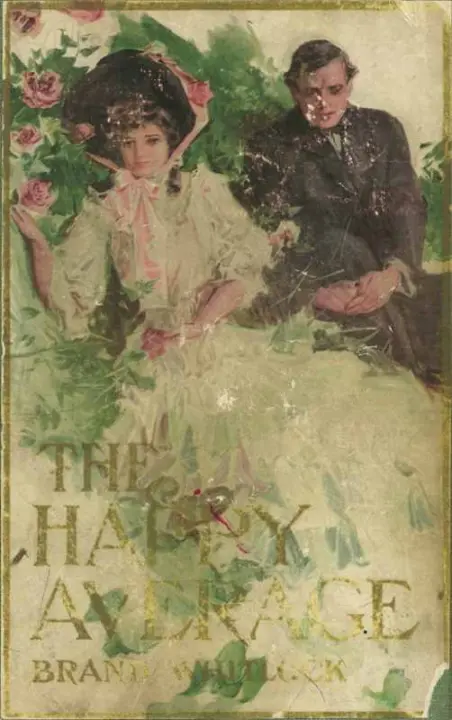
Brand Whitlock
Brand Whitlock
BEHIND THE BOOK
This eBook is for the use of anyone anywhere in the United States and most other parts of the world at no cost and with almost no restrictions whatsoever. You may copy it, give it away or re-use it under the terms of the Project Gutenberg License included with this eBook or online at www.gutenberg.org. If you are not located in the United States, you will have to check the laws of the country where you are located before using this eBook. Read the source licence.
The original source file, including credits and licence, is retained by this library. Request an original-format copy at no charge. Please include the book title and Project Gutenberg identifier #62902.
KEEP YOUR CURIOSITY GOING
Coulson Kernahan

Maurice Baring
Frances Wright
Cécile Tormay

Frederic Jesup Stimson

W. H. P. (William Henry Pope) Jarvis