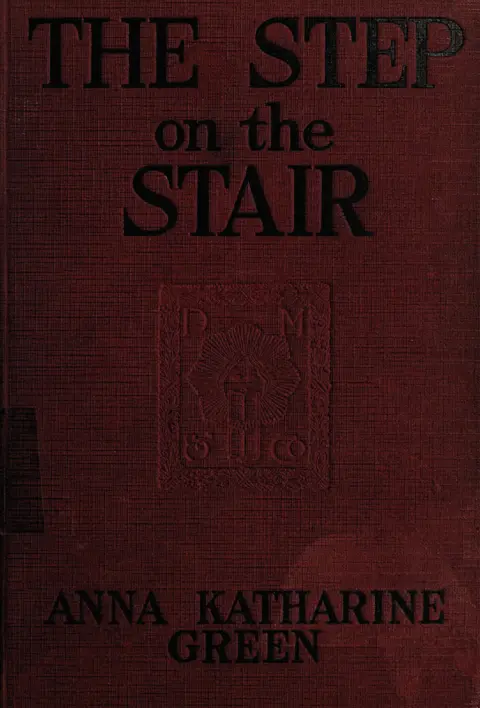
The step on the stair
Anna Katharine Green
THE CLASSIC COLLECTION · 1897
"That Affair Next Door" by Anna Katharine Green is a mystery novel written in the late 19th century. The story revolves around the curious Miss Amelia Butterworth, who becomes embroiled in an investigation following the mysterious death of a young woman found beneath a fallen cabinet in the neighboring Van Burnam mansion. As an astute observer, Amelia takes it upon herself to uncover the truth behind the tragedy that unfolds, delving into suspicions of murder, familial secrets, and the complexities of social standing. The opening of the novel presents Miss Butterworth as a determined yet thoughtful character, who first notices unusual activity next door during a warm night. Her concern for the potential occupant of the seemingly abandoned house leads her to discover something truly shocking—the lifeless body of a young woman. As she interacts with the police and begins to deduce her own theories about the circumstances surrounding the woman's death, the narrative sets the stage for an intricate mystery filled with twists and turns. Amelia's observations and growing conviction that foul play is involved create an intriguing setup, inviting readers to explore the depths of human morality and the veiled truths that lie within the lives of those in high society.
Introduction adapted from the source catalogue; source summaries may be automatically generated.
Free to read · English · 105,085 words · No account needed
MAKE TIME FOR A GOOD BOOK
On by default. Untick to stop anonymous reading totals. Each page counts after 10 seconds in view. How this works.
Anonymous counting is on unless you have switched it off.
"As he made no effort to conceal his feelings, she must have become immediately aware of the change which had taken place in them. But however affected by this, she gave no sign of relenting in her purpose. On the contrary, she persisted in her determination to retain his letter, and when he remonstrated with her and threatened to leave town before her marriage, she retorted by saying that, if he did so, she would show his letter to his brother as soon as the minister had made them one. This threat seemed to affect Franklin deeply, and while it intensified his feeling of animosity towards her, subjected him for the moment to her whim. He stayed in Four Corners till the ceremony was performed, but was such a gloomy guest that all united in saying that he did the occasion no credit.
"So much for my work in Four Corners."
I had by this time become aware that Mr. Gryce was addressing himself chiefly to the Inspector, being gratified no doubt at this opportunity of presenting his case at length before that gentleman. But true to his special habits, he looked at neither of us, but rather at the fretted basket, upon the handle of which he tapped out his arguments as he quickly proceeded:
"The young couple spent the first months of their married life in Yonkers; so to Yonkers I went next. There I learned that Franklin had visited the place twice; both times, as I judge, upon a peremptory summons from her. The result was mutual fret and heartburning, for she had made no progress in her endeavors to win recognition from the Van Burnams; and even had had occasion to perceive that her husband's love, based as it was upon her physical attributes, had begun to feel the stress of her uneasiness and dissatisfaction. She became more anxious than ever for social recognition and distinction, and when the family went to Europe, consented to accompany her husband into the quiet retreat he thought best calculated to win the approbation of his father, only upon the assurance of better times in the fall and a possible visit to Washington in the winter. But the quiet to which she was subjected had a bad effect upon her. Under it she grew more and more restless, and as the time approached for the family's return, conceived so many plans for conciliating them that her husband could not restrain his disgust. But the worst plan of all and the one which undoubtedly led to her death, he never knew. This was to surprise Franklin at his office and, by renewed threats of showing this old love-letter to his brother, win an absolute promise from him to support her in a fresh endeavor to win his father's favor. You see she did not understand Silas Van Burnam's real character, and persisted in holding the most extravagant views concerning Franklin's ascendancy over him as well as over the rest of the family. She even went so far as to insist in the interview, which Jane Pigot overheard, that it was Franklin himself who stood in the way of her desires, and that if he chose he could obtain for her an invitation to take up her abode with the rest of them in Gramercy Park. To Duane Street she therefore went before making her appearance at Mrs. Parker's; a fact which was not brought out at the inquest; Franklin not disclosing it of course, and the clerk not recognizing her under the false name she chose to give. Of the details of this interview I am ignorant, but as she was closeted with him some time, it is only natural to suppose that conversation of some importance took place between them. The clerk who works in the outer office did not, as I have said, know who she was at the time, but he noticed her face when she came out, and he declares that it was insolent with triumph, while Mr. Franklin, who was polite enough or calculating enough to bow her out of the room, was pale with rage, and acted so unlike himself that everybody observed it. She held his letter in her hand, a letter easily distinguishable by the violet-colored seal on the back, and she filliped with it in a most aggravating way as she crossed the floor, pretending to lay it down on Howard's desk as she went by and then taking it up again with an arch look at Franklin, pretty enough to see but hateful in its effect on him. As he went back to his own room his face was full of anger, and such was the effect of this visit on him that he declined to see any one else that day. She had probably shown such determination to reveal his past perfidy to her husband, that his fears were fully aroused at last, and he saw he was not only likely to lose his good name but the esteem with which he was accustomed to be regarded by this younger and evidently much-loved brother.
Your reading position is saved on this browser. Take it to another device with a library code. Reading pages adapt to text, rather than matching a printed edition.
Anna Katharine Green

Anna Katharine Green
Anna Katharine Green
Anna Katharine Green
BEHIND THE BOOK
This eBook is for the use of anyone anywhere in the United States and most other parts of the world at no cost and with almost no restrictions whatsoever. You may copy it, give it away or re-use it under the terms of the Project Gutenberg License included with this eBook or online at www.gutenberg.org. If you are not located in the United States, you will have to check the laws of the country where you are located before using this eBook. Read the source licence.
The original source file, including credits and licence, is retained by this library. Request an original-format copy at no charge. Please include the book title and Project Gutenberg identifier #21617.
KEEP YOUR CURIOSITY GOING
Coulson Kernahan

Maurice Baring
Frances Wright
Cécile Tormay

Frederic Jesup Stimson

W. H. P. (William Henry Pope) Jarvis