THE CLASSIC COLLECTION✦South Australia and Western AustraliaCLASSIC FREE BOOKS
South Australia and Western Australia
Anthony Trollope
THE CLASSIC COLLECTION · 1879
"Thackeray" by Anthony Trollope is a biographical piece written in the late 19th century. This work is part of the "English Men of Letters" series, aimed at exploring the lives and achievements of notable writers. Trollope delves into the life of William Makepeace Thackeray, focusing on his journey as an author and the challenges he faced throughout his career, offering insights into both his personal and professional life. The opening of this biography introduces readers to the notion that there has been no comprehensive memoir written about Thackeray despite his prominence in literature. Trollope discusses Thackeray's reluctance towards personal flattery in biographical accounts, thus explaining why his daughters maintained an air of privacy surrounding their father's life. It outlines Thackeray's early years, including anecdotes from his childhood, education, and initial struggles in establishing himself as an author amid the literary competition of his time. The chapter sets the tone for a deeper exploration of Thackeray's works and character, examining the intertwining of his life experiences with his literary endeavors, foreshadowing further exploration of his notable contributions to literature.
Introduction adapted from the source catalogue; source summaries may be automatically generated.
Free to read · English · 65,101 words · No account needed
MAKE TIME FOR A GOOD BOOK
On by default. Untick to stop anonymous reading totals. Each page counts after 10 seconds in view. How this works.
Anonymous counting is on unless you have switched it off.
The marvel of the book is not so much that the hero should evidently think well of himself, as that the author should so tell his story as to appear to be altogether on the hero's side. In Catherine, the horrors described are most truly disgusting,--so much that the story, though very clever, is not pleasant reading. The Memoirs of Barry Lyndon are very pleasant to read. There is nothing to shock or disgust. The style of narrative is exactly that which might be used as to the exploits of a man whom the author intended to represent as deserving of sympathy and praise,--so that the reader is almost brought to sympathise. But I should be doing an injustice to Thackeray if I were to leave an impression that he had taught lessons tending to evil practice, such as he supposed to have been left by Jack Sheppard or Eugene Aram. No one will be tempted to undertake the life of a chevalier d'industrie by reading the book, or be made to think that cheating at cards is either an agreeable or a profitable profession. The following is excellent as a tirade in favour of gambling, coming from Redmond de Balibari, as he came to be called during his adventures abroad, but it will hardly persuade anyone to be a gambler;
"We always played on parole with anybody,--any person, that is, of honour and noble lineage. We never pressed for our winnings, or declined to receive promissory notes in lieu of gold. But woe to the man who did not pay when the note became due! Redmond de Balibari was sure to wait upon him with his bill, and I promise you there were very few bad debts. On the contrary, gentlemen were grateful to us for our forbearance, and our character for honour stood unimpeached. In latter times, a vulgar national prejudice has chosen to cast a slur upon the character of men of honour engaged in the profession of play; but I speak of the good old days of Europe, before the cowardice of the French aristocracy (in the shameful revolution, which served them right) brought discredit upon our order. They cry fie now upon men engaged in play; but I should like to know how much more honourable their modes of livelihood are than ours. The broker of the Exchange, who bulls and bears, and buys and sells, and dabbles with lying loans, and trades upon state-secrets,--what is he but a gamester? The merchant who deals in teas and tallow, is he any better? His bales of dirty indigo are his dice, his cards come up every year instead of every ten minutes, and the sea is his green-table. You call the profession of the law an honourable one, where a man will lie for any bidder;--lie down poverty for the sake of a fee from wealth; lie down right because wrong is in his brief. You call a doctor an honourable man,--a swindling quack who does not believe in the nostrums which he prescribes, and takes your guinea for whispering in your ear that it is a fine morning. And yet, forsooth, a gallant man, who sits him down before the baize and challenges all comers, his money against theirs, his fortune against theirs, is proscribed by your modern moral world! It is a conspiracy of the middle-class against gentlemen. It is only the shopkeeper cant which is to go down nowadays. I say that play was an institution of chivalry. It has been wrecked along with other privileges of men of birth. When Seingalt engaged a man for six-and-thirty hours without leaving the table, do you think he showed no courage? How have we had the best blood and the brightest eyes too, of Europe throbbing round the table, as I and my uncle have held the cards and the bank against some terrible player, who was matching some thousands out of his millions against our all, which was there on the baize! When we engaged that daring Alexis Kossloffsky, and won seven thousand louis on a single coup, had we lost we should have been beggars the next day; when he lost, he was only a village and a few hundred serfs in pawn the worse. When at Toeplitz the Duke of Courland brought fourteen lacqueys, each with four bags of florins, and challenged our bank to play against the sealed bags, what did we ask? 'Sir,' said we, 'we have but eighty thousand florins in bank, or two hundred thousand at three months. If your highness's bags do not contain more than eighty thousand we will meet you.' And we did; and after eleven hours' play, in which our bank was at one time reduced to two hundred and three ducats, we won seventeen thousand florins of him. Is this not something like boldness? Does this profession not require skill, and perseverance, and bravery? Four crowned heads looked on at the game, and an imperial princess, when I turned up the ace of hearts and made Paroli, burst into tears. No man on the European Continent held a higher position than Redmond Barry then; and when the Duke of Courland lost he was pleased to say that we had won nobly. And so we had, and spent nobly what we won." This is very grand, and is put as an eloquent man would put it who really wished to defend gambling.
Your reading position is saved on this browser. Take it to another device with a library code. Reading pages adapt to text, rather than matching a printed edition.
Anthony Trollope
Anthony Trollope
Anthony Trollope

Anthony Trollope
BEHIND THE BOOK
This eBook is for the use of anyone anywhere in the United States and most other parts of the world at no cost and with almost no restrictions whatsoever. You may copy it, give it away or re-use it under the terms of the Project Gutenberg License included with this eBook or online at www.gutenberg.org. If you are not located in the United States, you will have to check the laws of the country where you are located before using this eBook. Read the source licence.
The original source file, including credits and licence, is retained by this library. Request an original-format copy at no charge. Please include the book title and Project Gutenberg identifier #18645.
KEEP YOUR CURIOSITY GOING
John L. Ransom
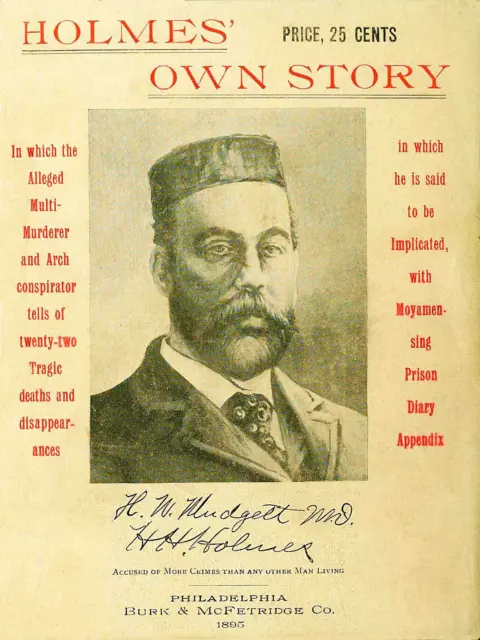
Herman W. Mudgett

Harriet Monroe
Daniel Dulany Addison
Charles Lanman
Harold Rosher