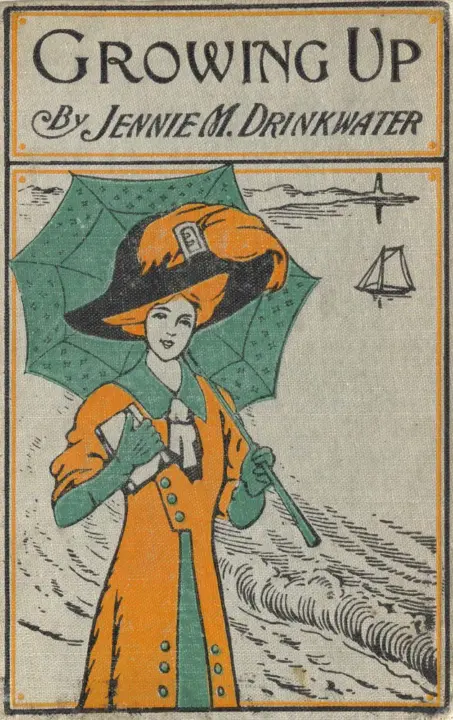
Growing Up: A Story of the Girlhood of Judith Mackenzie
Nathaniel, Mrs. Conklin
THE CLASSIC COLLECTION · 1879
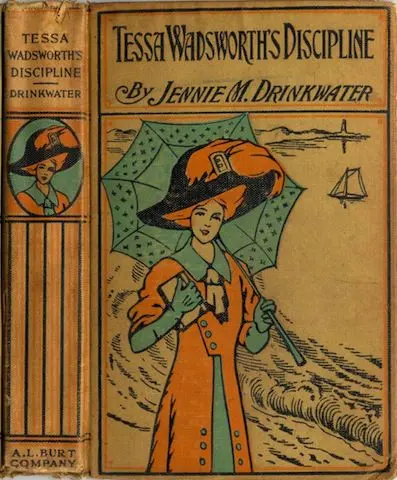
"Discipline: A Story of the Development of a Young Girl's Life" by Jennie M. Drinkwater is a novel written in the late 19th century. The story revolves around Tessa Wadsworth, a young girl navigating the complexities of love and self-discovery while grappling with her feelings for Ralph Towne, a seemingly oblivious young man. As Tessa's heart grows fonder for him, she also faces the harsh realities of her emotions and the societal expectations around her. The opening portion of the novel introduces Tessa as she reflects on her relationship with Ralph Towne. She observes him from her home and expresses the joy and hope his presence brings her, despite his apparent lack of awareness regarding her feelings. Tessa grapples with her emotions, demonstrating youthful enthusiasm tempered by a growing awareness of the world around her. Ralph, in turn, exhibits a mix of self-reproach and confusion, revealing a man struggling with his own feelings and responsibilities. This initial exploration of unreciprocated love sets the stage for a deeper examination of Tessa's character, her aspirations, and the challenges she faces in growing up amidst expectations and disappointments.
Introduction adapted from the source catalogue; source summaries may be automatically generated.
Free to read · English · 95,866 words · No account needed
MAKE TIME FOR A GOOD BOOK
On by default. Untick to stop anonymous reading totals. Each page counts after 10 seconds in view. How this works.
Anonymous counting is on unless you have switched it off.
"Some woman wrote that when she'd have done better to be sewing for her husband, I'll warrant," commented Mrs. Wadsworth. Mr. Wadsworth looked grave.
"Oh she had a literary husband," replied Tessa, mischievously. "A word that rhymed with supper would do instead of bread and butter; and he cared more for one of her poems than he did for his buttons."
"Literary men don't grow on every bush; and they don't take to literary women, either," said her mother.
"Mother, you forget the Howitts, William and Mary; what good, good times they have taking long walks and writing; like you and Gus, Tessa, and Mr. and Mrs. Browning--"
"You don't find such people in Dunellen; we live in Dunellen. Gus will choose a woman that doesn't care for books, and so will Mr. Towne, mark my words! And so will Felix Harrison, even if he is killing himself with study."
"He is improving greatly," said Mr. Wadsworth, pulling one of Dine's long curls straight. "He is going away Monday to finish his studies."
"I honor him," said Tessa, flushing slightly.
"Don't," said Dine, "he sha'n't have you, Tessa. Don't honor him."
"That's all you and your father think of--keeping Tessa. She needs the wear and tear of married life to give her character."
"It's queer about that," rejoined Tessa in a perplexed tone, playing with her napkin ring. "If such discipline be the best, why is any woman permitted to be without it? Why does not the fitting husband appear as soon as the girl begins to wish for him? In the East, where it is shameful for a girl not to be married at eleven, I have yet to learn that the wives are noted for strength or beauty of character."
"You may talk," said her mother, heatedly, "but two years hence you will dance in a brass kettle."
"I hope that I shall work in it," answered Tessa, coloring painfully, however. Whether her lips were touched with a slight contempt, or tremulous because she was very, very much hurt, Dinah could not decide; she was silent because she could not think of any thing sharp enough to reply; she never liked to be too saucy.
Mr. Wadsworth spoke in his genial voice: "It's a beautiful thing, daughters, to help a good man live a good life."
Dinah thought: "I would love to do such a beautiful thing." Tessa was saying to herself, "Oh, what should I do if my father were to die!"
Mr. Wadsworth pushed back his chair, went around to his wife and kissed her. Tessa loved him for it.
Your reading position is saved on this browser. Take it to another device with a library code. Reading pages adapt to text, rather than matching a printed edition.
Nathaniel, Mrs. Conklin
BEHIND THE BOOK
This eBook is for the use of anyone anywhere in the United States and most other parts of the world at no cost and with almost no restrictions whatsoever. You may copy it, give it away or re-use it under the terms of the Project Gutenberg License included with this eBook or online at www.gutenberg.org. If you are not located in the United States, you will have to check the laws of the country where you are located before using this eBook. Read the source licence.
The original source file, including credits and licence, is retained by this library. Request an original-format copy at no charge. Please include the book title and Project Gutenberg identifier #37003.
KEEP YOUR CURIOSITY GOING
Coulson Kernahan

Maurice Baring
Frances Wright
Cécile Tormay

Frederic Jesup Stimson

W. H. P. (William Henry Pope) Jarvis