THE CLASSIC COLLECTION✦Pan’s gardenCLASSIC FREE BOOKS
Pan’s garden
Algernon Blackwood
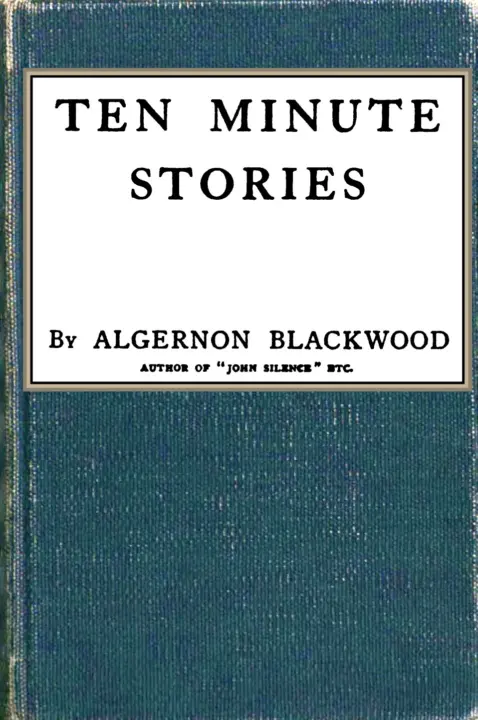
THE CLASSIC COLLECTION · 1914
"Ten Minute Stories" by Algernon Blackwood is a collection of short stories written in the early 20th century. The stories explore varied themes, often delving into the supernatural, the strange, or psychological aspects of human experience. Each tale is designed to be a quick read, making them perfect for a brief escape into the intriguing worlds Blackwood creates. The opening of the first story, "Accessory Before the Fact," introduces us to Martin, an accountant on holiday. He finds himself confused at a moorland crossroads due to an outdated map, leading to feelings of unease. As dusk falls, he encounters a suspicious pair of tramps who communicate with him in German, heightening his sense of dread. After a sudden, violent encounter, Martin realizes that he has been unintentionally eavesdropping on a dangerous situation that threatens others and wrestles with the moral implications of his knowledge. The story establishes a rich atmosphere of suspense and psychological depth, setting the tone for the intriguing narratives that follow in the collection.
Introduction adapted from the source catalogue; source summaries may be automatically generated.
Free to read · English · 62,810 words · No account needed
MAKE TIME FOR A GOOD BOOK
On by default. Untick to stop anonymous reading totals. Each page counts after 10 seconds in view. How this works.
Anonymous counting is on unless you have switched it off.
“Thanks, yes, I have,” Breezy replied with a certain air of disappointment, as though the question had been an invitation. He moved a few steps backwards down the pavement. “But, now you’re back,” he added more cheerfully, “we must try and see something of one another.”
“By all means. Do let’s,” said Pince-nez. His manner somehow suggested that he too expected an invitation, perhaps. He hesitated a moment, as though about to add something, but in the end said nothing.
“We must lunch together one day,” observed Breezy, with his jolly smile. He glanced up at the restaurant.
“By all means--let’s,” agreed the other again, with one foot on the steps. “Any day you like. Next week, perhaps. You let me know.” He nodded cordially, and half turned to enter.
“Lemme see, where are you staying?” called Breezy by way of
after-thought.
“Oh! I’m at the X----,” mentioning an obscure hostel in the W.C.
district.
“Of course; yes, I remember. That’s where you stopped before, isn’t it? Up in Bloomsbury somewhere----?”
“Rooms ain’t up to much, but the cooking’s quite decent.”
“Good. Then we’ll lunch one day soon. What sort of time, by the bye, suits you?” The breezy one, for some obscure reason, looked vigorously at his watch.
“Oh! any time; one o’clock onwards, sort of thing, I suppose?” with an air of “just let me know and I’ll be there.”
“Same here, yes,” agreed the other, with slightly less enthusiasm.
“That’s capital, then,” from Pince-nez. He paused a moment, not finding precisely the suitable farewell phrase. Then, to his own undoing, he added carelessly, “There are one or two things--er--I should like to tell you about----”
“And luncheon is the best time,” Breezy suggested at once, “for busy men like us. You might bespeak a table, in fact.” He jerked his head towards the restaurant.
The two acquaintances, one on the pavement, the other on the steps, stood and stared at each other. The onus of invitation had somehow shifted insensibly from Breezy to Pince-nez. The next remark would be vital. Neither thought it worth while to incur the slight expense of a luncheon that involved an hour in each other’s company. Yet it was nothing stronger than a dread of possible boredom that dictated the hesitancy.
“Not a bad idea,” agreed Pince-nez vaguely. “But I doubt if they’ll keep a table after one o’clock, you know.”
“Never mind, then. You’re on the telephone, I suppose, aren’t you?” called Breezy down the pavement, still moving slowly backwards.
Your reading position is saved on this browser. Take it to another device with a library code. Reading pages adapt to text, rather than matching a printed edition.
Algernon Blackwood
Algernon Blackwood
Algernon Blackwood
Algernon Blackwood
BEHIND THE BOOK
This eBook is for the use of anyone anywhere in the United States and most other parts of the world at no cost and with almost no restrictions whatsoever. You may copy it, give it away or re-use it under the terms of the Project Gutenberg License included with this eBook or online at www.gutenberg.org. If you are not located in the United States, you will have to check the laws of the country where you are located before using this eBook. Read the source licence.
The original source file, including credits and licence, is retained by this library. Request an original-format copy at no charge. Please include the book title and Project Gutenberg identifier #72928.
KEEP YOUR CURIOSITY GOING
Coulson Kernahan

Maurice Baring
Frances Wright
Cécile Tormay

Frederic Jesup Stimson

W. H. P. (William Henry Pope) Jarvis