THE CLASSIC COLLECTION✦Ten Girls from HistoryCLASSIC FREE BOOKS
Ten Girls from History
Kate Dickinson Sweetser
THE CLASSIC COLLECTION · 1902
"Ten Girls from Dickens" by Kate Dickinson Sweetser is a collection of character sketches based on the female figures in the works of Charles Dickens, compiled and presented in the early 20th century. This collection serves as a companion piece to Sweetser’s earlier work, "Ten Boys from Dickens," and aims to showcase the girlhood experiences and qualities of ten notable characters, including the likes of Little Nell and Florence Dombey. The book seeks to inspire a new generation of young readers to discover and appreciate Dickens' storytelling through the lens of these cherished female characters. The beginning of "Ten Girls from Dickens" introduces the author’s intention of reviving interest in Dickens' female characters by presenting their stories simply and engagingly. It begins with a preface explaining the purpose and connections to "Ten Boys from Dickens," suggesting that readers will find relatable themes of girlhood and innocence. The first character introduced is the Marchioness, a small and overworked servant girl from "The Old Curiosity Shop." Her introduction highlights both her vulnerability and diligence, as well as her interactions with Richard Swiveller, which set the tone for exploring the lives and struggles of other beloved female figures throughout the collection. Overall, the opening promises a blend of nostalgia and enjoyment for readers familiar with Dickens’ works, as well as accessibility for newcomers to his literature.
Introduction adapted from the source catalogue; source summaries may be automatically generated.
Free to read · English · 63,647 words · No account needed
MAKE TIME FOR A GOOD BOOK
On by default. Untick to stop anonymous reading totals. Each page counts after 10 seconds in view. How this works.
Anonymous counting is on unless you have switched it off.
"Stop a bit," she said, "I'll give the lady my card." She produced it from her pocket with an air, and Miss Abbey took the diminutive document, and found it to run thus:
Miss JENNY WREN.
Dolls' Dressmaker..
Dolls attended at their own residences.
So great were her amusement and astonishment, and so interested was she in the odd little creature that she at once asked:
"Did you ever taste shrub, child?"
Miss Wren shook her head.
"Should you like to?"
"Should if it's good," returned Miss Wren.
"You shall try. Put your little feet on the fender. It's a cold, cold night, and the fog clings so." As Miss Abbey helped her to turn her chair, her loosened bonnet fell on the floor. "Why, what lovely hair!" cried Miss Abbey. "And enough to make wigs: for all the dolls in the world. What a quantity!"
"Call that a quantity?" returned Miss Wren. "Poof! What do you say to the rest of it?" As she spoke, she untied a band, and the golden stream fell over herself, and over the chair, and flowed down to the ground. Miss Abbey's admiration seemed to increase her perplexity. She beckoned the Jew towards her, and whispered:
"Child or woman?"
"Child in years," was the answer; "woman in self-reliance and trial."
"You are talking about me, good people," thought Miss Jenny, sitting in her golden bower, warming her feet. "I can't hear what you say, but I know your tricks and your manners!"
The shrub, mixed by Miss Potterson's skilful hands, was perfectly satisfactory to Miss Jenny's palate, and she sat and sipped it leisurely while the interview between Mr. Riah and Miss Potterson proceeded, keenly regretting when the bottom of the glass was reached, and the interview at an end.
There was at this time much curiosity among Lizzie Hexam's acquaintances to discover her hiding-place, and many of them paid visits to the dolls' dressmaker in hopes of obtaining from her the desired address. Among these was Mr. Wrayburn, whom we find calling upon Miss Wren one evening:
"And so, Miss Jenny," he said, "I cannot persuade you to dress me a
doll?"
"No," replied Miss Wren snappishly; "If you want one, go and buy it at
the shop."
"And my charming young goddaughter," said Mr. Wrayburn plaintively,
"down in Hertfordshire--"
("Humbugshire, you mean, I think," interposed Miss Wren)--"is to be put upon the cold footing of the general public, and is to derive no advantage from my private acquaintance with the Court dressmaker?"
Your reading position is saved on this browser. Take it to another device with a library code. Reading pages adapt to text, rather than matching a printed edition.
Kate Dickinson Sweetser
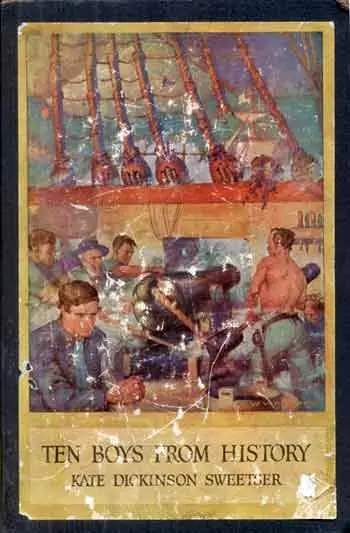
Kate Dickinson Sweetser
Kate Dickinson Sweetser
Kate Dickinson Sweetser
BEHIND THE BOOK
This eBook is for the use of anyone anywhere in the United States and most other parts of the world at no cost and with almost no restrictions whatsoever. You may copy it, give it away or re-use it under the terms of the Project Gutenberg License included with this eBook or online at www.gutenberg.org. If you are not located in the United States, you will have to check the laws of the country where you are located before using this eBook. Read the source licence.
The original source file, including credits and licence, is retained by this library. Request an original-format copy at no charge. Please include the book title and Project Gutenberg identifier #11126.
KEEP YOUR CURIOSITY GOING

David Patterson (Spirit) Hatch

David Patterson (Spirit) Hatch

David Patterson (Spirit) Hatch

Ralph Waldo Emerson

Maurice Baring

Oscar Wilde & James McNeill Whistler