THE CLASSIC COLLECTION✦Ten Girls from HistoryCLASSIC FREE BOOKS
Ten Girls from History
Kate Dickinson Sweetser
THE CLASSIC COLLECTION · 1902
"Ten Girls from Dickens" by Kate Dickinson Sweetser is a collection of character sketches based on the female figures in the works of Charles Dickens, compiled and presented in the early 20th century. This collection serves as a companion piece to Sweetser’s earlier work, "Ten Boys from Dickens," and aims to showcase the girlhood experiences and qualities of ten notable characters, including the likes of Little Nell and Florence Dombey. The book seeks to inspire a new generation of young readers to discover and appreciate Dickens' storytelling through the lens of these cherished female characters. The beginning of "Ten Girls from Dickens" introduces the author’s intention of reviving interest in Dickens' female characters by presenting their stories simply and engagingly. It begins with a preface explaining the purpose and connections to "Ten Boys from Dickens," suggesting that readers will find relatable themes of girlhood and innocence. The first character introduced is the Marchioness, a small and overworked servant girl from "The Old Curiosity Shop." Her introduction highlights both her vulnerability and diligence, as well as her interactions with Richard Swiveller, which set the tone for exploring the lives and struggles of other beloved female figures throughout the collection. Overall, the opening promises a blend of nostalgia and enjoyment for readers familiar with Dickens’ works, as well as accessibility for newcomers to his literature.
Introduction adapted from the source catalogue; source summaries may be automatically generated.
Free to read · English · 63,647 words · No account needed
MAKE TIME FOR A GOOD BOOK
On by default. Untick to stop anonymous reading totals. Each page counts after 10 seconds in view. How this works.
Anonymous counting is on unless you have switched it off.
Jenny Wren had her personal vanities--happily for her--and no intentions were stronger in her breast than the various trials and torments that were, in the fulness of time, to be inflicted upon "him."
"Wherever he may happen to be just at present, or whoever he may happen to be," said Miss Wren, "I know his tricks and his manners, and I give him warning to look out."
"Don't you think you're rather hard upon him?" asked her friend smiling,
and smoothing her hair.
"Not a bit," replied the sage Miss Wren, with an air of vast experience. "My dear, they don't care for you, those fellows, if you're not hard upon 'em?"
In such light and playful conversation, which was the dear delight of Jenny Wren, they continued until interrupted by Mr. Wrayburn, a friend of Lizzie's, who fell to talking playfully with Jenny Wren.
"I think of setting up a doll, Miss Jenny," he said.
"You had better not," replied the dressmaker.
"Why not?"
"You are sure to break it. All you children do."
"But that makes good for trade, you know, Miss Wren," he returned.
"I don't know about that," Miss Wren retorted; "but you'd better by half set up a pen-wiper, and turn industrious, and use it."
"Why, if we were all as industrious as you, little Busy Body, we should begin to work as soon as we could crawl, and there would be a bad thing!"
"Do you mean," returned the little creature with a flush suffusing her face, "bad for your backs and your legs?"
"No, no," said the visitor, shocked at the thought of trifling with her infirmity. "Bad for business. If we all set to work as soon as we could use our hands, it would be all over with the dolls' dressmakers.
"There's something in that," replied Miss Wren, "you have a sort of an idea in your noddle sometimes!" Then, resting one arm upon the elbow of her chair, resting her chin upon that hand, and looking vacantly before her, she said in a changed tone: "Talking of ideas, my Lizzie, I wonder how it happens that when I am working here all alone in the summer-time, I smell flowers. This is not a flowery neighborhood. It's anything but that. And yet as I sit at work, I smell miles of flowers; I smell rose-leaves till I think I see the rose-leaves lying in heaps, bushels, on the floor; I smell fallen leaves, till I put down my hand--so--and expect to make them rustle; I smell the white and the pink May in the hedges, and all sorts of flowers that I never was among. For I have seen very few flowers indeed in my life."
Your reading position is saved on this browser. Take it to another device with a library code. Reading pages adapt to text, rather than matching a printed edition.
Kate Dickinson Sweetser
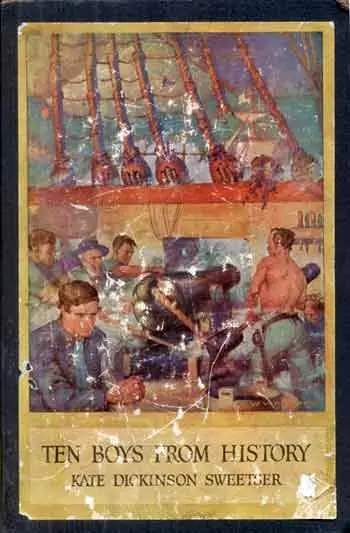
Kate Dickinson Sweetser
Kate Dickinson Sweetser
Kate Dickinson Sweetser
BEHIND THE BOOK
This eBook is for the use of anyone anywhere in the United States and most other parts of the world at no cost and with almost no restrictions whatsoever. You may copy it, give it away or re-use it under the terms of the Project Gutenberg License included with this eBook or online at www.gutenberg.org. If you are not located in the United States, you will have to check the laws of the country where you are located before using this eBook. Read the source licence.
The original source file, including credits and licence, is retained by this library. Request an original-format copy at no charge. Please include the book title and Project Gutenberg identifier #11126.
KEEP YOUR CURIOSITY GOING

David Patterson (Spirit) Hatch

David Patterson (Spirit) Hatch

David Patterson (Spirit) Hatch

Ralph Waldo Emerson

Maurice Baring

Oscar Wilde & James McNeill Whistler