THE CLASSIC COLLECTION✦Ten Girls from HistoryCLASSIC FREE BOOKS
Ten Girls from History
Kate Dickinson Sweetser
THE CLASSIC COLLECTION · 1902
"Ten Girls from Dickens" by Kate Dickinson Sweetser is a collection of character sketches based on the female figures in the works of Charles Dickens, compiled and presented in the early 20th century. This collection serves as a companion piece to Sweetser’s earlier work, "Ten Boys from Dickens," and aims to showcase the girlhood experiences and qualities of ten notable characters, including the likes of Little Nell and Florence Dombey. The book seeks to inspire a new generation of young readers to discover and appreciate Dickens' storytelling through the lens of these cherished female characters. The beginning of "Ten Girls from Dickens" introduces the author’s intention of reviving interest in Dickens' female characters by presenting their stories simply and engagingly. It begins with a preface explaining the purpose and connections to "Ten Boys from Dickens," suggesting that readers will find relatable themes of girlhood and innocence. The first character introduced is the Marchioness, a small and overworked servant girl from "The Old Curiosity Shop." Her introduction highlights both her vulnerability and diligence, as well as her interactions with Richard Swiveller, which set the tone for exploring the lives and struggles of other beloved female figures throughout the collection. Overall, the opening promises a blend of nostalgia and enjoyment for readers familiar with Dickens’ works, as well as accessibility for newcomers to his literature.
Introduction adapted from the source catalogue; source summaries may be automatically generated.
Free to read · English · 63,647 words · No account needed
MAKE TIME FOR A GOOD BOOK
On by default. Untick to stop anonymous reading totals. Each page counts after 10 seconds in view. How this works.
Anonymous counting is on unless you have switched it off.
"Miss Sally says you are a funny chap," replied his friend.
"Well, Marchioness," said Mr. Swiveller, "that's not uncomplimentary. Merriment, Marchioness, is not a bad of a degrading quality. Old King Cole was himself a merry old soul, if we may put any faith in the pages of history."
"But she says," pursued his companion, "that you aren't to be trusted."
"Why, really, Marchioness," said Mr. Swiveller thoughtfully, "it's a popular prejudice, and yet I'm sure I don't know why, for I've been trusted in my time to a considerable amount, and I can safely say that I never forsook my trust, until it deserted me--never. Mr. Brass is of the same opinion, I suppose?"
His friend nodded again, adding imploringly, "But don't you ever tell upon me, or I shall be beat to death."
"Marchioness," said Mr. Swiveller, rising, "the word of a gentleman is as good as his bond--sometimes better, as in the present case, where his bond might prove but a doubtful sort of security. I'm your friend, and I hope we shall play many more rubbers together. But, Marchioness," added Richard, "it occurs to me that you must be in the constant habit of airing your eye at keyholes to know this."
"I only wanted," replied the trembling Marchioness, "to know where the key of the meat-safe was hid--that was all; and I wouldn't have taken much if I had found it--only enough to squench my hunger."
"You didn't find it, then?" said Dick, "but, of course, you didn't, or of course you'd be plumper. Good-night, Marchioness, fare thee well, and if forever, then forever fare thee well. And put up the chain, Marchioness, in case of accidents!"
Upon repairing to Bevis Marks on the following morning, he found Miss Brass much agitated over the disappearance from the office of several small articles, as well as three half crowns, and Richard felt much troubled over the matter, saying to himself, "Then, by Jove, I'm afraid the Marchioness is done for!"
The more he discussed the subject in his thoughts, the more probable it appeared to Dick that the miserable little servant was the culprit. When he considered on what a spare allowance of food she lived, how neglected and untaught she was, and how her natural cunning had been sharpened by necessity and privation, he scarcely doubted it. And yet he pitied her so much, and felt so unwilling to have a matter of such gravity disturbing the oddity of their acquaintance, that he thought, rather than receive fifty pounds down, he would have the Marchioness proved innocent.
Your reading position is saved on this browser. Take it to another device with a library code. Reading pages adapt to text, rather than matching a printed edition.
Kate Dickinson Sweetser
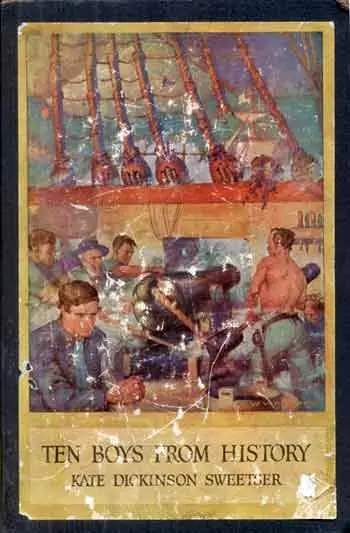
Kate Dickinson Sweetser
Kate Dickinson Sweetser
Kate Dickinson Sweetser
BEHIND THE BOOK
This eBook is for the use of anyone anywhere in the United States and most other parts of the world at no cost and with almost no restrictions whatsoever. You may copy it, give it away or re-use it under the terms of the Project Gutenberg License included with this eBook or online at www.gutenberg.org. If you are not located in the United States, you will have to check the laws of the country where you are located before using this eBook. Read the source licence.
The original source file, including credits and licence, is retained by this library. Request an original-format copy at no charge. Please include the book title and Project Gutenberg identifier #11126.
KEEP YOUR CURIOSITY GOING

David Patterson (Spirit) Hatch

David Patterson (Spirit) Hatch

David Patterson (Spirit) Hatch

Ralph Waldo Emerson

Maurice Baring

Oscar Wilde & James McNeill Whistler