THE CLASSIC COLLECTION✦Ten Girls from HistoryCLASSIC FREE BOOKS
Ten Girls from History
Kate Dickinson Sweetser
THE CLASSIC COLLECTION · 1902
"Ten Girls from Dickens" by Kate Dickinson Sweetser is a collection of character sketches based on the female figures in the works of Charles Dickens, compiled and presented in the early 20th century. This collection serves as a companion piece to Sweetser’s earlier work, "Ten Boys from Dickens," and aims to showcase the girlhood experiences and qualities of ten notable characters, including the likes of Little Nell and Florence Dombey. The book seeks to inspire a new generation of young readers to discover and appreciate Dickens' storytelling through the lens of these cherished female characters. The beginning of "Ten Girls from Dickens" introduces the author’s intention of reviving interest in Dickens' female characters by presenting their stories simply and engagingly. It begins with a preface explaining the purpose and connections to "Ten Boys from Dickens," suggesting that readers will find relatable themes of girlhood and innocence. The first character introduced is the Marchioness, a small and overworked servant girl from "The Old Curiosity Shop." Her introduction highlights both her vulnerability and diligence, as well as her interactions with Richard Swiveller, which set the tone for exploring the lives and struggles of other beloved female figures throughout the collection. Overall, the opening promises a blend of nostalgia and enjoyment for readers familiar with Dickens’ works, as well as accessibility for newcomers to his literature.
Introduction adapted from the source catalogue; source summaries may be automatically generated.
Free to read · English · 63,647 words · No account needed
MAKE TIME FOR A GOOD BOOK
On by default. Untick to stop anonymous reading totals. Each page counts after 10 seconds in view. How this works.
Anonymous counting is on unless you have switched it off.
"No, I haven't," she replied, "not a bit of it. Don't you mind about me. I like sitting up, and I've often had a sleep, bless you, in one of them chairs. But if you could have seen how you tried to jump out o' winder, and if you could have heard how you used to keep on singing and making speeches, you wouldn't have believed it--I'm so glad you're better, Mr. Liverer."
"Liverer, indeed!" said Dick thoughtfully. "It's well I am a liverer. I strongly suspect I should have died, Marchioness, but for you."
At this point, Mr. Swiveller took the small servant's hand in his, struggling to express his thanks, but she quickly changed the theme, urging him to shut his eyes and take a little rest. Being indeed fatigued, he needed but little urging, and fell into a slumber, from which he waked in about half an hour, after which his small friend helped him to sit up again.
"Marchioness," said Richard suddenly, "What has become of Kit?"
"He has been sentenced to transportation for a great many years," she
said.
"Has he gone?" asked Dick, "His mother, what has become of her?"
His nurse shook her head, and answered that she knew nothing about them. "But if I thought," said she presently, "that you'd not put yourself into another fever, I could tell you something--but I won't, now. Wait till you're better, then I'll tell you."
Dick looked very earnestly at his little friend, and urged her to tell
him the worst at once.
Unable to resist his fervent adjurations, the Marchioness spoke thus:
"Well! Before I run away, I used to sleep in the kitchen. Miss Sally used to keep the key of the door in her pocket, and she always come down at night to take away the candle and rake out the fire. Then she left me to go to bed in the dark, locked the door on the outside, and kept me locked up till she came down in the morning and let me out. I was terrible afraid of being kept like this, because if there was a fire, I thought they might forget me, you know. So, whenever I see an old key, I picked it up and tried if it would fit the door, and at last I found a key that did fit it. They kept me very short," said the small servant, "so I used to come out at night after they'd gone to bed, and feel about in the dark, for bits of biscuit, or sangwitches, or even pieces of orange-peel to put into cold water, and make believe it was wine. If you make believe very much, it's quite nice," continued the small servant; "but if you don't, you know, it seems as if it would bear a little more seasoning! Well, one or two nights before the young man was took, I come upstairs while Mr. Brass and Miss Sally was a-sittin by the office fire and talking softly together. They whispered and laughed for a long time, about there being no danger if it was well done; that they must do what their best client, Quilp, desired, and that for his own reasons, he hated Kit, and wanted to have his reputation ruined. Then Mr. Brass pulls out his pocket-book, and says, 'Well, here it is--Quilp's own five-pound note. Kit is coming to-morrow morning, I know. I'll hold him in conversation, and put this property in his hat, and then convict him of theft. And if that don't get Kit out of Mr. Quilp's way, and satisfy his grudge against the lad,' he said, 'the devil's in it,' Then they seemed to be moving away, and I was afraid to stop any longer. There!"
Your reading position is saved on this browser. Take it to another device with a library code. Reading pages adapt to text, rather than matching a printed edition.
Kate Dickinson Sweetser
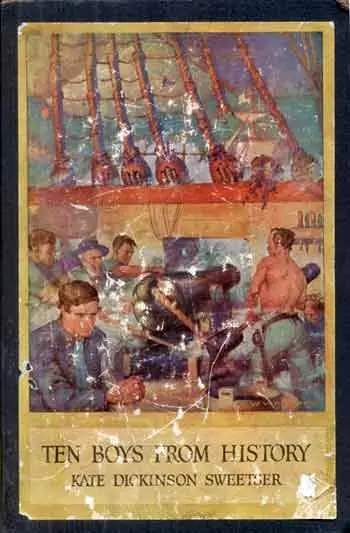
Kate Dickinson Sweetser
Kate Dickinson Sweetser
Kate Dickinson Sweetser
BEHIND THE BOOK
This eBook is for the use of anyone anywhere in the United States and most other parts of the world at no cost and with almost no restrictions whatsoever. You may copy it, give it away or re-use it under the terms of the Project Gutenberg License included with this eBook or online at www.gutenberg.org. If you are not located in the United States, you will have to check the laws of the country where you are located before using this eBook. Read the source licence.
The original source file, including credits and licence, is retained by this library. Request an original-format copy at no charge. Please include the book title and Project Gutenberg identifier #11126.
KEEP YOUR CURIOSITY GOING

David Patterson (Spirit) Hatch

David Patterson (Spirit) Hatch

David Patterson (Spirit) Hatch

Ralph Waldo Emerson

Maurice Baring

Oscar Wilde & James McNeill Whistler