THE CLASSIC COLLECTION✦Confessions of a ThugCLASSIC FREE BOOKS
Confessions of a Thug
Meadows Taylor
THE CLASSIC COLLECTION · 1863
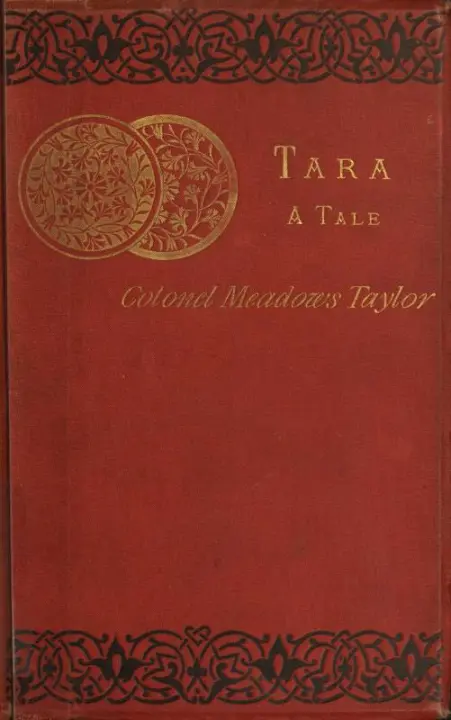
"Tara: A Mahratta Tale" by Meadows Taylor is a historical novel written in the late 19th century. The story explores the life of a young Brahmin girl named Tara, living in India during a time when she faces societal challenges and personal struggles after becoming a widow at a young age. The tale delves into themes of duty, spirituality, and tradition, set against the backdrop of Mahratta culture and the complexities of familial expectations. The opening of the novel introduces us to Tara and her family life, highlighting her beauty, her relationship with her parents, particularly her father, Vyas Shastree, who is a learned Brahmin with a deep commitment to his religious duties. As Tara prepares for a visit to the temple with her mother, we understand the weight of her mourning status as a widow and the societal pressures surrounding her. The narrative paints a vivid picture of Tara's inner conflict between societal expectations and her personal aspirations, setting the stage for her eventual transformation into a priestess. This beginning establishes not only Tara’s character but also the rich cultural and spiritual environment of the Deccan region of India, inviting readers into a profound exploration of identity and faith.
Introduction adapted from the source catalogue; source summaries may be automatically generated.
Free to read · English · 259,512 words · No account needed
MAKE TIME FOR A GOOD BOOK
On by default. Untick to stop anonymous reading totals. Each page counts after 10 seconds in view. How this works.
Anonymous counting is on unless you have switched it off.
With her outward conversion to a strange faith, did Tara forget the old? No, it was impossible. Though her studious disposition enabled her to master enough Arabic, under her husband's teaching, to understand the daily prayers, and some simple ceremonials, yet the grand old Hindu hymns of the Védas, and other devotional portions of the Shastras, especially the Bhugwat Geeta, were never forgotten; and when the purport of them was explained to her husband, he did not object to her reading them. She could not either, change her frugal mode of living; and, to her death, never overcame her natural repugnance to animal food. In this respect also, her husband indulged her; though perhaps the lady Lurlee thought it a sad dereliction of orthodox observances in general, which could only be overcome on the festivals of the Nowroz or the Bukreed, or other occasions of religious ceremonial.
When Tara was dying, and the Moollas without were chanting the service for her departing soul, her eyes seemed once to flash with a bright radiance, and her husband and children, who, were around her, heard her say gently, "I come, O Mother," and repeat some Sanscrit words. The priests, jealous of her perfect conversion, would have it, that she alluded to Miriam, the Mother of Jesus of Nazareth, for there could be no other Mother. It might, indeed, be so, for she seemed of late to have taken a peculiar delight and interest in this history, especially since some Christian monks from Goa, who had established a mission[23] at the town of Chittapoor, only a few miles distant, had come to beg alms of her, and had told her of the purer faith of Christ, and his loving mother Mary. It might have been that she spoke of this; or, more probable perhaps, that her spirit, trembling on the brink of the unknown world, had wandered back into the old days of her trials and deliverances, once, ere it departed.
[21] The loss of the Beejapoor army at Jowly was 4000 horses, with all the guns, elephants, camels, matériel, and treasure of the army.
[22] They were apprehended by the author, committed to the Zillah court of Sholapoor, and there tried by the judge.
[23] The mission still exists, and is visited periodically by priests from Goa. There are, or were, about seventy Christians in it who, with an affecting simplicity, preserve their faith in purity. They are shepherds, weavers, and distillers.
Alla, God.
Alla-hu-Akbur, God is victorious!
Alkab, honorary titles prefixed to letters according to rank.
Amān, mercy.
Ameen, amen.
Ashruffees, gold coins--mohurs.
Astagh-fur-oolla, exclamation of abhorrence--God forbid!
Bábool, mimosa.
Beebee, lady.
Bismilla, in God's name!
Your reading position is saved on this browser. Take it to another device with a library code. Reading pages adapt to text, rather than matching a printed edition.
Meadows Taylor
Meadows Taylor
Meadows Taylor
Meadows Taylor
BEHIND THE BOOK
This eBook is for the use of anyone anywhere in the United States and most other parts of the world at no cost and with almost no restrictions whatsoever. You may copy it, give it away or re-use it under the terms of the Project Gutenberg License included with this eBook or online at www.gutenberg.org. If you are not located in the United States, you will have to check the laws of the country where you are located before using this eBook. Read the source licence.
The original source file, including credits and licence, is retained by this library. Request an original-format copy at no charge. Please include the book title and Project Gutenberg identifier #45430.
KEEP YOUR CURIOSITY GOING
Cécile Tormay

Moritz Busch
Coulson Kernahan
John L. Ransom

Maurice Baring
Frances Wright