THE CLASSIC COLLECTION✦Confessions of a ThugCLASSIC FREE BOOKS
Confessions of a Thug
Meadows Taylor
THE CLASSIC COLLECTION · 1863
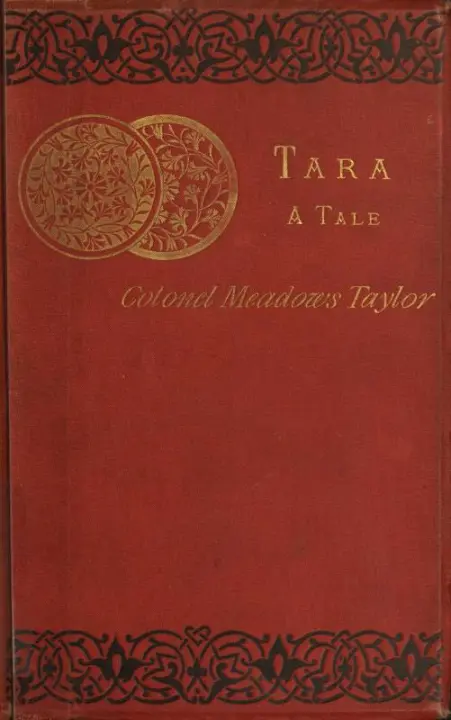
"Tara: A Mahratta Tale" by Meadows Taylor is a historical novel written in the late 19th century. The story explores the life of a young Brahmin girl named Tara, living in India during a time when she faces societal challenges and personal struggles after becoming a widow at a young age. The tale delves into themes of duty, spirituality, and tradition, set against the backdrop of Mahratta culture and the complexities of familial expectations. The opening of the novel introduces us to Tara and her family life, highlighting her beauty, her relationship with her parents, particularly her father, Vyas Shastree, who is a learned Brahmin with a deep commitment to his religious duties. As Tara prepares for a visit to the temple with her mother, we understand the weight of her mourning status as a widow and the societal pressures surrounding her. The narrative paints a vivid picture of Tara's inner conflict between societal expectations and her personal aspirations, setting the stage for her eventual transformation into a priestess. This beginning establishes not only Tara’s character but also the rich cultural and spiritual environment of the Deccan region of India, inviting readers into a profound exploration of identity and faith.
Introduction adapted from the source catalogue; source summaries may be automatically generated.
Free to read · English · 259,512 words · No account needed
MAKE TIME FOR A GOOD BOOK
On by default. Untick to stop anonymous reading totals. Each page counts after 10 seconds in view. How this works.
Anonymous counting is on unless you have switched it off.
"No," said the hunchback; "you will find me at the temple after the lamps are lighted; till then we must sing about the streets. Come, my son. Let us hurry on, boy," continued Lukshmun. "I know the house. Do not pretend to notice any one; we will sing the ballad of the Vow, after the first invocation."
They passed on rapidly: up a few cross streets and alleys, till they reached that in which was the house that they sought. In the covered alcove, beside the outer door, sat several Brahmuns, apparently talking together; one elderly man, covered with a sheet, was reading.
Lukshmun and Ashruf began to sing their ballads at the doors of every house as they advanced, and women from within, came out and gave them handfuls of flour or rice, which were dropped into the bag which Lukshmun carried. Gradually, as they came nearer, the hunchback changed the songs to those of his own country, Canarese and Mahratta in turn, and he was sure there must be some, with which the Shastree was familiar.
Yes, it was he, reading, while the others sat near him, and conversed among themselves; thinner than when the hunchback had last seen him, and looking weak, yet still remarkable and unmistakable. Once or twice the Shastree had looked up at the singers, not so as to seem to care about their performance, but as if a familiar sound had reached him. Now, however, it came to the turn of the Pundit's house, and the hunchback and Ashruf stopped before it.
"Go on," said one of the Brahmuns impatiently; "you have been bawling all down the street, disturbing our meditations, and the Shastree there is weak. Go on, and make no noise."
"Maharaj," said Lukshmun, humbly putting up his hands, "we are under a vow, made before the Holy Mother at Tooljapoor" ("May she forgive me for telling the lie!" he thought parenthetically), "to sing before every house in Wye, and bring her what we get; 'tis a good work, learned sirs, and we are poor people,--do not hinder us; 'tis a long way to go, and we are weary. Let us sing you a ballad for our vow, or only a verse, else we cannot go on."
"Make haste then," said the first spokesman impatiently.
Lukshmun returned the lute; and as he played the prelude which Tara had heard, he saw Vyas Shastree, who had not noticed him, look up. His large eyes were opened to the full, and he leaned forward with an expression of intense curiosity. Then the singers broke at once into the ballad:--
"Fast her tears fell--faster, faster,
As the days pass slowly by."
Your reading position is saved on this browser. Take it to another device with a library code. Reading pages adapt to text, rather than matching a printed edition.
Meadows Taylor
Meadows Taylor
Meadows Taylor
Meadows Taylor
BEHIND THE BOOK
This eBook is for the use of anyone anywhere in the United States and most other parts of the world at no cost and with almost no restrictions whatsoever. You may copy it, give it away or re-use it under the terms of the Project Gutenberg License included with this eBook or online at www.gutenberg.org. If you are not located in the United States, you will have to check the laws of the country where you are located before using this eBook. Read the source licence.
The original source file, including credits and licence, is retained by this library. Request an original-format copy at no charge. Please include the book title and Project Gutenberg identifier #45430.
KEEP YOUR CURIOSITY GOING
Cécile Tormay

Moritz Busch
Coulson Kernahan
John L. Ransom

Maurice Baring
Frances Wright