THE CLASSIC COLLECTION✦Confessions of a ThugCLASSIC FREE BOOKS
Confessions of a Thug
Meadows Taylor
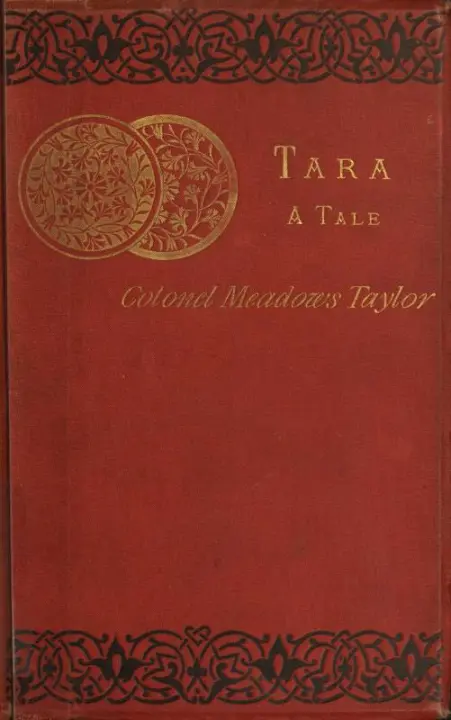
THE CLASSIC COLLECTION · 1863
"Tara: A Mahratta Tale" by Meadows Taylor is a historical novel written in the late 19th century. The story explores the life of a young Brahmin girl named Tara, living in India during a time when she faces societal challenges and personal struggles after becoming a widow at a young age. The tale delves into themes of duty, spirituality, and tradition, set against the backdrop of Mahratta culture and the complexities of familial expectations. The opening of the novel introduces us to Tara and her family life, highlighting her beauty, her relationship with her parents, particularly her father, Vyas Shastree, who is a learned Brahmin with a deep commitment to his religious duties. As Tara prepares for a visit to the temple with her mother, we understand the weight of her mourning status as a widow and the societal pressures surrounding her. The narrative paints a vivid picture of Tara's inner conflict between societal expectations and her personal aspirations, setting the stage for her eventual transformation into a priestess. This beginning establishes not only Tara’s character but also the rich cultural and spiritual environment of the Deccan region of India, inviting readers into a profound exploration of identity and faith.
Introduction adapted from the source catalogue; source summaries may be automatically generated.
Free to read · English · 259,512 words · No account needed
MAKE TIME FOR A GOOD BOOK
On by default. Untick to stop anonymous reading totals. Each page counts after 10 seconds in view. How this works.
Anonymous counting is on unless you have switched it off.
"He can do no harm, friend," said the Khan, laughing. "I fancy the Nimbalkur and others have had a good lesson, and will keep quiet; and, for the rest, as I am going to scotch the head of the snake, we need not fear if its tail writhes a little; it can do no harm: but I thank you for your caution nevertheless, and you will see to my people of Afzoolpoor and its villages?"
"Surely, Khan Sahib; be under no apprehension--nothing can molest them. Now, put your hand on my head once more, embrace me, and let me go."
"Go," said the Khan, rising and doing as he wished--"go; be careful, friend; remember the royal clemency, and be true."
"Will you come with me for a moment, Meah?" said Pahar Singh, as he disengaged himself from the Khan's embrace.
Fazil got up and followed him. As they emerged from the courtyard into the street, Fazil saw that Gopal Singh and others, ready mounted, awaited their chief, and they saluted him courteously.
"Come hither, Lukshmun," said the chief.
The man was well mounted, and advanced. Fazil saw that his cheeks were wet with tears, and his eyes red and swollen. Hideous as the face now was, there was a dignity of sorrow in it which was not unimpressive.
"Meah," said the chief, "this is a foolish slave of mine, who implores me to send him with you; he wants no pay,--only food and clothes, and forage for his horse. He will be faithful to you in all danger and trial, and knows no fear. When you return from the campaign, send him to me again. Do you accept him?"
"I do, Pahar Singh, and will be to him as you were, that I promise,"
replied Fazil.
"Then dismount and kiss the young Khan's feet," said the chief.
Lukshmun obeyed him, dismounted, and prostrating himself before Fazil, embraced his knees. He then did the same to his master, lying at his feet, and sobbing bitterly.
"Get up, fool," said the chief kindly, drawing the back of his hand roughly across his eyes. "Go, thou art safer with him than with me, go! Take him, Meah," he continued, putting the man's hand into Fazil's, who raised him up. "Take him; he will be to you the faithful hound he was to me and my boy yonder: we can ill spare him, but, after what has happened, he is better away for a while. And now, sir, we part. Remember what I said to your father, and that while Mahrattas are weak they will be treacherous. I wish you well; in the words of your people, 'Khôda Hafiz.'"
Your reading position is saved on this browser. Take it to another device with a library code. Reading pages adapt to text, rather than matching a printed edition.
Meadows Taylor
Meadows Taylor
Meadows Taylor
Meadows Taylor
BEHIND THE BOOK
This eBook is for the use of anyone anywhere in the United States and most other parts of the world at no cost and with almost no restrictions whatsoever. You may copy it, give it away or re-use it under the terms of the Project Gutenberg License included with this eBook or online at www.gutenberg.org. If you are not located in the United States, you will have to check the laws of the country where you are located before using this eBook. Read the source licence.
The original source file, including credits and licence, is retained by this library. Request an original-format copy at no charge. Please include the book title and Project Gutenberg identifier #45430.
KEEP YOUR CURIOSITY GOING
Cécile Tormay

Moritz Busch
Coulson Kernahan
John L. Ransom

Maurice Baring
Frances Wright