THE CLASSIC COLLECTION✦Confessions of a ThugCLASSIC FREE BOOKS
Confessions of a Thug
Meadows Taylor
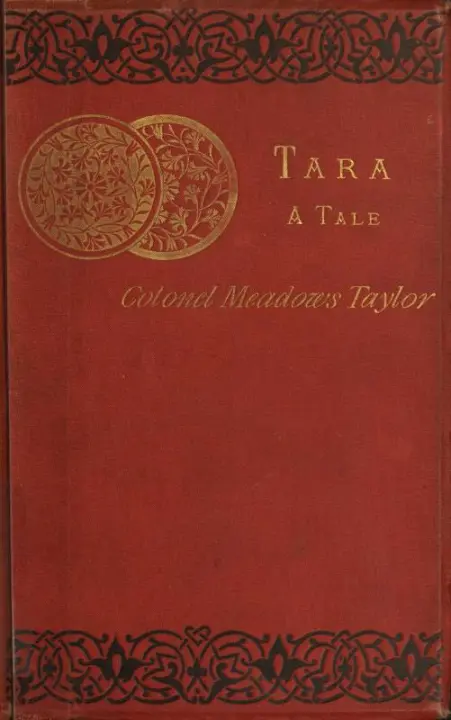
THE CLASSIC COLLECTION · 1863
"Tara: A Mahratta Tale" by Meadows Taylor is a historical novel written in the late 19th century. The story explores the life of a young Brahmin girl named Tara, living in India during a time when she faces societal challenges and personal struggles after becoming a widow at a young age. The tale delves into themes of duty, spirituality, and tradition, set against the backdrop of Mahratta culture and the complexities of familial expectations. The opening of the novel introduces us to Tara and her family life, highlighting her beauty, her relationship with her parents, particularly her father, Vyas Shastree, who is a learned Brahmin with a deep commitment to his religious duties. As Tara prepares for a visit to the temple with her mother, we understand the weight of her mourning status as a widow and the societal pressures surrounding her. The narrative paints a vivid picture of Tara's inner conflict between societal expectations and her personal aspirations, setting the stage for her eventual transformation into a priestess. This beginning establishes not only Tara’s character but also the rich cultural and spiritual environment of the Deccan region of India, inviting readers into a profound exploration of identity and faith.
Introduction adapted from the source catalogue; source summaries may be automatically generated.
Free to read · English · 259,512 words · No account needed
MAKE TIME FOR A GOOD BOOK
On by default. Untick to stop anonymous reading totals. Each page counts after 10 seconds in view. How this works.
Anonymous counting is on unless you have switched it off.
"What has passed here is secret, Neelkunt Rai," said the King. "Thou mayst go; we will send for thee again in this matter ere it be concluded," and with a deep reverence to the King, and salutations to the others, the old man retreated a few paces backwards, then turned, and passed out of the chamber.
"Blessed be God and the Prophet!" exclaimed the Syud when he was gone. "The air was defiled by his breath! Ul-humd-ul-illa! a Kafir and a traitor, may he----"
"Peace, Meer Sahib, we have dismissed him, and that is enough," said the King. "Our father, on whose memory be peace, trusted him, and so did his father,--so also do we."
"As my prince pleases," returned the holy man, with a humble gesture, and checking the volley of curses he had prepared to hurl after the old Brahmun. "In this matter it seemed to me that his counsel was cowardly and dangerous. How say you, Meerza? Was Feroze Shah afraid of infidels when he and his true believers slew them by lakhs, and the pyramids of heads stood by the gates of Gulburgah? And is our prince less than he was, or are these Mahratta Kafirs more powerful than those of Beejanugger? Speak, man!"
"My opinion would be little worth," said the secretary, "even did my lord desire it, and there are others more capable of judging of the power of this Mahratta robber than I am. What you have to advise our master upon is another matter, Syud."
"Explain it to him, Meerza," said the King, sadly: "I am sick of treachery, which seems to be closing round me like a net on all sides."
"God and the Prophet forbid!" exclaimed both in a breath. "Treachery known, is soon disposed of. That which sits crouching in hidden places is alone to be dreaded," continued the Syud. "Ere I hear the detail, I have my fears."
"Nay, read thyself and judge," said the King. "Give him the letters,
Meerza."
"I have compared the seals," said the secretary, "with those letters recently received by the King, and the writing also. Judge for yourself before you read."
The Syud obeyed. He examined and compared the seals, the superscription, and the paper of all, with much care and evident interest, as expressed in various ejaculations of wonder, and appeals to the divinity under various appellations suited to the circumstances, which may be spared. "No doubt, no doubt," he said, after the scrutiny had been concluded, "no doubt of these, nor of the superscription. They only confirm what hath long been in men's mouths, yet was undetected."
"Read," said the King. "Satisfy yourself."
Your reading position is saved on this browser. Take it to another device with a library code. Reading pages adapt to text, rather than matching a printed edition.
Meadows Taylor
Meadows Taylor
Meadows Taylor
Meadows Taylor
BEHIND THE BOOK
This eBook is for the use of anyone anywhere in the United States and most other parts of the world at no cost and with almost no restrictions whatsoever. You may copy it, give it away or re-use it under the terms of the Project Gutenberg License included with this eBook or online at www.gutenberg.org. If you are not located in the United States, you will have to check the laws of the country where you are located before using this eBook. Read the source licence.
The original source file, including credits and licence, is retained by this library. Request an original-format copy at no charge. Please include the book title and Project Gutenberg identifier #45430.
KEEP YOUR CURIOSITY GOING
Cécile Tormay

Moritz Busch
Coulson Kernahan
John L. Ransom

Maurice Baring
Frances Wright