
Dark Hester
Anne Douglas Sedgwick
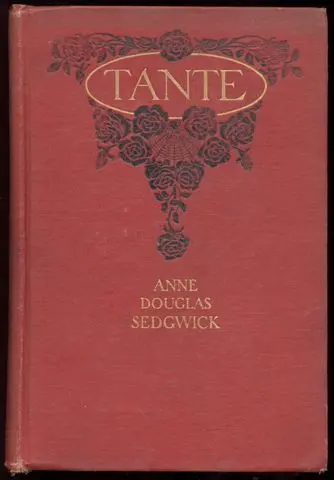
THE CLASSIC COLLECTION · 1911
"Tante" by Anne Douglas Sedgwick is a novel written in the early 20th century. The story unfolds against the backdrop of musical concerts in London, focusing on the iconic Madame Okraska, a celebrated pianist, and her enigmatic adopted daughter, Karen Woodruff. The relationship between these two characters hints at themes of devotion, artistic ambition, and the weight of personal history as they navigate the complexities of fame and expectation. The opening of the narrative immerses readers in the atmosphere of an eagerly awaited concert in London, where a diverse audience is gathered to witness Madame Okraska's performance. The description captures the anticipation, excitement, and social nuances of the attendees, emphasizing Okraska's unique blend of talent and beauty. As the concert commences, the initial excitement is contrasted by introspective moments experienced by Gregory Jardine, a barrister who becomes intrigued by Karen. Through their interactions, we begin to see the contrasting worlds they inhabit—one of public adoration and the other cloaked in personal challenges—setting the stage for deeper explorations of their intertwined destinies.
Introduction adapted from the source catalogue; source summaries may be automatically generated.
Free to read · English · 150,740 words · No account needed
MAKE TIME FOR A GOOD BOOK
On by default. Untick to stop anonymous reading totals. Each page counts after 10 seconds in view. How this works.
Anonymous counting is on unless you have switched it off.
"Ah, no: ah, no:" said Madame von Marwitz, laying her supplicating hand on the sleeve of Karen's nightdress. "You do not understand. How could you--young and cold and flawless--understand my heart, my wild, stained heart, Karen, my fierce and desolate and broken heart. You are air and water; I am earth and fire; how could you understand my darkness and my rage?" She spoke, sobbing, with a sincerity dreadful and irrefragable, as if she stripped herself and showed a body scarred and burning. With all the forces of her nature she threw herself on Karen's pity, tearing from herself, with a humility far above pride and shame, the glamour that had held Karen's heart to hers. Deep instinct guided her spontaneity. Her glamour, now, must consist in having none; her nobility must consist in abasement, her greatness in being piteous.
"Listen to me, Karen," she sobbed, "The world knows but one side of me--you have known but one side;--even Tallie, who knows so much, who understands so much--does not know the other--the dark and tortured soul. I am not a good woman, Karen, the blood that flows in my veins is tainted, ambiguous. I have sinned. I have been savage and dastardly; but it has always been in a madness when I could not seize my better self: flames seem to sweep me on. Listen, Karen, you are so strong, so calm, how could you dream of what a woman's last wild passion can be, a woman whose whole soul is passion? Love! it is all that I have craved. Love! love! all my inner life has been enmeshed in it--in craving, in seeking, in destroying. It is like a curse upon me, Karen. You will not understand; yet that love of love, is it not so with all us wretched women; do we not long, always, all of us, for the great flame to which we may surrender, the flame that will appease and exalt us, annihilate us, yet give us life in its supremacy? So I have always longed; and not grossly; mine has never been the sensual passion; it has been beauty and the heights of life that I have sought. And my curse has been that for me has come no appeasement, no exaltation, but only, always, a dark smouldering of joylessness. With my own hand I broke the great and sacred devotion that blessed my life, because I was thus cursed. Jealousy, the craving for a more complete possession, for the ecstasy I had not found, blind forces in my blood, drove me on to the destruction of that precious thing. I wrecked myself, I killed him. Oh, Karen, you know of whom I speak." Convulsively, the blackness of her memories assailing her in their old forms of horror, Madame von Marwitz sobbed, burying her face in the bed-clothes, her hand forgetting to clutch at Karen's sleeve. She lifted her face and the tears streamed from under her closed lids. "Let me not think of it or I shall go mad. How could I, having known that devotion, sink to the place where you have seen me? Be pitiful. He needed me so much--I believed. My youth was fading; I was growing old. Soon the time was to come when no man's heart would turn to me. Be pitiful. You do not know what it is to look without and see life slowly growing dark and look within and see only sinister memories. It came to me like late sunlight--like cool, sweet water--his love. I believed in it. I loved him. Oh--" she sobbed, "how I loved him, Karen! How my heart was torn with sick jealousy when I saw that his had turned from me to you. I loved you, Karen, yet I hated you. Open your generous heart to me, my child; do not spurn me from you. Understand how it may be that one can strike at the thing one loves. I knew myself in the grasp of an evil passion, but I could not tear it from me. I even feared, with a savage fear that seemed to eat into my brain, that you responded to his love. Oh, Karen, it was not I who spoke those shameful words, when I found you with him, but a creature maddened with pain and jealousy, who for days had fought against her madness and knew when she spoke that she was mad. When I had sent him from me, when he was gone from my life, and I knew that all was over, the evil fury passed from my brain like a mist. I knew myself again. I saw again the sweet and sacred places of my life. I saw you, Karen. Oh, my child," again the pleading hand trembled on Karen's sleeve, "it has not all been misplaced, your love for me; not all illusion. I am still the woman who has loved you through so many years. You will not let one hour of frenzy efface our happy years together?"
Your reading position is saved on this browser. Take it to another device with a library code. Reading pages adapt to text, rather than matching a printed edition.
Anne Douglas Sedgwick
Anne Douglas Sedgwick

Anne Douglas Sedgwick

Anne Douglas Sedgwick
BEHIND THE BOOK
This eBook is for the use of anyone anywhere in the United States and most other parts of the world at no cost and with almost no restrictions whatsoever. You may copy it, give it away or re-use it under the terms of the Project Gutenberg License included with this eBook or online at www.gutenberg.org. If you are not located in the United States, you will have to check the laws of the country where you are located before using this eBook. Read the source licence.
The original source file, including credits and licence, is retained by this library. Request an original-format copy at no charge. Please include the book title and Project Gutenberg identifier #30115.
KEEP YOUR CURIOSITY GOING
Coulson Kernahan

Maurice Baring
Frances Wright
Cécile Tormay

Frederic Jesup Stimson

W. H. P. (William Henry Pope) Jarvis