
Dark Hester
Anne Douglas Sedgwick
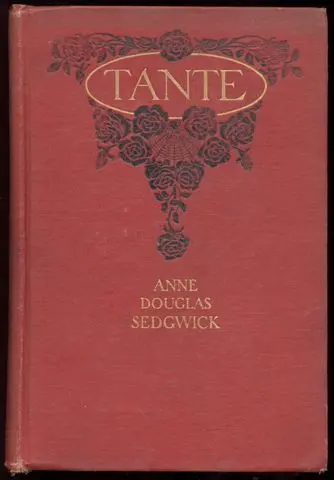
THE CLASSIC COLLECTION · 1911
"Tante" by Anne Douglas Sedgwick is a novel written in the early 20th century. The story unfolds against the backdrop of musical concerts in London, focusing on the iconic Madame Okraska, a celebrated pianist, and her enigmatic adopted daughter, Karen Woodruff. The relationship between these two characters hints at themes of devotion, artistic ambition, and the weight of personal history as they navigate the complexities of fame and expectation. The opening of the narrative immerses readers in the atmosphere of an eagerly awaited concert in London, where a diverse audience is gathered to witness Madame Okraska's performance. The description captures the anticipation, excitement, and social nuances of the attendees, emphasizing Okraska's unique blend of talent and beauty. As the concert commences, the initial excitement is contrasted by introspective moments experienced by Gregory Jardine, a barrister who becomes intrigued by Karen. Through their interactions, we begin to see the contrasting worlds they inhabit—one of public adoration and the other cloaked in personal challenges—setting the stage for deeper explorations of their intertwined destinies.
Introduction adapted from the source catalogue; source summaries may be automatically generated.
Free to read · English · 150,740 words · No account needed
MAKE TIME FOR A GOOD BOOK
On by default. Untick to stop anonymous reading totals. Each page counts after 10 seconds in view. How this works.
Anonymous counting is on unless you have switched it off.
Here was a young man, evidently, who was worth her trouble. Gregory sat disposed of and a good deal discomposed, the more so since he had to own that he had opened himself to the rebuff. He rose and moved away, looking about and seeing that Miss Woodruff had left the room; but Mrs. Forrester came to him, her brilliant little face somewhat clouded.
"What is it, my dear Gregory?" she questioned. "She asked to have you brought. Haven't you pleased her?"
Mrs. Forrester, who had known not only himself, but his father in boyhood, was fond of him, but was not disposed to think of him as important. And she expected the unimportant to know, in a sense, their place and to show the important that they did know it. There was a hint, now, of severity, in her countenance.
It would sound, he knew, merely boyish and sulky to say: "She hasn't pleased me." But he couldn't resist: "I wasn't à la hauteur."
Mrs. Forrester, at this, looked at him hard for a moment. She then diagnosed his case as one of bad temper rather than of malice, and could forgive it in one who had failed to interest the great woman and been discarded in consequence; Mercedes, she knew, could discard with decision.
"Well, when you talk to a woman like Madame von Marwitz, you must try to be worthy of your opportunities," she commented, tempering her severity with understanding. "You really had an opportunity. Your face interested her, and your kindness to little Karen. She always likes people who are kind to little Karen."
It was pleasantly open to him now to say: "Little Karen has been kind to
me."
"A dear, good child," said Mrs. Forrester. "I am glad that you talked to her. You pleased Mercedes in that."
"She is a delightful girl," said Gregory.
He now took his departure. But he was again to encounter Miss Woodruff. She was in the hall, talking French to a sallow little woman in black, evidently a ladies' maid, who had the oppressed, anxious countenance and bright, melancholy eyes of a monkey.
"Allons," Miss Woodruff was saying in encouraging tones, while she paused on the first step of the stairs, her hand on the banister; "ce n'est pas une cause perdue, Louise; nous arrangerons la chose."
"Ah, Mademoiselle, c'est que Madame ne sera pas contente, pas contente du tout quand elle verra la robe," was Louise's mournful reply as Gregory came up.
"I hoped we might go on with our talk," he said. He still addressed her somewhat as one addresses a friendly child; "I wanted to hear the end of that story about the Hungarian student."
Your reading position is saved on this browser. Take it to another device with a library code. Reading pages adapt to text, rather than matching a printed edition.
Anne Douglas Sedgwick
Anne Douglas Sedgwick

Anne Douglas Sedgwick

Anne Douglas Sedgwick
BEHIND THE BOOK
This eBook is for the use of anyone anywhere in the United States and most other parts of the world at no cost and with almost no restrictions whatsoever. You may copy it, give it away or re-use it under the terms of the Project Gutenberg License included with this eBook or online at www.gutenberg.org. If you are not located in the United States, you will have to check the laws of the country where you are located before using this eBook. Read the source licence.
The original source file, including credits and licence, is retained by this library. Request an original-format copy at no charge. Please include the book title and Project Gutenberg identifier #30115.
KEEP YOUR CURIOSITY GOING
Coulson Kernahan

Maurice Baring
Frances Wright
Cécile Tormay

Frederic Jesup Stimson

W. H. P. (William Henry Pope) Jarvis