
Dark Hester
Anne Douglas Sedgwick
THE CLASSIC COLLECTION · 1911
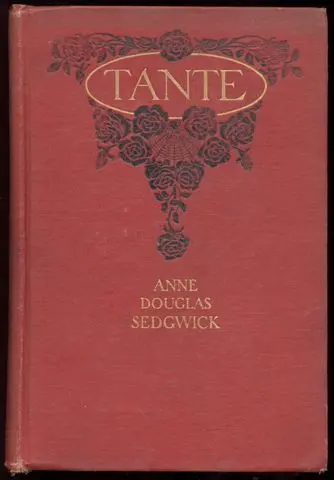
"Tante" by Anne Douglas Sedgwick is a novel written in the early 20th century. The story unfolds against the backdrop of musical concerts in London, focusing on the iconic Madame Okraska, a celebrated pianist, and her enigmatic adopted daughter, Karen Woodruff. The relationship between these two characters hints at themes of devotion, artistic ambition, and the weight of personal history as they navigate the complexities of fame and expectation. The opening of the narrative immerses readers in the atmosphere of an eagerly awaited concert in London, where a diverse audience is gathered to witness Madame Okraska's performance. The description captures the anticipation, excitement, and social nuances of the attendees, emphasizing Okraska's unique blend of talent and beauty. As the concert commences, the initial excitement is contrasted by introspective moments experienced by Gregory Jardine, a barrister who becomes intrigued by Karen. Through their interactions, we begin to see the contrasting worlds they inhabit—one of public adoration and the other cloaked in personal challenges—setting the stage for deeper explorations of their intertwined destinies.
Introduction adapted from the source catalogue; source summaries may be automatically generated.
Free to read · English · 150,740 words · No account needed
MAKE TIME FOR A GOOD BOOK
On by default. Untick to stop anonymous reading totals. Each page counts after 10 seconds in view. How this works.
Anonymous counting is on unless you have switched it off.
"Am I to go into the garden, too?" Mr. Drew inquired, as Madame von Marwitz seated herself and ran her fingers over the keys. "I thought we were to motor this morning."
"We will motor when I have done my work. Go into the garden, by all
means, if you wish to."
"May I come into the garden with you? May I help you there?" Mr. Drew serenely drawled, addressing Karen, who, with a curious, concentrated look, stood gazing at her guardian.
She turned her eyes on him and her glance put him far, far away, like an object scarcely perceived. "I am not going into the garden," she said. "Mrs. Talcott is working in the morning-room and does not need me yet."
"Ah. She is in the morning-room," Madame von Marwitz murmured, still not raising her eyes, and still running loud and soft scales up and down. Karen left the room.
As the door closed upon her, Madame von Marwitz, with a singular effect of control, began to weave a spider's-web of intricate, nearly impalpable, sound. "Go, if you please," she said to Mr. Drew.
He stood beside her, placid. "Why are you angry?" he asked.
"I am not pleased that my rules should be broken. Karen has many privileges. She must learn not to take, always, the extra inch when the ell is so gladly granted."
He leaned on the piano. Her controlled face, bent with absorption above the lacey pattern of sound that she evoked, interested him.
"When you are angry and harness your anger to your art like this, you become singularly beautiful," he remarked. He felt it; and, after all, if he were to remain at Les Solitudes and attempt to scale those Alpine slopes he must keep on good terms with Madame von Marwitz.
"So," was her only reply. Yet her eyes softened.
He raised the lace wing of her sleeve and kissed it, keeping it in his
hand.
"No foolishness if you please," said Madame von Marwitz. "Of what have you and Karen been talking?"
"I can't get her to talk," said Mr. Drew. "But I like to hear her play."
"She plays with right feeling," said Madame von Marwitz. "She is not a child to express herself in speech. Her music reveals her more truly."
"Nur wo du bist sei alles, immer kindlich," Mr. Drew mused. "That is what she makes me think of." With anybody of Madame von Marwitz's intelligence, frankness was far more likely to allay suspicion than guile. And for very pride now she was forced to seem reassured. "Yes. That is so," she said. And she continued to play.
Your reading position is saved on this browser. Take it to another device with a library code. Reading pages adapt to text, rather than matching a printed edition.
Anne Douglas Sedgwick
Anne Douglas Sedgwick

Anne Douglas Sedgwick

Anne Douglas Sedgwick
BEHIND THE BOOK
This eBook is for the use of anyone anywhere in the United States and most other parts of the world at no cost and with almost no restrictions whatsoever. You may copy it, give it away or re-use it under the terms of the Project Gutenberg License included with this eBook or online at www.gutenberg.org. If you are not located in the United States, you will have to check the laws of the country where you are located before using this eBook. Read the source licence.
The original source file, including credits and licence, is retained by this library. Request an original-format copy at no charge. Please include the book title and Project Gutenberg identifier #30115.
KEEP YOUR CURIOSITY GOING
Coulson Kernahan

Maurice Baring
Frances Wright
Cécile Tormay

Frederic Jesup Stimson

W. H. P. (William Henry Pope) Jarvis