
Dark Hester
Anne Douglas Sedgwick
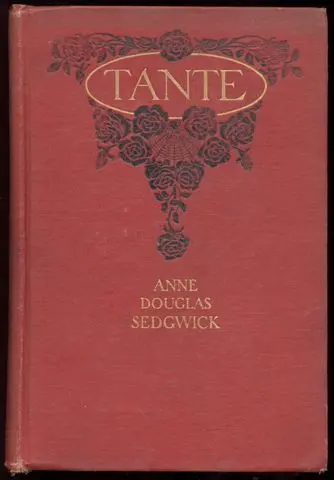
THE CLASSIC COLLECTION · 1911
"Tante" by Anne Douglas Sedgwick is a novel written in the early 20th century. The story unfolds against the backdrop of musical concerts in London, focusing on the iconic Madame Okraska, a celebrated pianist, and her enigmatic adopted daughter, Karen Woodruff. The relationship between these two characters hints at themes of devotion, artistic ambition, and the weight of personal history as they navigate the complexities of fame and expectation. The opening of the narrative immerses readers in the atmosphere of an eagerly awaited concert in London, where a diverse audience is gathered to witness Madame Okraska's performance. The description captures the anticipation, excitement, and social nuances of the attendees, emphasizing Okraska's unique blend of talent and beauty. As the concert commences, the initial excitement is contrasted by introspective moments experienced by Gregory Jardine, a barrister who becomes intrigued by Karen. Through their interactions, we begin to see the contrasting worlds they inhabit—one of public adoration and the other cloaked in personal challenges—setting the stage for deeper explorations of their intertwined destinies.
Introduction adapted from the source catalogue; source summaries may be automatically generated.
Free to read · English · 150,740 words · No account needed
MAKE TIME FOR A GOOD BOOK
On by default. Untick to stop anonymous reading totals. Each page counts after 10 seconds in view. How this works.
Anonymous counting is on unless you have switched it off.
"It is like old times, isn't it, Franz?" said Karen, ignoring her husband and addressing her former suitor. "It has been--oh, years--since I have heard such talk. Tante needs all of you, really, to draw her out. She has been wonderful this afternoon, hasn't she?"
"Ah, kolossal!" said Herr Lippheim, making no gesture, but expressing the depths of his appreciation by an emphasized solemnity of gaze.
"You are right, I think, and so does Tante, evidently," Karen continued, "about the tempo rubato in the Mozart. It is strange that Monsieur Ivanowski doesn't feel it."
"Ah! but that is it, he does feel it; it is only that he does not think it," said Herr Lippheim, now running his fingers through his hair. "Hear him play the Mozart. He then contradicts in his music all that his words have said."
But though Karen talked so pointedly to him, Herr Lippheim could not keep his eyes or his thoughts from Gregory. "You are a musician, too, Mr. Jardine?" he smiled, bending forward, blinking up through his glasses and laboriously carving out his excellent English. "You do not express, but you have the soul of an artist? Or perhaps you, too, play, like our Karen here."
"No," Gregory returned, with a chill utterance. "I know nothing about
music."
"Is it so, Karen?" Herr Lippheim questioned, his guileless warmth hardly
tempered.
"My husband is no artist," Karen answered.
It was from her tone rather than from Gregory's that Herr Lippheim seemed to receive his intimation; he was a little disconcerted; he could interpret Karen's tones. "Ach so! Ach so!" he said; but, his good-will still seeking to find its way to the polished and ambiguous person who had gained Karen's heart,--"But now you will live amongst artists, Mr. Jardine, and you will hear music, great music, played to you by the greatest. So you will come to feel it in the heart." And as Gregory, to this, made no reply, "You will educate him, Karen; is it not so? With you and the great Tante, how could it be otherwise?"
"I am afraid that one cannot create the love of art when it is not there, Franz," Karen returned. She was neither plaintive nor confiding; yet there was an edge in her voice which Gregory felt and which, he knew, he was intended to feel. Karen was angry with him.
"Have you seen Belot's portrait of Tante, yet, Franz?"--she again excluded her husband;--"It is just finished."
Herr Lippheim had seen it only that morning and he repeated, but now in preoccupied tones, "Kolossal!"
Your reading position is saved on this browser. Take it to another device with a library code. Reading pages adapt to text, rather than matching a printed edition.
Anne Douglas Sedgwick
Anne Douglas Sedgwick

Anne Douglas Sedgwick

Anne Douglas Sedgwick
BEHIND THE BOOK
This eBook is for the use of anyone anywhere in the United States and most other parts of the world at no cost and with almost no restrictions whatsoever. You may copy it, give it away or re-use it under the terms of the Project Gutenberg License included with this eBook or online at www.gutenberg.org. If you are not located in the United States, you will have to check the laws of the country where you are located before using this eBook. Read the source licence.
The original source file, including credits and licence, is retained by this library. Request an original-format copy at no charge. Please include the book title and Project Gutenberg identifier #30115.
KEEP YOUR CURIOSITY GOING
Coulson Kernahan

Maurice Baring
Frances Wright
Cécile Tormay

Frederic Jesup Stimson

W. H. P. (William Henry Pope) Jarvis