
Dark Hester
Anne Douglas Sedgwick
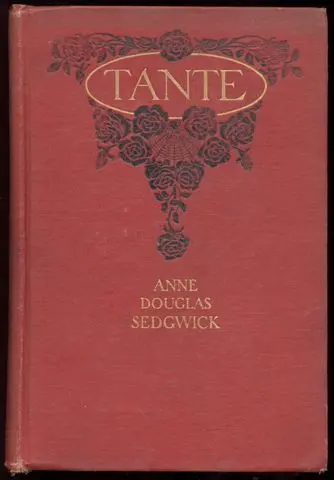
THE CLASSIC COLLECTION · 1911
"Tante" by Anne Douglas Sedgwick is a novel written in the early 20th century. The story unfolds against the backdrop of musical concerts in London, focusing on the iconic Madame Okraska, a celebrated pianist, and her enigmatic adopted daughter, Karen Woodruff. The relationship between these two characters hints at themes of devotion, artistic ambition, and the weight of personal history as they navigate the complexities of fame and expectation. The opening of the narrative immerses readers in the atmosphere of an eagerly awaited concert in London, where a diverse audience is gathered to witness Madame Okraska's performance. The description captures the anticipation, excitement, and social nuances of the attendees, emphasizing Okraska's unique blend of talent and beauty. As the concert commences, the initial excitement is contrasted by introspective moments experienced by Gregory Jardine, a barrister who becomes intrigued by Karen. Through their interactions, we begin to see the contrasting worlds they inhabit—one of public adoration and the other cloaked in personal challenges—setting the stage for deeper explorations of their intertwined destinies.
Introduction adapted from the source catalogue; source summaries may be automatically generated.
Free to read · English · 150,740 words · No account needed
MAKE TIME FOR A GOOD BOOK
On by default. Untick to stop anonymous reading totals. Each page counts after 10 seconds in view. How this works.
Anonymous counting is on unless you have switched it off.
Karen said that he must bring his cigar into the drawing-room, for Tante would smoke her cigarette with him, and there, until bedtime, things went as well as they had at dinner--or as badly; for part of their badness, Gregory more and more resentfully became aware, was that they were made to seem to go well, from her side, not from his.
She had a genius, veritably uncanny for, with all sweetness and hesitancy, revealing him as stiff and unresponsively complacent. It was impossible for him to talk freely with a person uncongenial to him of the things he felt deeply; and, pertinaciously, over her coffee and cigarettes, it was the deep things that she softly wooed him to share with her.
He might be stiff and stupid, but he flattered himself that he wasn't once short or sharp--as he would have been over and over again with any other woman who so bothered him. And he was sincerely unaware that his courtesy, in its dry evasiveness, was more repudiating than rudeness.
When Karen went with her guardian to her room that night, the little room that looked so choked and overcrowded with the great woman's multiplied necessities, Madame von Marwitz, sinking on the sofa, drew her to her and looked closely at her, with an intentness almost tragic, tenderly smoothing back her hair.
Karen looked back at her very firmly.
"Tell me, my child," Madame von Marwitz said, as if, suddenly, taking refuge in the inessential from the pressure of her own thoughts, "how did you find our Tallie? I have not heard of that from you yet."
"She is looking rather pale and thin, Tante; but she is quite well again; already she will go out into the garden," Karen answered, with, perhaps, an evident relief.
"That is well," said Madame von Marwitz with quiet satisfaction. "That is well. I cannot think of Tallie as ill. She is never ill. It is perhaps the peaceful, happy life she leads--povera--that preserves her. And the air, the wonderful air of our Cornwall. I fixed on Cornwall for the sake of Tallie, in great part; I sought for a truly halcyon spot where that faithful one might end her days in joy. You knew that, Karen?"
"No, Tante; you never told me that."
"It is so," Madame von Marwitz continued to muse, her eyes on the fire, "It is so. I have given great thought to my Tallie's happiness. She has earned it." And after a moment, in the same quiet tone, she went on. "This idea of yours, my Karen, of bringing Tallie up to town; was it wise, do you think?"
Your reading position is saved on this browser. Take it to another device with a library code. Reading pages adapt to text, rather than matching a printed edition.
Anne Douglas Sedgwick
Anne Douglas Sedgwick

Anne Douglas Sedgwick

Anne Douglas Sedgwick
BEHIND THE BOOK
This eBook is for the use of anyone anywhere in the United States and most other parts of the world at no cost and with almost no restrictions whatsoever. You may copy it, give it away or re-use it under the terms of the Project Gutenberg License included with this eBook or online at www.gutenberg.org. If you are not located in the United States, you will have to check the laws of the country where you are located before using this eBook. Read the source licence.
The original source file, including credits and licence, is retained by this library. Request an original-format copy at no charge. Please include the book title and Project Gutenberg identifier #30115.
KEEP YOUR CURIOSITY GOING
Coulson Kernahan

Maurice Baring
Frances Wright
Cécile Tormay

Frederic Jesup Stimson

W. H. P. (William Henry Pope) Jarvis