
Dark Hester
Anne Douglas Sedgwick
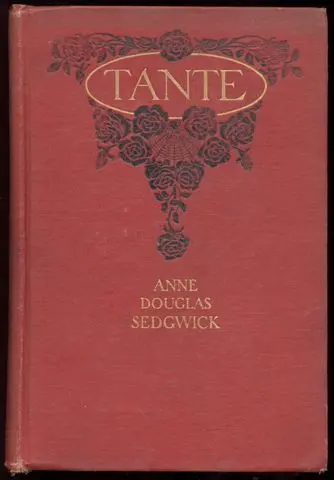
THE CLASSIC COLLECTION · 1911
"Tante" by Anne Douglas Sedgwick is a novel written in the early 20th century. The story unfolds against the backdrop of musical concerts in London, focusing on the iconic Madame Okraska, a celebrated pianist, and her enigmatic adopted daughter, Karen Woodruff. The relationship between these two characters hints at themes of devotion, artistic ambition, and the weight of personal history as they navigate the complexities of fame and expectation. The opening of the narrative immerses readers in the atmosphere of an eagerly awaited concert in London, where a diverse audience is gathered to witness Madame Okraska's performance. The description captures the anticipation, excitement, and social nuances of the attendees, emphasizing Okraska's unique blend of talent and beauty. As the concert commences, the initial excitement is contrasted by introspective moments experienced by Gregory Jardine, a barrister who becomes intrigued by Karen. Through their interactions, we begin to see the contrasting worlds they inhabit—one of public adoration and the other cloaked in personal challenges—setting the stage for deeper explorations of their intertwined destinies.
Introduction adapted from the source catalogue; source summaries may be automatically generated.
Free to read · English · 150,740 words · No account needed
MAKE TIME FOR A GOOD BOOK
On by default. Untick to stop anonymous reading totals. Each page counts after 10 seconds in view. How this works.
Anonymous counting is on unless you have switched it off.
She came, he fancied, with at first a little reluctance, but, as he put his arm around her, she leaned her head against his shoulder with a sigh. "I am tired, Gregory."
They stood thus for some moments and then, as if the confident tenderness their attitude expressed forced her to face with him their difficulty, she said carefully: "Gregory, dear, did you say anything to depress Tante this evening?"
"Why do you ask, darling?" Gregory, after a slight pause, also carefully
inquired.
"Only that she seemed depressed, very much depressed. I thought, I hoped that you and she were talking so nicely, so happily."
There was another little pause and then Gregory said: "She rather
depressed me, I think."
"Depressed you? But how, Gregory?"
He must indeed be very careful. It was far too late, now, for simple frankness; simple frankness had, perhaps, from the beginning been impossible and in that fact lay the insecurity of his position, and the immense advantage of Madame von Marwitz's. And as he paused and sought his words it was as if, in the image of the Bouddha, looking down upon him and Karen, Madame von Marwitz were with them now, a tranquil and ironic witness of his discomfiture. "Well," he said, "she made me feel that I had only a very dingy sort of life to offer you and that my friends were all very tiresome--borné was the word she used. That did rather--well--dash my spirits."
Standing there within his arm, of her face, seen from above, only the brow, the eyelashes, the cheek visible, she was very still for a long moment. Then, gently, she said--and in the gentleness he felt that she put aside the too natural suspicion that he was complaining of Tante behind her back: "She doesn't realise that I don't care at all about people. And they are rather bornés, aren't they, Gregory."
"I don't find them so," said Gregory, reasonably. "They aren't geniuses, of course, or acrobats, or saints, or anything of that sort; but they seem to me, on the whole, a very nice lot of people."
"Very nice indeed, Gregory. But I don't think it is saints and geniuses that Tante misses here; she misses minds that are able to recognise genius." Her quick ear had caught the involuntary irony of his quotation.
"Ah, but, dear, you mustn't expect to find the average nice person able to pay homage at a dinner-party. There is a time and a place for everything, isn't there."
Your reading position is saved on this browser. Take it to another device with a library code. Reading pages adapt to text, rather than matching a printed edition.
Anne Douglas Sedgwick
Anne Douglas Sedgwick

Anne Douglas Sedgwick

Anne Douglas Sedgwick
BEHIND THE BOOK
This eBook is for the use of anyone anywhere in the United States and most other parts of the world at no cost and with almost no restrictions whatsoever. You may copy it, give it away or re-use it under the terms of the Project Gutenberg License included with this eBook or online at www.gutenberg.org. If you are not located in the United States, you will have to check the laws of the country where you are located before using this eBook. Read the source licence.
The original source file, including credits and licence, is retained by this library. Request an original-format copy at no charge. Please include the book title and Project Gutenberg identifier #30115.
KEEP YOUR CURIOSITY GOING
Coulson Kernahan

Maurice Baring
Frances Wright
Cécile Tormay

Frederic Jesup Stimson

W. H. P. (William Henry Pope) Jarvis