
Dark Hester
Anne Douglas Sedgwick
THE CLASSIC COLLECTION · 1911
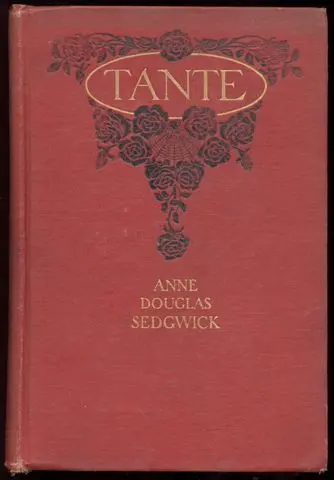
"Tante" by Anne Douglas Sedgwick is a novel written in the early 20th century. The story unfolds against the backdrop of musical concerts in London, focusing on the iconic Madame Okraska, a celebrated pianist, and her enigmatic adopted daughter, Karen Woodruff. The relationship between these two characters hints at themes of devotion, artistic ambition, and the weight of personal history as they navigate the complexities of fame and expectation. The opening of the narrative immerses readers in the atmosphere of an eagerly awaited concert in London, where a diverse audience is gathered to witness Madame Okraska's performance. The description captures the anticipation, excitement, and social nuances of the attendees, emphasizing Okraska's unique blend of talent and beauty. As the concert commences, the initial excitement is contrasted by introspective moments experienced by Gregory Jardine, a barrister who becomes intrigued by Karen. Through their interactions, we begin to see the contrasting worlds they inhabit—one of public adoration and the other cloaked in personal challenges—setting the stage for deeper explorations of their intertwined destinies.
Introduction adapted from the source catalogue; source summaries may be automatically generated.
Free to read · English · 150,740 words · No account needed
MAKE TIME FOR A GOOD BOOK
On by default. Untick to stop anonymous reading totals. Each page counts after 10 seconds in view. How this works.
Anonymous counting is on unless you have switched it off.
"Betty? Who is Betty?" Madame von Marwitz mournfully yet alertly
inquired.
"Lady Jardine, Gregory's sister-in-law. You remember, Tante, I have written of her. She has been so kind."
"Betty," Madame von Marwitz repeated, sadly. "Yes, I remember; she was at your wedding, I think. There, dry your eyes, child. I understand. It is a loving heart, but it forgot. The sad old Tante was crowded out by new friends--new joys."
"No, you must not say that, Tante. It is not true."
The hardness that Madame von Marwitz knew how to interpret was showing itself on Karen's face, despite the tears. Her guardian rose, passing her arm around her shoulders. "It is not true, then, chérie. When one is very sad one is foolish. Ah, I know it; one imagines too quickly things that are not true. They float and then they cling, like the tiny barbed down of the thistle, and then, behold, one's brain is choked with thorny weeds. That is how it comes, my Karen. Forgive me. There; kiss me."
"Darling Tante," Karen murmured, clasping her closely. "Nothing, nothing crowded you out. Nothing could ever crowd you out. Say that you believe me. Say that all the thistles are rooted up and thrown away."
"Rooted up and burned--burned root and branch, my child. I promise it. I trust my child; she is mine; my loving one. Ainsi soit-il. And now," Madame von Marwitz spoke with sudden gaiety, "and now show me your home, my Karen, show me all over this home of yours to which already you are so attached. Ah--it is a child in love!"
They went from room to room, their arms around each other's waists. Madame von Marwitz cast her spell over Mrs. Barker in the kitchen, and smiled a long smile upon Rose, the housemaid. "Yes, yes, very nice, very pretty," she said, in the spare-room, the little dressing-room, the dining-room and kitchen. In Karen's room, with its rose-budded chintz and many photographs of herself, of Gregory, she paused and looked about. "Very, very pretty," she repeated. "You like bedsteads of brass, my Karen?"
"Yes, Tante. They look so clean and bright."
"So clean and bright. I do not think that I could sleep in brass," Madame von Marwitz mused. "But it is a simple child."
"Yes, that is just it, Tante," said Karen, smiling. "And I wanted to explain to you about the drawing-room. You see it is that; I am simple; not a sea-anemone of taste, like you. I quite well see things. I see that Les Solitudes is beautiful, and that this is not like Les Solitudes. Yet I like it here just as it is."
Your reading position is saved on this browser. Take it to another device with a library code. Reading pages adapt to text, rather than matching a printed edition.
Anne Douglas Sedgwick
Anne Douglas Sedgwick

Anne Douglas Sedgwick

Anne Douglas Sedgwick
BEHIND THE BOOK
This eBook is for the use of anyone anywhere in the United States and most other parts of the world at no cost and with almost no restrictions whatsoever. You may copy it, give it away or re-use it under the terms of the Project Gutenberg License included with this eBook or online at www.gutenberg.org. If you are not located in the United States, you will have to check the laws of the country where you are located before using this eBook. Read the source licence.
The original source file, including credits and licence, is retained by this library. Request an original-format copy at no charge. Please include the book title and Project Gutenberg identifier #30115.
KEEP YOUR CURIOSITY GOING
Coulson Kernahan

Maurice Baring
Frances Wright
Cécile Tormay

Frederic Jesup Stimson

W. H. P. (William Henry Pope) Jarvis