
Dark Hester
Anne Douglas Sedgwick
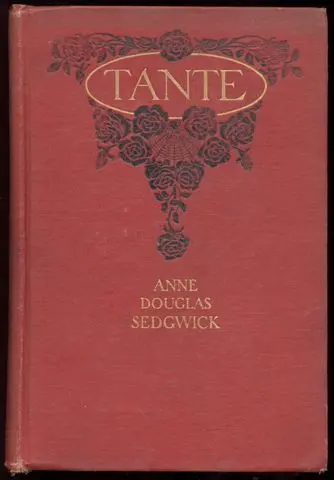
THE CLASSIC COLLECTION · 1911
"Tante" by Anne Douglas Sedgwick is a novel written in the early 20th century. The story unfolds against the backdrop of musical concerts in London, focusing on the iconic Madame Okraska, a celebrated pianist, and her enigmatic adopted daughter, Karen Woodruff. The relationship between these two characters hints at themes of devotion, artistic ambition, and the weight of personal history as they navigate the complexities of fame and expectation. The opening of the narrative immerses readers in the atmosphere of an eagerly awaited concert in London, where a diverse audience is gathered to witness Madame Okraska's performance. The description captures the anticipation, excitement, and social nuances of the attendees, emphasizing Okraska's unique blend of talent and beauty. As the concert commences, the initial excitement is contrasted by introspective moments experienced by Gregory Jardine, a barrister who becomes intrigued by Karen. Through their interactions, we begin to see the contrasting worlds they inhabit—one of public adoration and the other cloaked in personal challenges—setting the stage for deeper explorations of their intertwined destinies.
Introduction adapted from the source catalogue; source summaries may be automatically generated.
Free to read · English · 150,740 words · No account needed
MAKE TIME FOR A GOOD BOOK
On by default. Untick to stop anonymous reading totals. Each page counts after 10 seconds in view. How this works.
Anonymous counting is on unless you have switched it off.
"Ah, my dear, you are too generous to that young man," Miss Scrotton mused. "It's beautiful, it's wonderful to watch; but you are, indeed, too kind to him." She mused, she was absent, yet she knew, and knew that Mercedes knew, that never before in all their intercourse had she ventured on such a speech. It implied watchfulness; it implied criticism; it implied, even, anxiety; it implied all manner of things that it was not permitted for a satellite to say.
The Baroness's eyes were on her letter, and though she did not raise them her dark brows lifted. "Tiens," she continued, "you find that I am too kind to him?"
Miss Scrotton, to keep up the appearance of ingenuousness, was forced to further definition. "I don't think, darling, that in your sympathy, your solicitude, where young talent is concerned, you quite realize how much you give, how much you can be made use of. The man admires you, of course, and has, of course, talent of a sort. Yet, when I see you together, I confess that I receive sometimes the impression of a scattering of pearls."
Madame von Marwitz laid down her letter. "Ah! ah!--oh! oh!--ma bonne," she said. She laughed out. Her eyes were lit with dancing sparks. "Do you know you speak as if you were very, very jealous of this young man who is found so charming?"
"Jealous, my dear Mercedes?" Miss Scrotton's emotion showed itself in a
dark flush.
"Mais oui; mais oui; you tell me that my friend is a swine. Does that not mean that you, of late, have received too few pearls?"
"My dear Mercedes! Who called him a swine?"
"One doesn't speak of scattered pearls without rousing these associations." Her tone was beaming.
Was it possible to swallow such an affront? Was it possible not to? And she had brought it upon herself. There was comfort and a certain restoration of dignity in this thought. Miss Scrotton, struggling inwardly, feigned lightness. "So few of us are worthy of your pearls, dear. Unworthiness doesn't, I hope, consign us to the porcine category. Perhaps it is that being, like him, a little person, I'm able to see Mr. Drew's merits and demerits more impartially than you do. That is all. I really ought to know a good deal about Mr. Drew," Miss Scrotton pursued, regaining more self-control, now that she had steered her way out of the dreadful shoals where her friend's words had threatened to sink her; "I've known him since the days when he was at Oxford and I used to stay there with my uncle the Dean. He was sitting, then, at the feet of Pater. It's a derivative, a parvenu talent, and, I do feel it, I confess I do, a derivative personality altogether, like that of so many of these clever young men nowadays. He is, you know, of anything but distinguished antecedents, and his reaction from his own milieu has been, perhaps, from the first, a little marked. Unfortunately his marriage is there to remind people of it, and I never see Mr. Drew dans le monde without, irrepressibly, thinking of the dismal little wife in Surbiton whom I once called upon, and his swarms--but swarms, my dear--of large-mouthed children."
Your reading position is saved on this browser. Take it to another device with a library code. Reading pages adapt to text, rather than matching a printed edition.
Anne Douglas Sedgwick
Anne Douglas Sedgwick

Anne Douglas Sedgwick

Anne Douglas Sedgwick
BEHIND THE BOOK
This eBook is for the use of anyone anywhere in the United States and most other parts of the world at no cost and with almost no restrictions whatsoever. You may copy it, give it away or re-use it under the terms of the Project Gutenberg License included with this eBook or online at www.gutenberg.org. If you are not located in the United States, you will have to check the laws of the country where you are located before using this eBook. Read the source licence.
The original source file, including credits and licence, is retained by this library. Request an original-format copy at no charge. Please include the book title and Project Gutenberg identifier #30115.
KEEP YOUR CURIOSITY GOING
Coulson Kernahan

Maurice Baring
Frances Wright
Cécile Tormay

Frederic Jesup Stimson

W. H. P. (William Henry Pope) Jarvis