
Letters to a Friend, Written to Mrs. Ezra S. Carr, 1866-1879
John Muir
THE CLASSIC COLLECTION · 1878
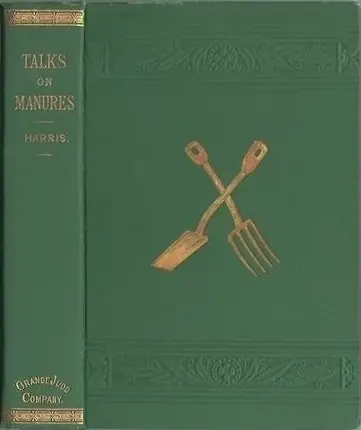
"Talks on Manures" by Joseph Harris is a practical agricultural guide written in the late 19th century. This work adopts a conversational format, featuring discussions between the author, a deacon, a doctor, and other local farmers concerning the role and importance of manures and fertilizers in farming. It aims to provide insights into effective farming practices that can enhance soil fertility and improve crop yields. The opening of the book sets the stage for a series of dialogue-driven discussions on various aspects of farming and manures. The author introduces concepts like the necessity of personal investment in farming, various definitions of manure, and the importance of drawing out soil nutrients for crop growth. Through illustrative conversations, Harris challenges common beliefs about farming practices, highlighting how even experienced farmers grapple with ideas of soil productivity and the necessity of fertilizers. Each interaction builds a foundation for a deeper exploration into agricultural science and practical methods for enhancing crop production.
Introduction adapted from the source catalogue; source summaries may be automatically generated.
Free to read · English · 149,155 words · No account needed
MAKE TIME FOR A GOOD BOOK
On by default. Untick to stop anonymous reading totals. Each page counts after 10 seconds in view. How this works.
Anonymous counting is on unless you have switched it off.
“I thought,” said he, “that on the part of the field where the clover was allowed to go to seed, Dr. Vœlcker found a great increase in the amount of nitrogen.”
“That seems to be the general impression,” said the Doctor, “but in point of fact, we have no proof that the growth of clover, either for hay or for seed, had anything to do with the quantity of nitrogen and phosphoric acid found in the soil. The facts given by Dr. Vœlcker, are exceedingly interesting. Let us look at them:
“A field of 11 acres was sown to winter-wheat, and seeded down in the spring, with 13 lbs. per acre of clover. The wheat yielded 40 bushels per acre. The next year, on the 25th of June, the clover was mown for hay. We are told that ‘the best part of the field yielded three tons (6,720 lbs.) of clover-hay per acre; the whole field averaging 2½ tons (5,600 lbs.) per acre.’
“We are not informed how much land there was of the ‘best part,’ but assuming that it was half the field, the poorer part must have yielded only 4,480 lbs. of hay per acre, or only two-thirds as much as the other. This shows that there was considerable difference in the quality or condition of the land.
“After the field was mown for hay, it was divided into two parts: one part was mown again for hay, August 21st, and yielded about 30 cwt. (3,360 lbs.) of hay per acre; the other half was allowed to grow six or seven weeks longer, and was then (October 8th), cut for seed. The yield was a little over 5½ bushels of seed per acre. Whether the clover allowed to grow for seed, was on the richer or poorer half of the field, we are not informed.
“Dr. Vœlcker then analyzed the soil. That from the part of the field mown twice for hay, contained per acre:
First six Second six Third six Total, 18 inches. inches. inches. inches deep. Phosphoric acid 4,950 2,725 3,575 11,250 Nitrogen 3,350 1,875 1,325 6,550
“The soil from the part mown once for hay, and then for seed,
contained per acre:
First six Second six Third six Total, 18 inches. inches. inches. inches deep. Phosphoric acid 3,975 4,150 3,500 11,625 Nitrogen 4,725 3,350 2,225 10,300
“Dr. Vœlcker also ascertained the amount and composition of the clover-roots growing in the soil on the two parts of the field. On the part mown twice for hay, the roots contained per acre 24½ lbs. of nitrogen. On the part mown once for hay, and then for seed, the roots contained 51½ lbs. of nitrogen per acre.”
Your reading position is saved on this browser. Take it to another device with a library code. Reading pages adapt to text, rather than matching a printed edition.
BEHIND THE BOOK
This eBook is for the use of anyone anywhere in the United States and most other parts of the world at no cost and with almost no restrictions whatsoever. You may copy it, give it away or re-use it under the terms of the Project Gutenberg License included with this eBook or online at www.gutenberg.org. If you are not located in the United States, you will have to check the laws of the country where you are located before using this eBook. Read the source licence.
The original source file, including credits and licence, is retained by this library. Request an original-format copy at no charge. Please include the book title and Project Gutenberg identifier #19448.
KEEP YOUR CURIOSITY GOING
John Muir

Asa Gray
Asa Gray

Florence Nightingale
Elizabeth Robins Pennell
Denison Olmsted