
Letters to a Friend, Written to Mrs. Ezra S. Carr, 1866-1879
John Muir
THE CLASSIC COLLECTION · 1878
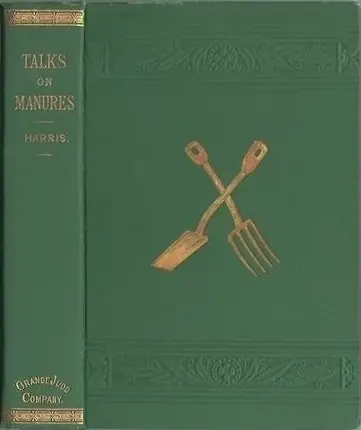
"Talks on Manures" by Joseph Harris is a practical agricultural guide written in the late 19th century. This work adopts a conversational format, featuring discussions between the author, a deacon, a doctor, and other local farmers concerning the role and importance of manures and fertilizers in farming. It aims to provide insights into effective farming practices that can enhance soil fertility and improve crop yields. The opening of the book sets the stage for a series of dialogue-driven discussions on various aspects of farming and manures. The author introduces concepts like the necessity of personal investment in farming, various definitions of manure, and the importance of drawing out soil nutrients for crop growth. Through illustrative conversations, Harris challenges common beliefs about farming practices, highlighting how even experienced farmers grapple with ideas of soil productivity and the necessity of fertilizers. Each interaction builds a foundation for a deeper exploration into agricultural science and practical methods for enhancing crop production.
Introduction adapted from the source catalogue; source summaries may be automatically generated.
Free to read · English · 149,155 words · No account needed
MAKE TIME FOR A GOOD BOOK
On by default. Untick to stop anonymous reading totals. Each page counts after 10 seconds in view. How this works.
Anonymous counting is on unless you have switched it off.
“These three portions of one foot of soil, 18 inches deep, were dried nearly completely, and weighed again; when the first six inches weighed 51¼ lbs.; the second six inches, 51 lbs. 5 oz.; and the third section, 54 lbs. 2 oz.
“The first six inches contained 3 lbs. of silicious stones, (flints), which were rejected in preparing a sample for analysis; in the two remaining sections there were no large sized stones. The soils were pounded down, and passed through a wire sieve.
“The three layers of soil, dried and reduced to powder, were mixed together, and a prepared average sample, when submitted to analysis, yielded the following results:
Composition of Clover-Soil, 18 Inches Deep, From Part of 11-Acre
Field, Twice Mown for Hay.
{Organic matter 5.86 {Oxides of iron 6.83 {Alumina 7.12 {Carbonate of lime 2.13 Soluble in {Magnesia 2.01 hydrochloric acid. {Potash .67 {Soda .08 {Chloride of sodium .02 {Phosphoric acid .18 {Sulphuric acid .17
{Insoluble silicious matter, 74.61. { Consisting of: {Alumina 4.37 {Lime, (in a state of silicate) 4.07 Insoluble in acid {Magnesia .46 {Potash .19 {Soda .23 {Silica 65.29 ----- 99.68 =====
“This soil, it will be seen, contained, in appreciable quantities, not only potash and phosphoric acid, but all the elements of fertility which enter into the composition of good arable land. It may be briefly described as a stiff clay soil, containing a sufficiency of lime, potash, and phosphoric acid, to meet all the requirements of the clover-crop. Originally, rather unproductive, it has been much, improved by deep culture; by being smashed up into rough clods, early in autumn, and by being exposed in this state to the crumbling effects of the air, it now yields good corn and forage crops.
“In separate portions of the three layers of soil, the proportions of nitrogen and phosphoric acid contained in each layer of six inches, were determined and found to be as follows:
Soil dried at 212 deg. Fahr.
1st six 2d six 3d six inches. inches. inches. Percentage of phosphoric acid .249 .134 .172 Nitrogen 1.62 .092 .064 Equal to ammonia .198 .112 .078
“In the upper six inches, as will be seen, the percentage of both phosphoric acid and nitrogen, was larger than in the two following layers, while the proportion of nitrogen in the six inches of surface soil, was much larger than in the next six inches; and in the third section, containing no visible particles of root-fibres, only very little nitrogen occurred.
“In their natural state, the three layers of soil contained:
1st six 2d six 3d six inches. inches. inches. Moisture 17.16 18.24 16.62 Phosphoric acid .198 .109 .143 Nitrogen .134 .075 .053 Equal to ammonia .162 .091 .064 Lbs. Lbs. Lbs. Weight of one foot square of soil 60 61 63
“Calculated per acre, the absolute weight of one acre of this land, six
inches deep, weighs:
Lbs.
1st six inches 2,613,600
2d six inches 2,657,160
3d six inches 2,746,280
=========
Your reading position is saved on this browser. Take it to another device with a library code. Reading pages adapt to text, rather than matching a printed edition.
BEHIND THE BOOK
This eBook is for the use of anyone anywhere in the United States and most other parts of the world at no cost and with almost no restrictions whatsoever. You may copy it, give it away or re-use it under the terms of the Project Gutenberg License included with this eBook or online at www.gutenberg.org. If you are not located in the United States, you will have to check the laws of the country where you are located before using this eBook. Read the source licence.
The original source file, including credits and licence, is retained by this library. Request an original-format copy at no charge. Please include the book title and Project Gutenberg identifier #19448.
KEEP YOUR CURIOSITY GOING
John Muir

Asa Gray
Asa Gray

Florence Nightingale
Elizabeth Robins Pennell
Denison Olmsted