
Letters to a Friend, Written to Mrs. Ezra S. Carr, 1866-1879
John Muir
THE CLASSIC COLLECTION · 1878
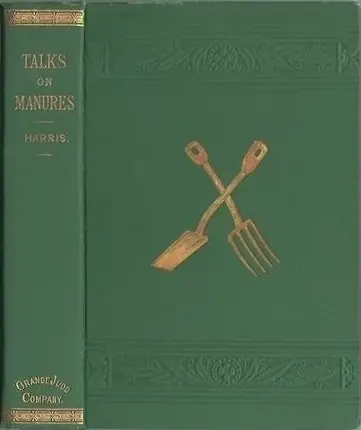
"Talks on Manures" by Joseph Harris is a practical agricultural guide written in the late 19th century. This work adopts a conversational format, featuring discussions between the author, a deacon, a doctor, and other local farmers concerning the role and importance of manures and fertilizers in farming. It aims to provide insights into effective farming practices that can enhance soil fertility and improve crop yields. The opening of the book sets the stage for a series of dialogue-driven discussions on various aspects of farming and manures. The author introduces concepts like the necessity of personal investment in farming, various definitions of manure, and the importance of drawing out soil nutrients for crop growth. Through illustrative conversations, Harris challenges common beliefs about farming practices, highlighting how even experienced farmers grapple with ideas of soil productivity and the necessity of fertilizers. Each interaction builds a foundation for a deeper exploration into agricultural science and practical methods for enhancing crop production.
Introduction adapted from the source catalogue; source summaries may be automatically generated.
Free to read · English · 149,155 words · No account needed
MAKE TIME FOR A GOOD BOOK
On by default. Untick to stop anonymous reading totals. Each page counts after 10 seconds in view. How this works.
Anonymous counting is on unless you have switched it off.
“9. Rotten dung is richer in nitrogen than fresh.
“10. Weight for weight, rotten dung is more valuable than fresh.
“11. In the fermentation of dung, a very considerable proportion of the organic matters in fresh manure is dissipated into the air in the form of carbonic acid and other gases.
“12. Properly regulated, however, the fermentation of dung is not attended with any great loss of nitrogen, nor of saline mineral matters.
“13. During the fermentation of dung, ulmic, humic, and other organic acids are formed, as well as gypsum, which fix the ammonia generated in the decomposition of the nitrogenized constituents of dung.
“14. During the fermentation of dung, the phosphate of lime which it contains is rendered more soluble than in fresh manure.
“15. In the interior and heated portions of manure-heaps, ammonia is given off; but, on passing into the external and cold layers of dung-heaps, the free ammonia is retained in the heap.
“16. Ammonia is not given off from the surface of well-compressed dung-heaps, but on turning manure-heaps, it is wasted in appreciable quantities. Dung-heaps, for this reason, should not be turned more frequently than absolutely necessary.
“17. No advantage appears to result from carrying on the fermentation of dung too far, but every disadvantage.
“18. Farm-yard manure becomes deteriorated in value, when kept in heaps exposed to the weather, the more the longer it is kept.
“19. The loss in manuring matters, which is incurred in keeping manure-heaps exposed to the weather, is not so much due to the volatilization of ammonia as to the removal of ammoniacal salts, soluble nitrogenized organic matters, and valuable mineral matters, by the rain which falls in the period during which the manure is kept.
“20. If rain is excluded from dung-heaps, or little rain falls at a time, the loss in ammonia is trifling, and no saline matters, of course, are removed; but, if much rain falls, especially if it descends in heavy showers upon the dung-heap, a serious loss in ammonia, soluble organic matter, phosphate of lime, and salts of potash is incurred, and the manure becomes rapidly deteriorated in value, whilst at the same time it is diminished in weight.
“21. Well-rotten dung is more readily affected by the deteriorating influence of rain than fresh manure.
“22. Practically speaking, all the essentially valuable manuring constituents are preserved by keeping farm-yard manure under cover.
“23. If the animals have been supplied with plenty of litter, fresh dung contains an insufficient quantity of water to induce an active fermentation. In this case, fresh dung can not be properly fermented under cover, except water or liquid manure is pumped over the heap from time to time.
Your reading position is saved on this browser. Take it to another device with a library code. Reading pages adapt to text, rather than matching a printed edition.
BEHIND THE BOOK
This eBook is for the use of anyone anywhere in the United States and most other parts of the world at no cost and with almost no restrictions whatsoever. You may copy it, give it away or re-use it under the terms of the Project Gutenberg License included with this eBook or online at www.gutenberg.org. If you are not located in the United States, you will have to check the laws of the country where you are located before using this eBook. Read the source licence.
The original source file, including credits and licence, is retained by this library. Request an original-format copy at no charge. Please include the book title and Project Gutenberg identifier #19448.
KEEP YOUR CURIOSITY GOING
John Muir

Asa Gray
Asa Gray

Florence Nightingale
Elizabeth Robins Pennell
Denison Olmsted