THE CLASSIC COLLECTION✦The Catholic Church and conversionCLASSIC FREE BOOKS
The Catholic Church and conversion
G. K. (Gilbert Keith) Chesterton
THE CLASSIC COLLECTION · 1925
"Tales of the Long Bow" by G. K. Chesterton is a collection of intriguing stories likely written in the early 20th century. The narratives revolve around eccentric characters and improbable events, showcasing the whimsical and sometimes absurd nature of human existence. The opening tale introduces Colonel Crane, a seemingly typical and respectable military man, who surprises his conservative neighbors by walking to church with a cabbage on his head, setting the stage for a humorous exploration of social conventions and individuality. At the start of the tale, the narrative establishes the context in a mundane suburban setting, with Colonel Crane appearing as a mundane figure among ordinary neighbors. However, a mysterious note leads him to behave quite unconventionally, culminating in his decision to wear a cabbage as a hat while on his way to church. This peculiar act attracts the attention and bewilderment of those around him, particularly focusing on a young woman named Audrey Smith, who admires Crane's audacity. The interaction between the Colonel and Audrey hints at deeper themes of societal pressures, identity, and the tension between convention and individual expression. The opening portion sets a humorous yet thought-provoking tone, inviting readers to ponder the nature of normalcy and the courage it takes to defy it.
Introduction adapted from the source catalogue; source summaries may be automatically generated.
Free to read · English · 62,571 words · No account needed
MAKE TIME FOR A GOOD BOOK
On by default. Untick to stop anonymous reading totals. Each page counts after 10 seconds in view. How this works.
Anonymous counting is on unless you have switched it off.
“It is said that the men of the Long Bow carried their mediæval symbolism so far as to wear Lincoln green as their uniform when they retired to the woods in the manner of Robin Hood. It is certain that they did employ the weapon after which they were named; and curiously enough, as will be seen, by no means without effect. But it must be clearly understood that when the new agrarian class took to the woods like outlaws, they did not feel in the least like robbers. They hardly even felt like rebels. From their point of view at least, they were and had long been the lawful owners of their own fields, and the officials who came to confiscate were the robbers. Therefore when Lord Eden proclaimed Nationalization, they turned out in thousands as their fathers would have gone out against pirates or wolves.
“The Government acted with great promptitude. It instantly voted £50,000 to Mr. Rosenbaum Low, the expenditure of which was wisely left to his discretion at so acute a crisis, with no more than the understanding that he should take a thorough general survey of the situation. He proved worthy of the trust; and it was with the gravest consideration and sense of responsibility that he selected Mr. Leonard Kramp, the brilliant young financier, from all his other nephews to take command of the forces in the field. In the field, however, fortune is well known to be somewhat more incalculable; and all the intelligence and presence of mind that had enabled Kramp to postpone the rush on the Potosi Bank were not sufficient to balance the accidental possession by Crane and Pierce of an elementary knowledge of strategy.
“Before considering the successes obtained by these commanders in the rather rude fashion of warfare which they were forced to adopt, it must be noted, of course, that even on their side there were also scientific resources of a kind; and an effective if eccentric kind. The scientific genius of Bellew Blair had equipped his side with many secret processes affecting aviation and aeronautics, and it is the peculiarity of this extraordinary man that his secret processes really remained for a considerable time secret. For he had not told them to anybody with any intention of making any money out of them. This quixotic and visionary behaviour contrasted sharply with the shrewd good sense of the great business men who knew that publicity is the soul of business. For some time past they had successfully ignored the outworn sentimental prejudice that had prevented soldiers and sailors from advertising the best methods of defeating the enemy; and we can all recall those brilliantly coloured announcements which used to brighten so many hoardings in those days, ‘Sink in Smith’s Submarine; Pleasure Trips for Patriots.’ Or ‘Duffin’s Portable Dug-Out Makes War a Luxury.’ Advertisement cannot fail to effect its aim; the name of an aeroplane that had been written on the sky in pink and pea-green lights could not but become a symbol of the conquest of the air; and the patriotic statesman, deeply considering what sort of battleship might best defend his country’s coasts, was insensibly and subtly influenced by the number of times that he had seen its name repeated on the steps of a moving staircase at an Imperial Exhibition. Nor could there be any doubt about the brilliant success that attended these scientific specialities so long as their operations were confined to the market. The methods of Commander Blair were in comparison private, local, obscure and lacking any general recognition; and by a strange irony it was a positive advantage to this nameless and secretive crank that he had never advertised his weapons until he used them. He had paraded a number of merely fanciful balloons and fireworks for a jest; but the secrets to which he attached importance he had hidden in cracks of the Welsh mountains with a curious and callous indifference to the principles of commercial distribution and display. He could not in any case have conducted operations on a large scale, being deficient in that capital, the lack of which has so often been fatal to inventors; and had made it useless for a man to discover a machine unless he could also discover a millionaire. But it cannot be denied that when his machine was brought into operation it was always operative, even to the point of killing the millionaire who might have financed it. For the millionaire had so persistently cultivated the virtues of self-advertisement that it was difficult for him to become suddenly unknown and undistinguished, even in scenes of conflict where he most ardently desired to do so. There was a movement on foot for treating all millionaires as non-combatants, as being treasures belonging alike to all nations, like the Cathedrals or the Parthenon. It is said that there was even an alternative scheme for camouflaging the millionaire by the pictorial methods that can disguise a gun as a part of the landscape; and that Captain Pierce devoted much eloquence to persuading Mr. Rosenbaum Low how much better it would be for all parties if his face could be made to melt away into the middle distance or take on the appearance of a blank wall or a wooden post.”
Your reading position is saved on this browser. Take it to another device with a library code. Reading pages adapt to text, rather than matching a printed edition.
G. K. (Gilbert Keith) Chesterton
G. K. (Gilbert Keith) Chesterton
G. K. (Gilbert Keith) Chesterton
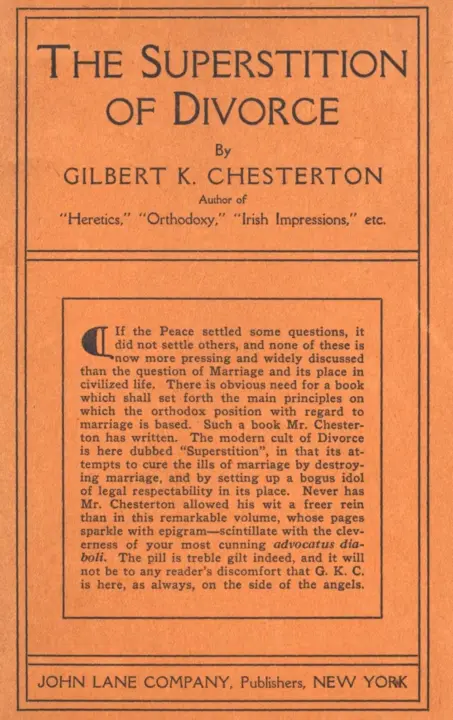
G. K. (Gilbert Keith) Chesterton
BEHIND THE BOOK
This eBook is for the use of anyone anywhere in the United States and most other parts of the world at no cost and with almost no restrictions whatsoever. You may copy it, give it away or re-use it under the terms of the Project Gutenberg License included with this eBook or online at www.gutenberg.org. If you are not located in the United States, you will have to check the laws of the country where you are located before using this eBook. Read the source licence.
The original source file, including credits and licence, is retained by this library. Request an original-format copy at no charge. Please include the book title and Project Gutenberg identifier #69185.
KEEP YOUR CURIOSITY GOING
Coulson Kernahan

Maurice Baring
Frances Wright
Cécile Tormay

Frederic Jesup Stimson

W. H. P. (William Henry Pope) Jarvis