THE CLASSIC COLLECTION✦My diaries, being a personal narrative of events 1888-1914, Part 2 (1900-1914)CLASSIC FREE BOOKS
My diaries, being a personal narrative of events 1888-1914, Part 2 (1900-1914)
Wilfrid Scawen Blunt
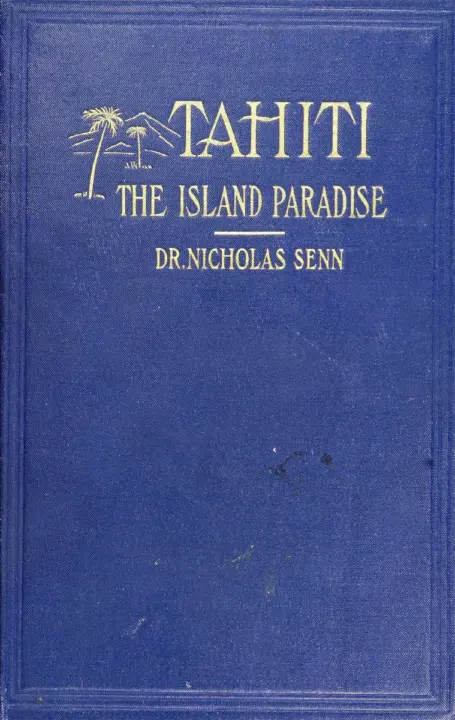
THE CLASSIC COLLECTION · 1906
"Tahiti, the Island Paradise" by Nicholas Senn is a travelogue written in the early 20th century. This descriptive work showcases the natural beauty, culture, and history of Tahiti, a remote island in the South Pacific, emphasizing its idyllic landscape and the tranquil lifestyle of its inhabitants. Senn captures the charm and allure of Tahiti, depicting it as a paradise untouched by the burdens of modern life. At the start of the book, the author introduces readers to the breathtaking beauty of Tahiti, describing its lush vegetation, tranquil climate, and friendly natives, who live carefree lives provided for by nature. He reflects on the island's cultural richness and its historical significance while hinting that visitors can enjoy restorative vacations amidst stunning scenery. The opening sets the stage for a journey into the depths of Tahitian life, inviting readers to explore the island's wonders through the author's keen observations and vivid descriptions.
Introduction adapted from the source catalogue; source summaries may be automatically generated.
Free to read · English · 55,084 words · No account needed
MAKE TIME FOR A GOOD BOOK
On by default. Untick to stop anonymous reading totals. Each page counts after 10 seconds in view. How this works.
Anonymous counting is on unless you have switched it off.
Ariitaimai, in her own beautiful home at Papara, pondered over the wretched state of her beloved country and her heart was sore both for her idolized friend and poor bleeding Tahiti. Was there no way out of this Slough of Despond into which the foreigners had plunged her unhappy country? She knew the temper of the island chiefs and that they had sworn to die fighting for the independence of their country. She remembered the fate of Tati, who had been branded a traitor with Opuhara's last breath because he counseled submission to the English, and she dared not propose to them any compromising measures. She looked out despairingly over the trackless sea, and appealingly up at the towering mountains which had been her companions during prosperity and adversity, but no answer came to her anxious questionings. Then suddenly, one day, word was brought to her by an old woman of her clan that two French frigates had landed in the harbor of Tahiti. She knew this meant the end, unless Queen Pomare could be persuaded to return to Tahiti and accept the offer of the French. The old crone who had brought her the news said to her: "Don't you know that you are the first in the Island, and that it remains in your hands to save all this and your land?" Then Ariitaimai hesitated no longer, but hastened to the governor and told him what she had heard. He replied: "You have heard the truth. The colonel commanding the troops has heard of so many instances of insult given to the French that we have decided at last to go out and finish up the affair." This brusque answer aroused in Ariitaimai all the stored-up energy of years. She became immediately the diplomatic representative of her people, and begged the governor to give her a few days that she might see the chiefs and make at least an effort to avert the terrible havoc to lives and property which this would cause. Ariitaimai was well known to the governor, and although evidently amused that a young woman should take upon herself this difficult task, readily consented. Like two generals they sat down and talked over all the terms of the peace; the governor agreeing to restore Pomare to her throne if she would return immediately, and to leave the chiefs in possession of their estates and control each of his own chiefery, all to be under the protection of the French flag. This, he said, they were willing to do, although the Queen had broken her written agreement with them, and by deserting her country and throne had absolved them from all obligations to her. Before the conclusion of the interview Ariitaimai had won the respect and admiration of the governor, and from that time on they worked together to bring about a peaceable settlement of the long and disastrous war. The journey which she was obliged to make in order to meet the chiefs in council was a long one, and while she was making her preparations the governor's own aid-de-camp arrived ready to accompany her, bringing the governor's horses and all necessary passports. She says in her memoirs: "I knew that my influence with the natives would be sufficient to save us from any trouble with them." Arrived at last at the principal native fort where the chiefs were assembled, her first act showed her the accomplished diplomat. She sent a trusty messenger for Nuutere, the one whose influence against peace she most feared, and who with the other chief, Teaatoro, practically controlled the situation. When he came out to see her she took him by the hand and said: "My object in coming here is to bring peace, and I have counted on you for the sake of old friendship to be my speaker in this trying instance." She quaintly adds: "He was very much perplexed at this," evidently not understanding why she could not speak for herself as she had often done before. But to her surprise Ariitaimai found the old chief very much broken in spirit and quite ready to listen to her arguments for peace, and she soon had his promise to speak for the acceptance of the governor's proposition. Human nature is very much the same the world over, whether encased in a brown skin or white. Nuutere called Teaatoro to him, and, after a hasty consultation, came over and whispered to Ariitaimai that Teaatoro would be all right. This practically settled the matter, but as in all political assemblies the usual formalities must be gone through with and Nuutere called upon each one of the chiefs for his opinion. The speakers all teemed with love and admiration for my heroine and I can not refrain from making some quotations. Nuutere, after stating the object of the meeting, called upon Teaatoro to make the first speech. He said: "We are all as one person in this meeting, and we have suffered together as brothers. We have heard what the object of this lone woman's visit amongst us is, solely for our good and that of our children. What can we say to this? We can only return her one answer, which is to thank her for the trouble and danger she has taken upon herself, for the peace she has brought, and she must return to the French commander with this our answer. We have been five months on the point of starvation. We lost a great many of our men at Tamavao. The best of our blood was spilled at Mahaena. At Piha-e-atata, our young men were slain. Our Queen left us in the midst of our troubles without the least sorrow for us. We have heard no more of the help which was promised us by Great Britain." Another chief rose and said: "Ariitaimai, you have flown amongst us, as it were, like the two birds of Ruataa and Teena. You have brought the cooling medicine of vainu into the hearts of the chiefs. Our hearts yearn for you and we can not in words thank you; you have brought us the best of all goods, which is peace. You have done this when you thought we were in great trouble, and ran the risk of losing our lives and property. Your people will prove to you in the future that your visit will always remain in their memory." The old chief of her own district turned toward Ariitaimai and said only: "As you are my head, my eyes, my hands and my feet, what more can I say? What you have decided we accept and will carry out." One dissenting voice only was heard, a young chief who had but lately come into his possessions and was anxious to distinguish himself as a warrior. He called out in a loud voice: "Why have you decided upon this peace so soon? Tahiti is not broken asunder. We could play with the French until we could get aid of Great Britain, who has formally promised to help us through in this war. I think you have all done wrong." But the young man had his lesson to learn and it was promptly taught him by Ariitaimai's spokesman. The spirit of young America is not appreciated in Tahiti, where reverence for age and worship of the ancestors is a vital part of the native pagan religion. Nuutere turned on the young man and asked: "Where were you, that consider yourself such a fighting man, in the fights which have already happened? I have never perceived you ahead of the others. You do not excel the youngest of our men in all of these battles. What are you known as in the annals of the country which allows you to get up and speak when your chiefs have already given the word?" Ariitaimai set out immediately on her return trip, this time escorted by ten of the chiefs. Although they made all possible haste the time had already expired before they reached the governor's headquarters, and preparations were being made to attack one of the native forts, the officers having concluded that her errand had been a failure. The governor, seeing her at a distance, rode out to meet her and helped her from her horse. He asked her anxiously in Tahitian, "Is it peace?" and she replied that it was peace and that everything was all right with the chiefs. He held her hand as he said with great feeling: "The Tahitians should never forget you; but your work is not finished. You must now go to Raiatea and bring us back the Queen." So Ariitaimai started on her second and more difficult errand. At first Queen Pomare refused to receive her, sending word that she was told that she had gone over to the French; but later she granted her an interview in which she cried very much, upbraiding her friend for the stand she had taken, and accusing her of betraying her interests to the French.
Your reading position is saved on this browser. Take it to another device with a library code. Reading pages adapt to text, rather than matching a printed edition.
BEHIND THE BOOK
This eBook is for the use of anyone anywhere in the United States and most other parts of the world at no cost and with almost no restrictions whatsoever. You may copy it, give it away or re-use it under the terms of the Project Gutenberg License included with this eBook or online at www.gutenberg.org. If you are not located in the United States, you will have to check the laws of the country where you are located before using this eBook. Read the source licence.
The original source file, including credits and licence, is retained by this library. Request an original-format copy at no charge. Please include the book title and Project Gutenberg identifier #69945.
KEEP YOUR CURIOSITY GOING
Wilfrid Scawen Blunt
Wilfrid Scawen Blunt

E. W. (Edgar Watson) Howe
Francis Greenleaf Allinson & Anne C. E. (Anne Crosby Emery) Allinson
Cyrenus Cole

John Martineau