THE CLASSIC COLLECTION✦My diaries, being a personal narrative of events 1888-1914, Part 2 (1900-1914)CLASSIC FREE BOOKS
My diaries, being a personal narrative of events 1888-1914, Part 2 (1900-1914)
Wilfrid Scawen Blunt
THE CLASSIC COLLECTION · 1906
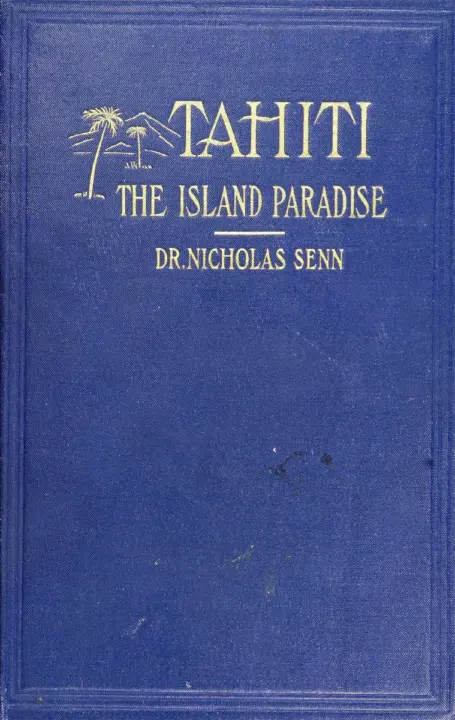
"Tahiti, the Island Paradise" by Nicholas Senn is a travelogue written in the early 20th century. This descriptive work showcases the natural beauty, culture, and history of Tahiti, a remote island in the South Pacific, emphasizing its idyllic landscape and the tranquil lifestyle of its inhabitants. Senn captures the charm and allure of Tahiti, depicting it as a paradise untouched by the burdens of modern life. At the start of the book, the author introduces readers to the breathtaking beauty of Tahiti, describing its lush vegetation, tranquil climate, and friendly natives, who live carefree lives provided for by nature. He reflects on the island's cultural richness and its historical significance while hinting that visitors can enjoy restorative vacations amidst stunning scenery. The opening sets the stage for a journey into the depths of Tahitian life, inviting readers to explore the island's wonders through the author's keen observations and vivid descriptions.
Introduction adapted from the source catalogue; source summaries may be automatically generated.
Free to read · English · 55,084 words · No account needed
MAKE TIME FOR A GOOD BOOK
On by default. Untick to stop anonymous reading totals. Each page counts after 10 seconds in view. How this works.
Anonymous counting is on unless you have switched it off.
Twelve servants, men and women, take care of the house, the family and the visitors. Most of these were born on the place, and some of them, very old now, were in the service of the grandfather of the present chief. The relation between master and servants in this house is a very pleasant one. The servants are looked upon and treated rather as relatives than employes. Their pay is small, but they are given all the comforts of a home.
Word had been sent ahead from Papeete announcing our visit, for the purpose of securing for us the rare pleasure of partaking of a genuine native dinner. A little pig was roasted underground, and chickens were boiled in the milk of the cocoanut, exquisite dishes, which, with excellent coffee, French bread, and a variety of luscious tropical fruit, made up a dinner which it would be impossible to duplicate in any of the large cities of the continents.
The village of Papara is a most interesting place to visit. Besides the magnificent scenery, one finds here many native huts, and the town hall is a large, airy structure, built of bamboo sticks and covered with a thatched roof. Near the village are the grotto and cave, which enjoy a local reputation, and are well worth seeing by the visitor.
The sun's rim dips; the stars rush out:
At one stride conies the dark;
With far-heard whisper o'er the sea;
Off shot the spectre bark.
The day had been hot and sultry. From a cloudless sky, the tropical sun shot down, without mercy, his arrows of heat, against which the lightest and most porous headdress, umbrella, roof and shade afforded but inadequate protection. Man and beast were listless, perspiring, careful to make no unnecessary exertion. The green, succulent foliage bowed under the oppressive heat, and even the gayest of the flowers drooped their proud heads in homage to the fierce king of the serene blue sky. The very atmosphere quivered in convulsive movements, and the intense light, reflected from the surface of the sleeping ocean and the white city, dazzled and blinded those who ventured to go out into the streets. The little capital city of Papeete, nestled on the plateau between the harbor and the foot of towering mountains, half hidden among the tropic trees, was at rest; market and streets deserted, business houses closed, and the wharf silent and lifeless. The numerous miserable curs in the streets sought shelter in the shade, lying in a position affording most perfect relaxation, with protruded, blue, saliva-covered tongues, fighting the heat by increasing the respiratory movements to the utmost speed. The numerous half-wild pigs in the streets, with paralyzed tails and relaxed bristles, buried themselves as deeply as possible in the nearest mud-pool, and with eyes closed, submitted passively to the fiery rays of the midday sun. The roaming chickens, from bald chicks a few days old to the ruffled, fatless veterans of questionable age, suspended their search for rare particles of food with which to satisfy their torturing sense of hunger, and simply squatted where the heat overcame them, in the nearest shady place, there to spend the enforced siesta with bills wide open and the dry, blue tongues agitated by the rapid and violent breathing. The birds of the air ceased their frolic; their song was silenced, and they took refuge in trees with thickest foliage. Men, women and children, rich and poor, merchant and laborer, were forced to suspend work and play, and seek, in the shadow of their homes or near-by trees, protection against the onslaught of the burning rays of the sun. Such is the victory of the sun of the tropics. He demands unconditional surrender on the part of every living thing. He knows no compromise, as he is sure of victory as long as his victim is in a favorable strategic position. This was the case on the day of which I speak. As the rays of the sun became more and more oblique, and the invisible great fan of the land-breeze was set in motion, wafting down from the high mountain peaks a current of cool air, the city woke up from its midday slumber. The sun had lost his fiery power. He was retreating from the field of combat, and approaching in the distance the rim of the placid ocean. The monarch of the day, so near his cool, watery couch, laid aside his mask of fire and smiled upon the vanishing world with a face beaming with happiness and peace.
Your reading position is saved on this browser. Take it to another device with a library code. Reading pages adapt to text, rather than matching a printed edition.
BEHIND THE BOOK
This eBook is for the use of anyone anywhere in the United States and most other parts of the world at no cost and with almost no restrictions whatsoever. You may copy it, give it away or re-use it under the terms of the Project Gutenberg License included with this eBook or online at www.gutenberg.org. If you are not located in the United States, you will have to check the laws of the country where you are located before using this eBook. Read the source licence.
The original source file, including credits and licence, is retained by this library. Request an original-format copy at no charge. Please include the book title and Project Gutenberg identifier #69945.
KEEP YOUR CURIOSITY GOING
Wilfrid Scawen Blunt
Wilfrid Scawen Blunt

E. W. (Edgar Watson) Howe
Francis Greenleaf Allinson & Anne C. E. (Anne Crosby Emery) Allinson
Cyrenus Cole

John Martineau