THE CLASSIC COLLECTION✦Ralph Waldo Emerson, philosopher and seerCLASSIC FREE BOOKS
Ralph Waldo Emerson, philosopher and seer
Amos Bronson Alcott
THE CLASSIC COLLECTION · 1868
"Tablets" by A. Bronson Alcott is a philosophical work written in the late 19th century. The book appears to explore various themes related to practical and speculative aspects of life, including nature, human relationships, and personal development. Alcott’s reflections on gardening, fellowship, and culture suggest a focus on how these elements intertwine to foster a rich and fulfilling existence. The opening of "Tablets" introduces readers to the concept of gardens as a metaphor for the ideal human condition and cultivation. Alcott muses on the historical significance of gardens in human civilization, emphasizing their role as a symbol of civility and the connection between humanity and nature. He highlights the pleasures of cultivating a garden and how it can transform one's relationship with the landscape, ultimately offering both a physical space for rejuvenation and a philosophical grounding for a more meaningful life. Through rich descriptions and reflections, the text sets the foundation for Alcott's exploration of practical wisdom, the importance of rural life, and the joys of personal and communal cultivation.
Introduction adapted from the source catalogue; source summaries may be automatically generated.
Free to read · English · 36,743 words · No account needed
MAKE TIME FOR A GOOD BOOK
On by default. Untick to stop anonymous reading totals. Each page counts after 10 seconds in view. How this works.
Anonymous counting is on unless you have switched it off.
Alcibiades. What meaning? what have you in your thoughts, Socrates, when you ask the question?
Socrates. I will tell you what I suspect this inscription means, and what particular thing it advises us to do. For a just resemblance of it is, I think, not to be found wherever one pleases, but in only one thing, the sight.
Alcibiades. How do you mean?
Socrates. Consider it jointly with me. Were a man to address himself to the outward human eye, as it were some other man; and were he to give it this counsel, "See yourself," what particular thing should we suppose that he advises the eye to do? Should we not suppose that it was to look at such a thing as that the eye by looking at it, might see itself?
Alcibiades. Certainly we should.
Socrates. What kind of thing then do we think of by looking at which we see things at which we look, and at the same time see ourselves?
Alcibiades. 'Tis evident, Socrates, that for this purpose we must look at mirrors and other things of like kind.
Socrates. You are right. And has not the eye itself, with which we see, something of the same kind belonging to it?
Alcibiades. Most certainly it has.
Socrates. You have observed then, that the face of the person who looks in the eye of another person, appears visible to himself in the eye of the person opposite to him, as in a mirror. And we therefore call this the pupil, because it exhibits the image of that person who examines it.
Alcibiades. What you say is true.
Socrates. The eye beholding an eye and looking in the most
excellent part of it in that which it sees, may thus see
itself?
Alcibiades. Apparently so.
Socrates. But if the eye look at any other part of the man, or at anything whatever, except what this part of the eye happens to be like, it will not see itself.
Alcibiades. It is true.
Socrates. If therefore the eye would see itself, it must look in an eye, and in that place of the eye, too, where the virtue of the eye is naturally seated; and the virtue of the eye is sight.
Alcibiades. I am aware that it is so.
Socrates. Whether then is it not true, my friend Alcibiades, that the soul if she know herself, must look at soul, and especially at that place in the soul in which wisdom, the virtue of the soul, is ingenerated, and also at whatsoever else this virtue of the soul resembles?
Alcibiades. To me, Socrates, it seems true.
Your reading position is saved on this browser. Take it to another device with a library code. Reading pages adapt to text, rather than matching a printed edition.
Amos Bronson Alcott
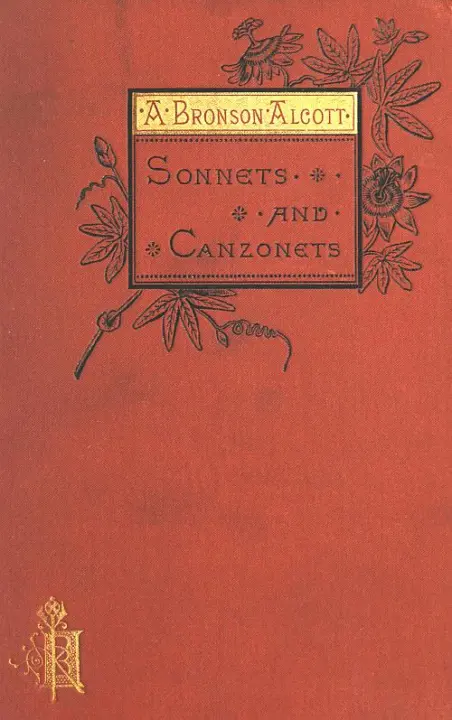
Amos Bronson Alcott
Amos Bronson Alcott
BEHIND THE BOOK
This eBook is for the use of anyone anywhere in the United States and most other parts of the world at no cost and with almost no restrictions whatsoever. You may copy it, give it away or re-use it under the terms of the Project Gutenberg License included with this eBook or online at www.gutenberg.org. If you are not located in the United States, you will have to check the laws of the country where you are located before using this eBook. Read the source licence.
The original source file, including credits and licence, is retained by this library. Request an original-format copy at no charge. Please include the book title and Project Gutenberg identifier #36825.
KEEP YOUR CURIOSITY GOING

David Patterson (Spirit) Hatch

David Patterson (Spirit) Hatch

David Patterson (Spirit) Hatch
Coulson Kernahan

Ralph Waldo Emerson

Maurice Baring