THE CLASSIC COLLECTION✦Ralph Waldo Emerson, philosopher and seerCLASSIC FREE BOOKS
Ralph Waldo Emerson, philosopher and seer
Amos Bronson Alcott
THE CLASSIC COLLECTION · 1868
"Tablets" by A. Bronson Alcott is a philosophical work written in the late 19th century. The book appears to explore various themes related to practical and speculative aspects of life, including nature, human relationships, and personal development. Alcott’s reflections on gardening, fellowship, and culture suggest a focus on how these elements intertwine to foster a rich and fulfilling existence. The opening of "Tablets" introduces readers to the concept of gardens as a metaphor for the ideal human condition and cultivation. Alcott muses on the historical significance of gardens in human civilization, emphasizing their role as a symbol of civility and the connection between humanity and nature. He highlights the pleasures of cultivating a garden and how it can transform one's relationship with the landscape, ultimately offering both a physical space for rejuvenation and a philosophical grounding for a more meaningful life. Through rich descriptions and reflections, the text sets the foundation for Alcott's exploration of practical wisdom, the importance of rural life, and the joys of personal and communal cultivation.
Introduction adapted from the source catalogue; source summaries may be automatically generated.
Free to read · English · 36,743 words · No account needed
MAKE TIME FOR A GOOD BOOK
On by default. Untick to stop anonymous reading totals. Each page counts after 10 seconds in view. How this works.
Anonymous counting is on unless you have switched it off.
A purer civilization than ours can yet claim to be, is to inspire the genius of mankind with the skill to deal dutifully with soils and souls, exalt agriculture and manculture into a religion of art; the freer interchange of commodities which the current world-wide intercourse promotes, spread a more various, wholesome, classic table, whereby the race shall be refined of traits reminding too plainly of barbarism and the beast. "Ye desire from the gods excellent health and a beautiful old age, but your table opposes itself, since it fetters the hands of Zeus."[A]
[Footnote A: Grillis having been transformed from a beast into a man, used to discourse with his table companions, about how much better he fed while in that state than his present one, since he then took instinctively what was best for him, avoiding what was hurtful; but now, he said, though endowed with reason and natural knowledge to guide him in the selection, he yet seemed to have fallen below the beast he was, since he found he liked what did not like him, and took it, moreover, without shame.]
"Time may come when man
With angels may participate and find
No inconvenient diet, no too light fare,
And, from these corporal nutriments, perhaps,
Their bodies may at last turn all to Spirit
Improved by tract of time, and winged ascend
Ethereal as they; or may at choice
Here, or in heavenly Paradises, dwell."
An elegant abstinence is complimentary to any one, as, fed from the virgin essences of the season, his genius, dispositions, tastes, have no shame to blush for, and modestly claim the honor of being well bred. And one's table, like Apelles', may be fitly pictured with the beauty of sobriety on the one side, the deformity of excess on the other, the feast substantial as it is lyrical, praising itself and those who partake; and his guests as ready to compliment him, as Timotheus did Plato, when he said: "They who dine with the philosopher never complain the next morning."
Takes sunbeams, spring waters,
Earth's juices, meads' creams,
Bathes in floods of sweet ethers,
Comes baptized from the streams;
Guest of Him, the sweet-lipp'd,
The Dreamer's quaint dreams.
Mingles morals idyllic
With Samian fable,
Sage seasoned from cruets,
Of Plutarch's chaste table.
Pledges Zeus, Zoroaster,
Tastes Cana's glad cheer,
Suns, globes, on his trencher,
The elements there.
Bowls of sunrise for breakfast
Brimful of the East,
Foaming flagons of frolic
His evening's gay feast.
Sov'reign solids of nature,
Solar seeds of the sphere,
Olympian viand
Surprising as rare.
Thus baiting his genius,
His wonderful word
Brings poets and sibyls
To sup at his board.
Your reading position is saved on this browser. Take it to another device with a library code. Reading pages adapt to text, rather than matching a printed edition.
Amos Bronson Alcott
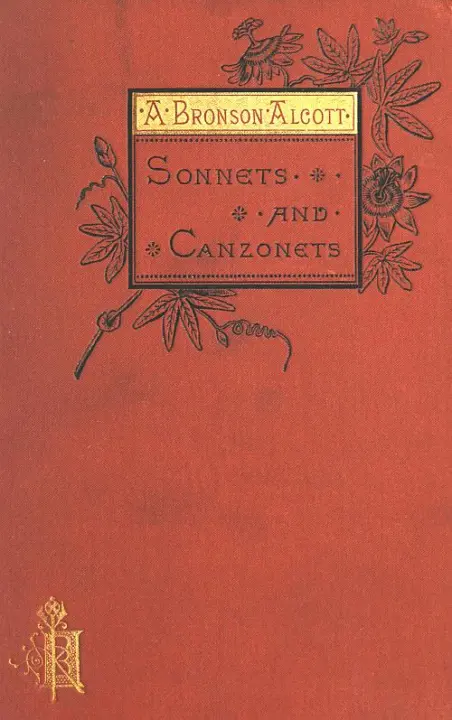
Amos Bronson Alcott
Amos Bronson Alcott
BEHIND THE BOOK
This eBook is for the use of anyone anywhere in the United States and most other parts of the world at no cost and with almost no restrictions whatsoever. You may copy it, give it away or re-use it under the terms of the Project Gutenberg License included with this eBook or online at www.gutenberg.org. If you are not located in the United States, you will have to check the laws of the country where you are located before using this eBook. Read the source licence.
The original source file, including credits and licence, is retained by this library. Request an original-format copy at no charge. Please include the book title and Project Gutenberg identifier #36825.
KEEP YOUR CURIOSITY GOING

David Patterson (Spirit) Hatch

David Patterson (Spirit) Hatch

David Patterson (Spirit) Hatch
Coulson Kernahan

Ralph Waldo Emerson

Maurice Baring