THE CLASSIC COLLECTION✦An outlaw’s diary: the CommuneCLASSIC FREE BOOKS
An outlaw’s diary: the Commune
Cécile Tormay
THE CLASSIC COLLECTION · 1814
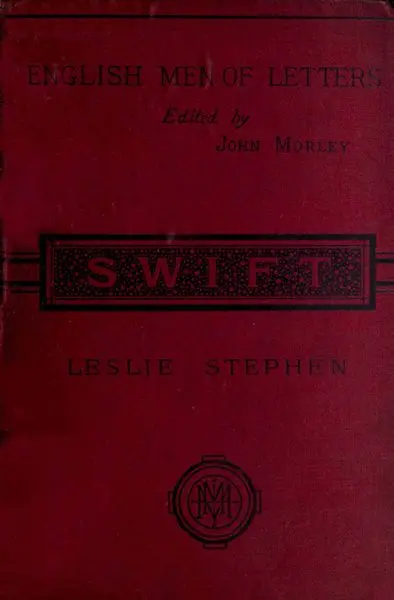
"Swift" by Leslie Stephen is a biographical account written in the late 19th century. This work delves into the life of Jonathan Swift, the renowned author and Dean of St. Patrick's, providing insights into his early years, influences, and formative experiences. The book explores not only Swift's personal history but also the broader context of 17th and 18th-century Ireland. The opening of the text introduces Jonathan Swift’s lineage, detailing his family background and early childhood, marked by struggles and a sense of neglect. It describes the peculiar circumstances surrounding his birth and upbringing, revealing a precocious child influenced by issues of identity and belonging. As he navigates his education, particularly at Trinity College Dublin and the feelings of resentment towards his relatives, readers get a glimpse into the early development of Swift’s complex character and intellect, setting the stage for his later literary accomplishments and satirical prowess.
Introduction adapted from the source catalogue; source summaries may be automatically generated.
Free to read · English · 63,890 words · No account needed
MAKE TIME FOR A GOOD BOOK
On by default. Untick to stop anonymous reading totals. Each page counts after 10 seconds in view. How this works.
Anonymous counting is on unless you have switched it off.
Part of the fury was no doubt due to the growing unsoundness of his political position. Steele in the beginning of 1714 was expelled from the House for the Crisis; and an attack made upon Swift in the House of Lords for an incidental outburst against the hated Scots in his reply to the Crisis, was only staved off by a manoeuvre of the ministry. Meanwhile Swift was urging the necessity of union upon men who hated each other more than they regarded any public cause whatever. Swift at last brought his two patrons together in Lady Masham's lodgings, and entreated them to be reconciled. If, he said, they would agree, all existing mischiefs could be remedied in two minutes. If they would not, the ministry would be ruined in two months. Bolingbroke assented: Oxford characteristically shuffled, said "all would be well," and asked Swift to dine with him next day. Swift, however, said that he would not stay to see the inevitable catastrophe. It was his natural instinct to hide his head in such moments; his intensely proud and sensitive nature could not bear to witness the triumph of his enemies, and he accordingly retired at the end of May, 1714, to the quiet parsonage of Upper Letcombe in Berkshire. The public wondered and speculated; friends wrote letters describing the scenes which followed, and desiring Swift's help; and he read, and walked, and chewed the cud of melancholy reflection, and thought of stealing away to Ireland. He wrote, however, a very remarkable pamphlet, giving his view of the situation, which was not published at the time; events went too fast.
Swift's conduct at this critical point is most noteworthy. The pamphlet (Free Thoughts upon the Present State of Affairs) exactly coincides with all his private and public utterances. His theory was simple and straightforward. The existing situation was the culminating result of Harley's policy of refinement and procrastination. Swift two years before had written a very able remonstrance with the October Club, who had sought to push Harley into decisive measures; but though he preached patience, he really sympathized with their motives. Instead of making a clean sweep of his opponents, Harley had left many of them in office, either from "refinement"--that over-subtlety of calculation which Swift thought inferior to plain common sense, and which, to use his favourite illustration, is like the sharp knife that mangles the paper, when a plain, blunt paper-knife cuts it properly--or else from inability to move the Queen, which he had foolishly allowed to pass for unwillingness, in order to keep up the appearance of power. Two things were now to be done; first, a clean sweep should be made of all Whigs and dissenters from office and from the army; secondly, the Court of Hanover should be required to break off all intercourse with the Opposition, on which condition the heir-presumptive (the infant Prince Frederick) might be sent over to reside in England. Briefly, Swift's policy was a policy of "thorough." Oxford's vacillations were the great obstacle, and Oxford was falling before the alliance of Bolingbroke with Lady Masham. Bolingbroke might have turned Swift's policy to the account of the Jacobites; but Swift did not take this into account, and in the Free Thoughts he declares his utter disbelief in any danger to the succession. What side, then, should he take? He sympathized with Bolingbroke's avowed principles. Bolingbroke was eager for his help, and even hoped to reconcile him to the red-haired duchess. But Swift was bound to Oxford by strong personal affection; by an affection which was not diminished even by the fact that Oxford had procrastinated in the matter of Swift's own preferment; and was, at this very moment, annoying him by delaying to pay the 1000l. incurred by his installation in the deanery. To Oxford he had addressed (Nov. 21, 1713) a letter of consolation upon the death of a daughter, possessing the charm which is given to such letters only by the most genuine sympathy with the feelings of the loser, and by a spontaneous selection of the only safe topic--praise of the lost, equally tender and sincere. Every reference to Oxford is affectionate. When, at the beginning of July, Oxford was hastening to his fall, Swift wrote to him another manly and dignified letter, professing an attachment beyond the reach of external accidents of power and rank. The end came soon. Swift heard that Oxford was about to resign. He wrote at once (July 25, 1714) to propose to accompany him to his country house. Oxford replied two days later in a letter oddly characteristic. He begs Swift to come with him; "If I have not tired you tête-à-tête, fling away so much of your time upon one who loves you;" and then rather spoils the pathos by a bit of hopeless doggerel. Swift wrote to Miss Vanhomrigh on August 1. "I have been asked," he says, "to join with those people now in power; but I will not do it. I told Lord Oxford I would go with him, when he was out; and now he begs it of me, and I cannot refuse him. I meddle not with his faults, as he was a Minister of State; but you know his personal kindness to me was excessive; he distinguished and chose me above all other men, while he was great, and his letter to me the other day was the most moving imaginable."
Your reading position is saved on this browser. Take it to another device with a library code. Reading pages adapt to text, rather than matching a printed edition.
BEHIND THE BOOK
This eBook is for the use of anyone anywhere in the United States and most other parts of the world at no cost and with almost no restrictions whatsoever. You may copy it, give it away or re-use it under the terms of the Project Gutenberg License included with this eBook or online at www.gutenberg.org. If you are not located in the United States, you will have to check the laws of the country where you are located before using this eBook. Read the source licence.
The original source file, including credits and licence, is retained by this library. Request an original-format copy at no charge. Please include the book title and Project Gutenberg identifier #41532.
KEEP YOUR CURIOSITY GOING
Cécile Tormay

Moritz Busch
John L. Ransom
Frances Wright
Cécile Tormay

Mabel Potter Daggett