THE CLASSIC COLLECTION✦An outlaw’s diary: the CommuneCLASSIC FREE BOOKS
An outlaw’s diary: the Commune
Cécile Tormay
THE CLASSIC COLLECTION · 1814
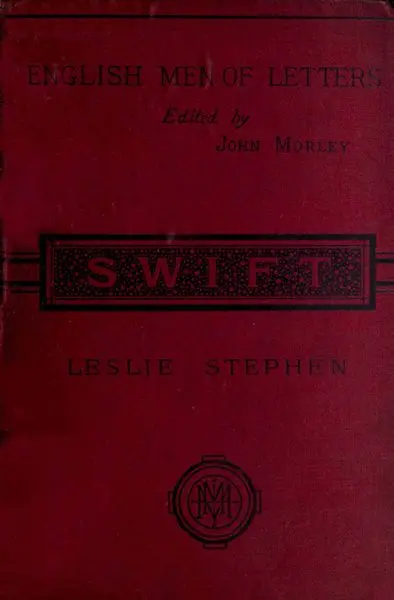
"Swift" by Leslie Stephen is a biographical account written in the late 19th century. This work delves into the life of Jonathan Swift, the renowned author and Dean of St. Patrick's, providing insights into his early years, influences, and formative experiences. The book explores not only Swift's personal history but also the broader context of 17th and 18th-century Ireland. The opening of the text introduces Jonathan Swift’s lineage, detailing his family background and early childhood, marked by struggles and a sense of neglect. It describes the peculiar circumstances surrounding his birth and upbringing, revealing a precocious child influenced by issues of identity and belonging. As he navigates his education, particularly at Trinity College Dublin and the feelings of resentment towards his relatives, readers get a glimpse into the early development of Swift’s complex character and intellect, setting the stage for his later literary accomplishments and satirical prowess.
Introduction adapted from the source catalogue; source summaries may be automatically generated.
Free to read · English · 63,890 words · No account needed
MAKE TIME FOR A GOOD BOOK
On by default. Untick to stop anonymous reading totals. Each page counts after 10 seconds in view. How this works.
Anonymous counting is on unless you have switched it off.
What, then, is Swift's aim in the Examiner? Mr. Kinglake has told us how a great journal throve by discovering what was the remark that was on every one's lips, and making the remark its own. Swift had the more dignified task of really striking the keynote for his party. He was to put the ministerial theory into that form in which it might seem to be the inevitable utterance of strong common-sense. Harley's supporters were to see in Swift's phrases just what they would themselves have said--if they had been able. The shrewd, sturdy, narrow prejudices of the average Englishman were to be pressed into the service of the ministry, by showing how admirably they could be clothed in the ministerial formulas.
The real question, again, as Swift saw, was the question of peace. Whig and Tory, as he said afterwards,[23] were really obsolete words. The true point at issue was peace or war. The purpose, therefore, was to take up his ground so that peace might be represented as the natural policy of the church or Tory party; and war as the natural fruit of the selfish Whigs. It was necessary, at the same time, to show that this was not the utterance of high-flying Toryism or downright Jacobitism, but the plain dictate of a cool and impartial judgment. He was not to prove but to take for granted that the war had become intolerably burdensome; and to express the growing wish for peace in terms likely to conciliate the greatest number of supporters. He was to lay down the platform which could attract as many as possible, both of the zealous Tories and of the lukewarm Whigs.
Measured by their fitness for this end, the Examiners are admirable. Their very fitness for the end implies the absence of some qualities which would have been more attractive to posterity. Stirring appeals to patriotic sentiment may suit a Chatham rousing a nation to action; but Swift's aim is to check the extravagance in the name of selfish prosaic prudence. The philosophic reflections of Burke, had Swift been capable of such reflection, would have flown above the heads of his hearers. Even the polished and elaborate invective of Junius would have been out of place. No man, indeed, was a greater master of invective than Swift. He shows it in the Examiners by onslaughts upon the detested Wharton. He shows, too, that he is not restrained by any scruples when it comes in his way to attack his old patrons, and he adopts the current imputations upon their private character. He could roundly accuse Cowper of bigamy, and Somers--the Somers whom he had elaborately praised some years before in the dedication to the Tale of a Tub--of the most abominable perversion of justice. But these are taunts thrown out by the way. The substance of the articles is not invective, but profession of political faith. One great name, indeed, is of necessity assailed. Marlborough's fame was a tower of strength for the Whigs. His duchess and his colleagues had fallen; but whilst war was still raging, it seemed impossible to dismiss the greatest living commander. Yet whilst Marlborough was still in power, his influence might be used to bring back his party. Swift's treatment of this great adversary is significant. He constantly took credit for having suppressed many attacks[24] upon Marlborough. He was convinced that it would be dangerous for the country to dismiss a general whose very name carried victory.[25] He felt that it was dangerous for the party to make an unreserved attack upon the popular hero. Lord Rivers, he says, cursed the Examiner to him for speaking civilly of Marlborough; and St. John, upon hearing of this, replied that if the counsels of such men as Rivers were taken, the ministry "would be blown up in twenty-four hours." Yet Marlborough was the war personified; and the way to victory lay over Marlborough's body. Nor had Swift any regard for the man himself, who, he says,[26] is certainly a vile man, and has no sort of merit except the military--as "covetous as hell, and as ambitious as the prince of it."[27] The whole case of the ministry implied the condemnation of Marlborough. Most modern historians would admit that continuance of the war could at this time be desired only by fanatics or interested persons. A psychologist might amuse himself by inquiring what were the actual motives of its advocates; in what degrees personal ambition, a misguided patriotism, or some more sordid passions were blended. But in the ordinary dialect of political warfare there is no room for such refinements. The theory of Swift and Swift's patrons was simple. The war was the creation of the Whig "ring;" it was carried on for their own purposes by the stock-jobbers and "monied men," whose rise was a new political phenomenon, and who had introduced the diabolical contrivance of public debts. The landed interest and the church had been hoodwinked too long by the union of corrupt interests supported by Dutchmen, Scotchmen, dissenters, freethinkers, and other manifestations of the evil principle. Marlborough was the head and patron of the whole. And what was Marlborough's motive? The answer was simple. It was that which has been assigned, with even more emphasis, by Macaulay--Avarice. The twenty-seventh Examiner (Feb. 8th, 1711) probably contains the compliments to which Rivers objected. Swift, in fact, admits that Marlborough had all the great qualities generally attributed to him; but all are spoilt by this fatal blemish. How far the accusation was true matters little. It is put at least with force and dignity; and it expressed in the pithiest shape Swift's genuine conviction, that the war now meant corrupt self-interest. Invective, as Swift knew well enough in his cooler moments, is a dangerous weapon, apt to recoil on the assailant unless it carries conviction. The attack on Marlborough does not betray personal animosity; but the deliberate and the highly plausible judgment of a man determined to call things by their right names, and not to be blinded by military glory.
Your reading position is saved on this browser. Take it to another device with a library code. Reading pages adapt to text, rather than matching a printed edition.
BEHIND THE BOOK
This eBook is for the use of anyone anywhere in the United States and most other parts of the world at no cost and with almost no restrictions whatsoever. You may copy it, give it away or re-use it under the terms of the Project Gutenberg License included with this eBook or online at www.gutenberg.org. If you are not located in the United States, you will have to check the laws of the country where you are located before using this eBook. Read the source licence.
The original source file, including credits and licence, is retained by this library. Request an original-format copy at no charge. Please include the book title and Project Gutenberg identifier #41532.
KEEP YOUR CURIOSITY GOING
Cécile Tormay

Moritz Busch
John L. Ransom
Frances Wright
Cécile Tormay

Mabel Potter Daggett