THE CLASSIC COLLECTION✦An outlaw’s diary: the CommuneCLASSIC FREE BOOKS
An outlaw’s diary: the Commune
Cécile Tormay
THE CLASSIC COLLECTION · 1814
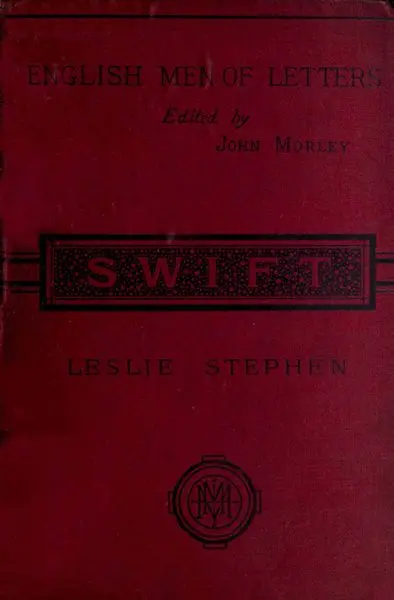
"Swift" by Leslie Stephen is a biographical account written in the late 19th century. This work delves into the life of Jonathan Swift, the renowned author and Dean of St. Patrick's, providing insights into his early years, influences, and formative experiences. The book explores not only Swift's personal history but also the broader context of 17th and 18th-century Ireland. The opening of the text introduces Jonathan Swift’s lineage, detailing his family background and early childhood, marked by struggles and a sense of neglect. It describes the peculiar circumstances surrounding his birth and upbringing, revealing a precocious child influenced by issues of identity and belonging. As he navigates his education, particularly at Trinity College Dublin and the feelings of resentment towards his relatives, readers get a glimpse into the early development of Swift’s complex character and intellect, setting the stage for his later literary accomplishments and satirical prowess.
Introduction adapted from the source catalogue; source summaries may be automatically generated.
Free to read · English · 63,890 words · No account needed
MAKE TIME FOR A GOOD BOOK
On by default. Untick to stop anonymous reading totals. Each page counts after 10 seconds in view. How this works.
Anonymous counting is on unless you have switched it off.
The Tale of a Tub is another challenge thrown down to pretentious pedantry. The vigorous, self-confident intellect has found out the emptiness and absurdity of a number of the solemn formulæ which pass current in the world, and tears them to pieces with audacious and rejoicing energy. He makes a mock of the paper chains with which solemn professors tried to fetter his activity, and scatters the fragments to the four winds of heaven. In one of the first sections he announces the philosophy afterwards expounded by Herr Teufelsdröckh, according to which "man himself is but a micro-coat;" if one of the suits of clothes called animals "be trimmed up with a gold chain, and a red gown, and a white rod, and a pert look, it is called a Lord Mayor; if certain ermines and furs be placed in a certain position, we style them a judge; and so an apt conjunction of lawn and black satin we entitle a bishop." Though Swift does not himself develop this philosophical doctrine, its later form reflects light upon the earlier theory. For, in truth, Swift's teaching comes to this, that the solemn plausibilities of the world are but so many "shams"--elaborate masks used to disguise the passions, for the most part base and earthly, by which mankind is really impelled. The "digressions" which he introduces with the privilege of a humorist, bear chiefly upon the literary sham. He falls foul of the whole population of Grub Street at starting, and (as I may note in passing) incidentally gives a curious hint of his authorship. He describes himself as a worn-out pamphleteer who has worn his quill to the pith in the service of the State. "Fourscore and eleven pamphlets have I writ under the reigns and for the service of six-and-thirty patrons." Porson first noticed that the same numbers are repeated in Gulliver's Travels; Gulliver is fastened with "fourscore and eleven chains" locked to his left leg "with six-and-thirty padlocks." Swift makes the usual onslaught of a young author upon the critics, with more than the usual vigour, and carries on the war against Bentley and his ally by parodying Wotton's remarks upon the ancients. He has discovered many omissions in Homer; "who seems to have read but very superficially either Sendivogus, Behmen, or Anthroposophia Magia."[13] Homer, too, never mentions a saveall; and has a still worse fault--his "gross ignorance in the common laws of this realm, and in the doctrine as well as discipline of the Church of England"--defects, indeed, for which he has been justly censured by Wotton. Perhaps the most vigorous and certainly the most striking of these digressions, is that upon "the original use and improvement of madness in a commonwealth." Just in passing, as it were, Swift gives the pith of a whole system of misanthropy, though he as yet seems to be rather indulging a play of fancy, than expressing a settled conviction. Happiness, he says, is a "perpetual possession of being well deceived." The wisdom which keeps on the surface is better than that which persists in officiously prying into the underlying reality. "Last week I saw a woman flayed," he observes, "and you will hardly believe how much it altered her person for the worse." It is best to be content with patching up the outside, and so assuring the "serene, peaceful state"--the sublimest point of felicity--"of being a fool amongst knaves." He goes on to tell us how useful madmen may be made: how Curtius may be regarded equally as a madman and a hero for his leap into the gulf; how the raging, blaspheming, noisy inmate of Bedlam is fit to have a regiment of dragoons; and the bustling, sputtering, bawling madman should be sent to Westminster Hall; and the solemn madman, dreaming dreams and seeing best in the dark, to preside over a congregation of dissenters; and how elsewhere you may find the raw material of the merchant, the courtier, or the monarch. We are all madmen, and happy so far as mad: delusion and peace of mind go together; and the more truth we know, the more shall we recognize that realities are hideous. Swift only plays with his paradoxes. He laughs without troubling himself to decide whether his irony tells against the theories which he ostensibly espouses, or those which he ostensibly attacks. But he has only to adopt in seriousness the fancy with which he is dallying, in order to graduate as a finished pessimist. These, however, are interruptions to the main thread of the book, which is a daring assault upon that serious kind of pedantry which utters itself in theological systems. The three brothers, Peter, Martin, and Jack, represent, as we all know, the Roman Catholic, the Anglican, and the Puritanical varieties of Christianity. They start with a new coat provided for each by their father, and a will to explain the right mode of wearing it; and after some years of faithful observance, they fall in love with the three ladies of wealth, ambition, and pride, get into terribly bad ways and make wild work of the coats and the will. They excuse themselves for wearing shoulder-knots by picking the separate letters S, H, and so forth, out of separate words in the will, and as K is wanting, discover it to be synonymous with C. They reconcile themselves to gold lace by remembering that when they were boys they heard a fellow say that he had heard their father's man say that he would advise his sons to get gold lace when they had money enough to buy it. Then, as the will becomes troublesome in spite of exegetical ingenuity, the eldest brother finds a convenient codicil which can be tacked to it, and will sanction a new fashion of flame-coloured satin. The will expressly forbids silver fringe on the coats; but they discover that the word meaning silver fringe may also signify a broomstick. And by such devices they go on merrily for a time, till Peter sets up to be the sole heir and insists upon the obedience of his brethren. His performances in this position are trying to their temper. "Whenever it happened that any rogue of Newgate was condemned to be hanged, Peter would offer him a pardon for a certain sum of money; which when the poor caitiff had made all shifts to scrape up and send, his lordship would return a piece of paper in this form.
Your reading position is saved on this browser. Take it to another device with a library code. Reading pages adapt to text, rather than matching a printed edition.
BEHIND THE BOOK
This eBook is for the use of anyone anywhere in the United States and most other parts of the world at no cost and with almost no restrictions whatsoever. You may copy it, give it away or re-use it under the terms of the Project Gutenberg License included with this eBook or online at www.gutenberg.org. If you are not located in the United States, you will have to check the laws of the country where you are located before using this eBook. Read the source licence.
The original source file, including credits and licence, is retained by this library. Request an original-format copy at no charge. Please include the book title and Project Gutenberg identifier #41532.
KEEP YOUR CURIOSITY GOING
Cécile Tormay

Moritz Busch
John L. Ransom
Frances Wright
Cécile Tormay

Mabel Potter Daggett