THE CLASSIC COLLECTION✦An outlaw’s diary: the CommuneCLASSIC FREE BOOKS
An outlaw’s diary: the Commune
Cécile Tormay
THE CLASSIC COLLECTION · 1814
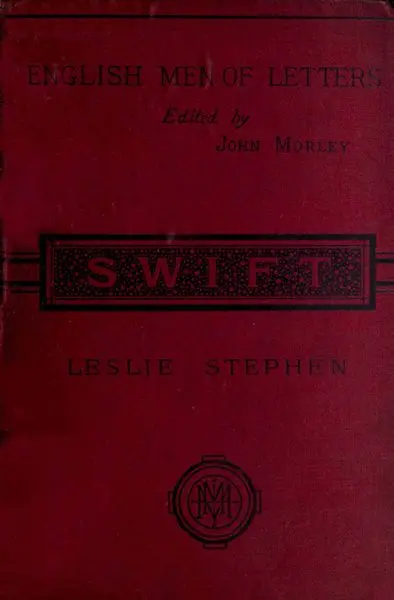
"Swift" by Leslie Stephen is a biographical account written in the late 19th century. This work delves into the life of Jonathan Swift, the renowned author and Dean of St. Patrick's, providing insights into his early years, influences, and formative experiences. The book explores not only Swift's personal history but also the broader context of 17th and 18th-century Ireland. The opening of the text introduces Jonathan Swift’s lineage, detailing his family background and early childhood, marked by struggles and a sense of neglect. It describes the peculiar circumstances surrounding his birth and upbringing, revealing a precocious child influenced by issues of identity and belonging. As he navigates his education, particularly at Trinity College Dublin and the feelings of resentment towards his relatives, readers get a glimpse into the early development of Swift’s complex character and intellect, setting the stage for his later literary accomplishments and satirical prowess.
Introduction adapted from the source catalogue; source summaries may be automatically generated.
Free to read · English · 63,890 words · No account needed
MAKE TIME FOR A GOOD BOOK
On by default. Untick to stop anonymous reading totals. Each page counts after 10 seconds in view. How this works.
Anonymous counting is on unless you have switched it off.
[10] The most direct statement to this effect was made in an article in the Gentleman's Magazine for 1757. It professes to speak with authority, but includes such palpable blunders as to carry little weight.
[11] I am not certain whether this means 1681 or 1681-82. I have assumed the former date in mentioning Stella's age; but the other is equally possible.
[12] Wotton first accused Swift of borrowing the idea of the battle from a French book, by one Coutray, called Histoire Poétique de la Guerre nouvellement declarée entre les Anciens et Modernes. Swift declared (I have no doubt truly) that he had never seen or heard of this book. But Coutray, like Swift, uses the scheme of a mock Homeric battle. The book is prose, but begins with a poem. The resemblance is much closer than Mr. Forster's language would imply; but I agree with him that it does not justify Johnson and Scott in regarding it as more than a natural coincidence. Every detail is different.
[13] This was a treatise by Thomas, twin brother of Henry Vaughan, the "Silurist." It led to a controversy with Henry More. Vaughan was a Rosicrucian. Swift's contempt for mysteries is characteristic. Sendivogus was a famous alchemist (1566-1646).
[14] See Forster, p. 117.
[15] He was in England from April to September in 1701, from April to November in 1702, from November 1703 till May 1704, for an uncertain part of 1705, and again for over fifteen months from the end of 1707 till the beginning of 1709.
[16] Mr. Forster found the original MS., and gives us the exact numbers: 96 omitted, 44 added, 22 altered. The whole was 178 lines after the omissions.
[17] See letter to Peterborough, May 6, 1711.
[18] In most of their principles the two parties seem to have shifted opinions since their institution in the reign of Charles II. Examiner, No. 43. May 31, 1711.
[19] Delany, p. 211.
[20] Letter to King, Jan. 6th, 1709.
[21] Swift to King, July 12, 1711.
[22] These dinners, it may be noticed, seem to have been held on Thursdays when Harley had to attend the court at Windsor. This may lead to some confusion with the Brothers' Club, which met on Thursdays during the parliamentary session.
[23] Letter to a Whig Lord, 1712.
[24] Journal to Stella, Feb. 6th, 1712, and Jan. 8th and 25th, 1712.
[25] Ib. Jan. 7th, 1711.
[26] Ib. Jan. 21st, 1712.
[27] Ib. Dec. 31st, 1710.
[28] Conduct of the Allies.
[29] Advice to October Club.
[30] Behaviour of Queen's Ministry.
[31] There was enough plausibility in this scandal to give it a sting. The duchess had left her second husband, a Mr. Thynne, immediately after the marriage ceremony, and fled to Holland. There Count Coningsmark paid her his addresses, and, coming to England, had Mr. Thynne shot by ruffians in Pall Mall. See the curious case in the State Trials, vol. ix.
[32] Letters from Smalridge and Dr. Davenant in 1713.
Your reading position is saved on this browser. Take it to another device with a library code. Reading pages adapt to text, rather than matching a printed edition.
BEHIND THE BOOK
This eBook is for the use of anyone anywhere in the United States and most other parts of the world at no cost and with almost no restrictions whatsoever. You may copy it, give it away or re-use it under the terms of the Project Gutenberg License included with this eBook or online at www.gutenberg.org. If you are not located in the United States, you will have to check the laws of the country where you are located before using this eBook. Read the source licence.
The original source file, including credits and licence, is retained by this library. Request an original-format copy at no charge. Please include the book title and Project Gutenberg identifier #41532.
KEEP YOUR CURIOSITY GOING
Cécile Tormay

Moritz Busch
John L. Ransom
Frances Wright
Cécile Tormay

Mabel Potter Daggett