THE CLASSIC COLLECTION✦An outlaw’s diary: the CommuneCLASSIC FREE BOOKS
An outlaw’s diary: the Commune
Cécile Tormay
THE CLASSIC COLLECTION · 1814
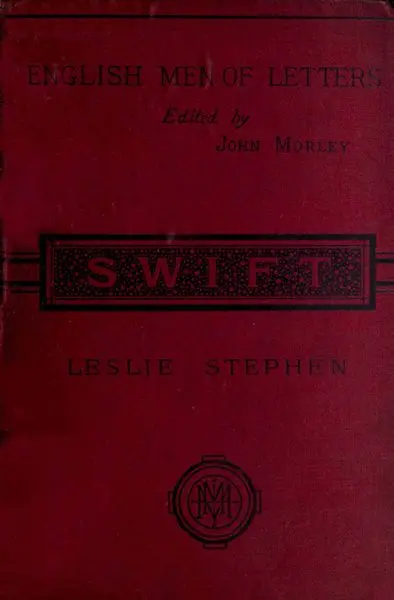
"Swift" by Leslie Stephen is a biographical account written in the late 19th century. This work delves into the life of Jonathan Swift, the renowned author and Dean of St. Patrick's, providing insights into his early years, influences, and formative experiences. The book explores not only Swift's personal history but also the broader context of 17th and 18th-century Ireland. The opening of the text introduces Jonathan Swift’s lineage, detailing his family background and early childhood, marked by struggles and a sense of neglect. It describes the peculiar circumstances surrounding his birth and upbringing, revealing a precocious child influenced by issues of identity and belonging. As he navigates his education, particularly at Trinity College Dublin and the feelings of resentment towards his relatives, readers get a glimpse into the early development of Swift’s complex character and intellect, setting the stage for his later literary accomplishments and satirical prowess.
Introduction adapted from the source catalogue; source summaries may be automatically generated.
Free to read · English · 63,890 words · No account needed
MAKE TIME FOR A GOOD BOOK
On by default. Untick to stop anonymous reading totals. Each page counts after 10 seconds in view. How this works.
Anonymous counting is on unless you have switched it off.
Swift, however, left work of a more dignified kind. Many of the letters in his correspondence are admirable specimens of a perishing art. The most interesting are those which passed between him, Pope, and Bolingbroke, and which were published by Pope's contrivance during Swift's last period. "I look upon us three," says Swift, "as a peculiar triumvirate, who have nothing to expect or fear, and so far fittest to converse with one another." We may perhaps believe Swift when he says that he "never leaned on his elbow to consider what he should write" (except to fools, lawyers, and ministers), though we certainly cannot say the same of his friends. Pope and Bolingbroke are full of affectations, now transparent enough; but Swift in a few trenchant, outspoken phrases, dashes out a portrait of himself as impressive as it is in some ways painful. We must, indeed, remember in reading his inverse hypocrisy, his tendency to call his own motives by their ugliest names--a tendency which is specially pronounced in writing letters to the old friends whose very names recall the memories of past happiness, and lead him to dwell upon the gloomiest side of the present. There is too a characteristic reserve upon some points. In his last visit to Pope, Swift left his friend's house after hearing the bad accounts of Stella's health, and hid himself in London lodgings. He never mentioned his anxieties to his friend, who heard of them first from Sheridan; and in writing afterwards from Dublin, Swift excuses himself for the desertion by referring to his own ill-health--doubtless a true cause ("two sick friends never did well together")--and his anxiety about his affairs, without a word about Stella. A phrase of Bolingbroke's in the previous year about "the present Stella, whoever she may be," seems to prove that he too had no knowledge of Stella except from the poems addressed to the name. There were depths of feeling which Swift could not lay bare to the friend in whose affection he seems most thoroughly to have trusted. Meanwhile he gives full vent to the scorn of mankind and himself, the bitter and unavailing hatred of oppression, and above all for that strange mingling of pride and remorse which is always characteristic of his turn of mind. When he leaves Arbuthnot and Pope he expresses the warmth of his feelings by declaring that he will try to forget them. He is deeply grieved by the death of Congreve, and the grief makes him almost regret that he ever had a friend. He would give half his fortune for the temper of an easy-going acquaintance who could take up or lose a friend as easily as a cat. "Is not this the true happy man?" The loss of Gay cuts him to the heart; he notes on the letter announcing it that he had kept the letter by him five days "by an impulse foreboding some misfortune." He cannot speak of it except to say that he regrets that long living has not hardened him; and that he expects to die poor and friendless. Pope's ill-health "hangs on his spirits." His moral is that if he were to begin the world again, he would never run the risk of a friendship with a poor or sickly man--for he cannot harden himself. "Therefore I argue that avarice and hardness of heart are the two happiest qualities a man can acquire who is late in his life, because by living long we must lessen our friends or may increase our fortunes." This bitterness is equally apparent in regard to the virtues on which he most prided himself. His patriotism was owing to "perfect rage and resentment, and the mortifying sight of slavery, folly, and baseness;" in which, as he says, he is the direct contrary of Pope, who can despise folly and hate vice without losing his temper or thinking the worse of individuals. "Oppression tortures him," and means bitter hatred of the concrete oppressor. He tells Barber in 1738 that for three years he has been but the shadow of his former self, and has entirely lost his memory, "except when it is roused by perpetual subjects of vexation." Commentators have been at pains to show that such sentiments are not philanthropic; yet they are the morbid utterance of a noble and affectionate nature soured by long misery and disappointment. They brought their own punishment. The unhappy man was fretting himself into melancholy and was losing all sources of consolation. "I have nobody now left but you," he writes to Pope in 1736; his invention is gone; he makes projects which end in the manufacture of waste paper; and what vexes him most is that his "female friends have now forsaken him." "Years and infirmities," he says in the end of the same year (about the date of the Legion Club), "have quite broke me; I can neither read, nor write, nor remember, nor converse. All I have left is to walk and ride." A few letters are preserved in the next two years--melancholy wails over his loss of health and spirit--pathetic expressions of continual affection for his "dearest and almost only constant friend," and a warm request or two for services to some of his acquaintance.
Your reading position is saved on this browser. Take it to another device with a library code. Reading pages adapt to text, rather than matching a printed edition.
BEHIND THE BOOK
This eBook is for the use of anyone anywhere in the United States and most other parts of the world at no cost and with almost no restrictions whatsoever. You may copy it, give it away or re-use it under the terms of the Project Gutenberg License included with this eBook or online at www.gutenberg.org. If you are not located in the United States, you will have to check the laws of the country where you are located before using this eBook. Read the source licence.
The original source file, including credits and licence, is retained by this library. Request an original-format copy at no charge. Please include the book title and Project Gutenberg identifier #41532.
KEEP YOUR CURIOSITY GOING
Cécile Tormay

Moritz Busch
John L. Ransom
Frances Wright
Cécile Tormay

Mabel Potter Daggett