THE CLASSIC COLLECTION✦An outlaw’s diary: the CommuneCLASSIC FREE BOOKS
An outlaw’s diary: the Commune
Cécile Tormay
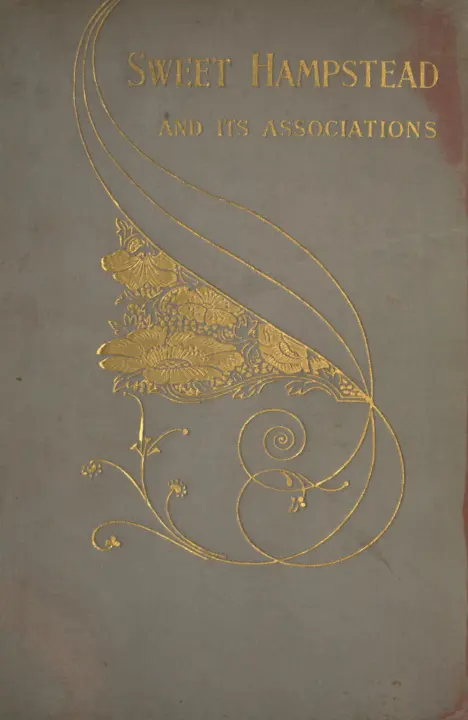
THE CLASSIC COLLECTION · 1903
"Sweet Hampstead and Its Associations" by Mrs. Caroline A. White is a historical account written in the late 19th century. The book explores the rich history and notable figures associated with Hampstead, a picturesque area in London known for its natural beauty and cultural significance. It aims to fill a gap in the literature concerning Hampstead's important historical events and personalities from Queen Anne's reign to the author's own time. The opening of "Sweet Hampstead and Its Associations" delves into the author's motivations for writing the book, reflecting on the passage of time and her long-held desire to document Hampstead's past. She highlights a lack of comprehensive works on the subject and acknowledges her connections to the area's history, sharing fond memories intertwined with her personal experiences. Throughout this section, White expresses her passion for documenting forgotten incidents and characters that have shaped Hampstead’s charm, promising readers a journey through its historical landscape enriched by her own reflections and research.
Introduction adapted from the source catalogue; source summaries may be automatically generated.
Free to read · English · 118,334 words · No account needed
MAKE TIME FOR A GOOD BOOK
On by default. Untick to stop anonymous reading totals. Each page counts after 10 seconds in view. How this works.
Anonymous counting is on unless you have switched it off.
[172] Horace Walpole, who also vindicated Byng, and regarded his fate as a gross injustice, or, rather, we should say, a judicial murder, tells us that, being with Her Royal Highness Princess Amelia at her villa of Gunnersbury, amongst other interesting anecdotes, she told him that while Byng’s affair was depending, the Duchess of Newcastle sent Lady Sophia Egerton (the wife of a clergyman, by the way) to beg her to be for the execution of the Admiral. ‘And, indeed,’ she continued, ‘I was already for it. The officers would never have fought if he had not been executed; nor would Lord Anson have been head of the Admiralty.’
[173] I have seen it this year (1895), and rejoice at its healthy
appearance.
[174] Tom Hood.
[175] The bower or seat at the Bull and Bush is about 12 feet from the ground, among the branches of the yew-tree, and is reached by a rude staircase. The tree was a very ancient one, but a ring of young shoots have sprung up from the roots, and are growing vigorously round the spot where the old trunk stood.—G. W. P.
[176] Hughson’s ‘History of London,’ 1809.
[177] This well-known physician has died since these lines were written.
[178] These fields are now covered with houses.
[179] Mrs. Barbauld’s ‘Richardson’s Correspondence.’
[180] I believe the elm has been preserved, but the house has been
removed.
[181] Mr. Le Breton, who heard him, says it was the first large elm-tree
on the Heath.
[182] The Park, Brussels.
[183] Said to have been one of the most reliable of Charles Kean’s stock
pieces.
[184] Leigh Hunt and his brother had been condemned to two years’ imprisonment each, and a fine of £1,000, for having, as he ludicrously phrases it, contrasted the Morning Post’s description of the Regent as an Adonis in appearance, and the Mæcenas of his age, with the old real, fat state of the case, and for having said that H.R.H. had lived for fifty years without doing anything to deserve the admiration of his contemporaries or the gratitude of posterity.
[185] A tradition of the inhabitants of the cottage when I saw it.
[186] These lines do not appear in ‘Sleep and Poetry,’ in Moxon’s edition in the Pocket Series.
[187] Old John Cleave, the publisher, and friend of Douglas Jerrold and William Linton, who visited Leigh Hunt in his Surrey cage, told me that not only were the walls covered with a rose-patterned paper, but that the poet had trained living roses on them.
[188] Vide Mary Cowden Clarke.
Your reading position is saved on this browser. Take it to another device with a library code. Reading pages adapt to text, rather than matching a printed edition.
BEHIND THE BOOK
This eBook is for the use of anyone anywhere in the United States and most other parts of the world at no cost and with almost no restrictions whatsoever. You may copy it, give it away or re-use it under the terms of the Project Gutenberg License included with this eBook or online at www.gutenberg.org. If you are not located in the United States, you will have to check the laws of the country where you are located before using this eBook. Read the source licence.
The original source file, including credits and licence, is retained by this library. Request an original-format copy at no charge. Please include the book title and Project Gutenberg identifier #64394.
KEEP YOUR CURIOSITY GOING
Cécile Tormay

Moritz Busch
John L. Ransom
Frances Wright
Cécile Tormay

Mabel Potter Daggett