
Dead letters
Maurice Baring
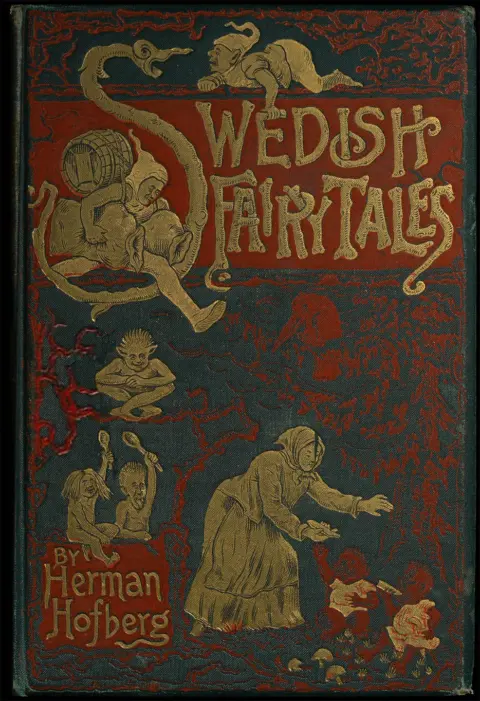
THE CLASSIC COLLECTION · 1890
"Swedish Fairy Tales" by Herman Hofberg is a collection of folkloric tales written in the late 19th century. This compilation gathers various traditional stories from Sweden, exploring themes of magic, giants, and whimsical adventures that reflect the deep-rooted culture and mythology of the Swedish people. The tales feature a range of characters, from courageous peasants to mystical creatures like trolls and sea nymphs, immersing readers in a world of fantasy and moral lessons. The opening of the collection begins with the author's preface, distinguishing between tradition and saga, and explaining the origins of these stories in Swedish folklore. The following tales introduce a variety of characters, including a boastful watchman who boasts of his marksmanship, a clever goatherd who outwits a giant, and a giant Finn who helps build a cathedral. Each story is crafted to highlight not only the enchanting elements of magical beings and heroic feats but also the moral implications and consequences of the characters' actions, setting the tone for the rich storytelling that unfolds throughout the book.
Introduction adapted from the source catalogue; source summaries may be automatically generated.
Free to read · English · 42,336 words · No account needed
MAKE TIME FOR A GOOD BOOK
On by default. Untick to stop anonymous reading totals. Each page counts after 10 seconds in view. How this works.
Anonymous counting is on unless you have switched it off.
A niggardly and cruel woman, Lady Rangela, for a time owned Edsholm and all the land thereabout. She soon made herself bitterly hated by the peasantry because of the oppressions she heaped upon them, and especially because of the unreasonable toll she demanded every time they crossed the castle bridge.
According to agreement, two peasants went one day, the one to the top of Edsholm Mountain and the second to a mountain on the other side of the sound near the castle, whereupon the following conversation was carried on between them, in a loud voice:
“My dear neighbor, lend me your large kettle.”
“What do you want with it?”
“I want to cook Lady Rangela of Edsholm Castle, because she demands too high toll from passers over the bridge.”
“You shall have it gladly.”
This was heard at the castle, and Lady Rangela, believing it to be the Trolls planning her destruction, hurriedly packed her treasures and deserted Edsholm. She had, however, gone no further than to Rangelsund, or Ransund, which is named after her, when a severe storm overtook her and sunk the boat, with people, treasure and all.
When the peasantry learned what had happened, they poured into the castle and razed it to the ground, since when there has been nothing to indicate its existence more than a few heaps of gravel.
At the mouth of the Bay of Olme, upon a little island, which on its west side is connected with the island of Kumel, is situated the castle of Saxeholm.
Here dwelt, in former days, a powerful chief, by name Saxe, the greater part of whose time was spent in bloody warfare, in which occupation he seemed to find great success and pleasure. At home he was gloomy and reserved, and very cruel to his wife.
Finally, becoming wearied by her husband’s continued harshness, she determined to elope with another who better understood how to reward her love.
One time when Saxe was at Christmas matins in the church at Varnum, his wife set fire to the castle, shut the gates and threw the key over the wall into the garden outside. Preceding this she had commanded that her horses be shod with shoes reversed, thus hoping to bewilder her pursuers, then, with her lover and a few trusty servants, the castle was deserted, and her way taken over the ice-covered bay.
When Saxe came home, he found his castle wrapped in flames, and the following lines written on the outer gate:
“Within is burning Saxe’s knout,
And Saxe the cruel must lie without.”
Your reading position is saved on this browser. Take it to another device with a library code. Reading pages adapt to text, rather than matching a printed edition.
BEHIND THE BOOK
This eBook is for the use of anyone anywhere in the United States and most other parts of the world at no cost and with almost no restrictions whatsoever. You may copy it, give it away or re-use it under the terms of the Project Gutenberg License included with this eBook or online at www.gutenberg.org. If you are not located in the United States, you will have to check the laws of the country where you are located before using this eBook. Read the source licence.
The original source file, including credits and licence, is retained by this library. Request an original-format copy at no charge. Please include the book title and Project Gutenberg identifier #73093.
KEEP YOUR CURIOSITY GOING
Maurice Baring
Francis Greenleaf Allinson & Anne C. E. (Anne Crosby Emery) Allinson
Stuart Dodgson Collingwood
Percy Keese Fitzhugh
Mary Macleod & Edmund Spenser

Cooke Don-Carlos