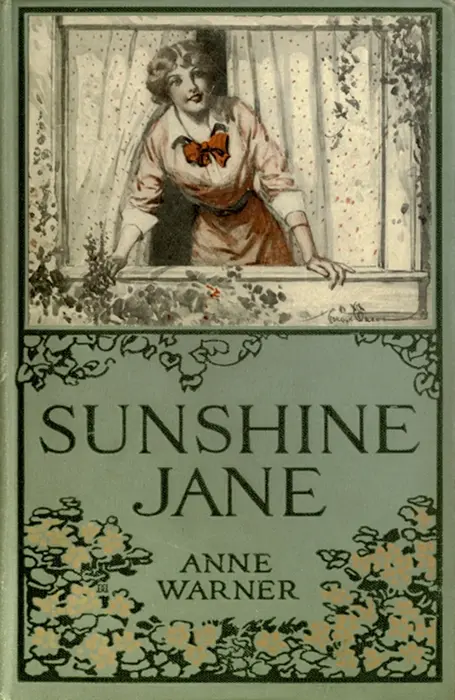
Sunshine Jane
Anne Warner
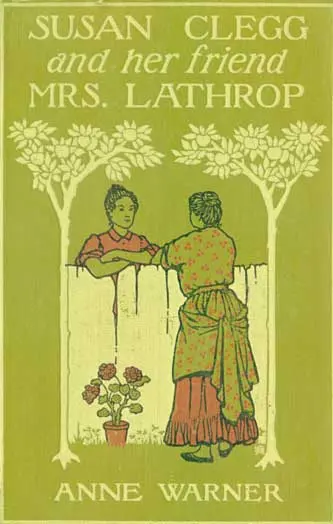
THE CLASSIC COLLECTION · 1903
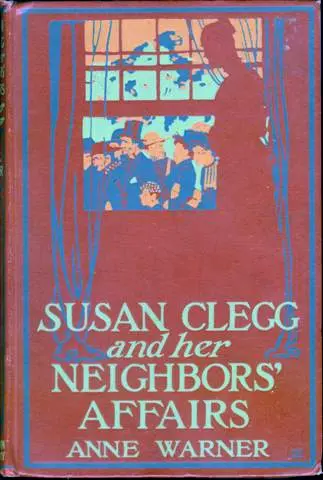
"Susan Clegg and Her Friend Mrs. Lathrop" by Anne Warner is a fictional work written in the early 20th century. The story revolves around the lives of two close friends, Susan Clegg and Mrs. Lathrop, who navigate the complexities of their everyday lives, relationships, and aspirations. The opening sets a tone of humor and poignant realism, depicting Susan's often comedic struggles as she contemplates marriage while caring for her ailing father. The beginning of the novel introduces Susan, a single woman who has devoted herself to taking care of her bedridden father for many years, and her neighborly confidante, Mrs. Lathrop. Their interactions reveal Susan's longing for companionship and her humorous musings about marriage, showcasing her desire to find a husband once her father passes away. In their conversations, Susan expresses both determination and resignation about her circumstances, marking her as a relatable character facing societal expectations and personal dilemmas. The interplay between the two women establishes a strong friendship, filled with warmth, advice, and candid discussions, setting the stage for the exploration of themes related to love, duty, and the pursuit of personal happiness.
Introduction adapted from the source catalogue; source summaries may be automatically generated.
Free to read · English · 48,820 words · No account needed
MAKE TIME FOR A GOOD BOOK
On by default. Untick to stop anonymous reading totals. Each page counts after 10 seconds in view. How this works.
Anonymous counting is on unless you have switched it off.
Mrs. Lathrop sighed slightly, but did not alter her position by a hair. Susan whirled her stocking, took a fresh breath, and went on:
"It's a subjeck 't I've been lookin' straight in the face, 's well 's upside down 'n' hind end to, f'r a good long time. I 'xpeck 't it'll mebbe come in the nature of a surprise to the c'mmunity in general, 'n' yet, to tell you the truth, Mrs. Lathrop, I was thinkin' o' this very thing away back las' spring when Mrs. Shores eloped. I was even thinkin' of it that very minute, f'r I was one o' them 's was in the square when Johnny come runnin' from the station with the telegram. Everybody 's see Johnny's face thought 's two trains had smashed on his a'count somewhere, 'n' I recolleck Mr. Kimball's sayin' 's he couldn't 'a' looked more miserable 'f he'd been the man 's had run away with her. It was too bad you wasn't there, Mrs. Lathrop,--Mrs. Macy always says 't she'll regret to her dyin' day 's she thought o' comin' to town that mornin' to get the right time f'r her clock 'n' then decided to wait 'n' set it by the whistle. Gran'ma Mullins was there--she was almost in front o' Mr. Shores' store. I've heard her say a hunderd times 't, give her three seconds more, 'n' she'd 'a' been right in front; but she was takin' her time, 'n' so she jus' missed seein' Johnny hand in the telegram. I was standin' back to the band-stand, tellin' Mrs. Allen my receipt for cabbage pickle, so I never felt to blame myself none f'r not gettin' nearer quicker. The first thing I recolleck was I says, ''N' then boil the vinegar again,' 'n' Mrs. Allen give a scream 'n' run. Then I turned 'n' see every one runnin', 'n' Mr. Shores in the lead. They do say 's he was so crazy 't first 't he seemed to think he c'd catch the Knoxville Express by tearin' across the square. But he give out afore he reached Judge Fitch's, 'n' Johnny 'n' Hiram Mullins had to carry him home. Well, it was a bad business at first, 'n' when she kidnapped the baby 't was worse. I was down in the square the day 't Johnny come with that telegram too. I remember Mrs. Macy 'n' me was the only ones there 'cause it was Monday. I wasn't goin' to wash 'cause I only had a nightgown 'n' two aprons, 'n' the currants was ripe 'n' I'd gone down to get my sugar, 'n' Johnny come kitin' up fr'm the station, 'n' Mrs. Macy 'n' me didn't put on no airs but just kited right after him. Mrs. Macy always says she learned to see the sense in Bible miracles that day, f'r she had n't run in years then, 'n' she's walked with a stick ever since, but she run that day, 'n' Johnny bein' tired 'n' Mrs. Macy 'n' me fresh--she was a little fresher 'n me f'r I 'd been talkin'--we all three come in on Mr. Shores together. Seems like I c'n see him now. He sort of shivered all over 'n' says, 'Ah--a telegram!' 'n' Johnny says, 'Jus' come,' 'n' then we all waited. Well, Mrs. Lathrop, I guess I've told you before how he jus' sort o' went right up in the air!--it said, 'We have took the child,' 'n' he bounced all over like a rat that ain't good caught 'n' then he out 'n' away 'n' we right after him. He kept hollerin', 'It's a lie--it's a lie,' but when he got home he found out 't Mrs. Shores had kep' her word 's usual. Mrs. Macy put cold water to his head 'n' I mixed mustard plasters 'n' put 'em on anywhere 't he was still enough, but all the same they had to lace him to the ironin' board that night. I hear lots o' folks says 's he's never really knowed which end up he was walkin' since, but I guess there's more reasons f'r that 'n her takin' the baby. My own view o' the matter is 't he misses his clerk full 's much 's he misses his family, f'r he's got to tend both sides of the store at once 'n' he don't begin to be as spry 's that young feller was. He can't hop back 'n' forth over the counter like he used to; he's got to go way back through the calicoes every time or else climb up in the window-seat over that squirrel 't he keeps there in a cage advertisin' fur-lined mitts 'n' winter nuts. Mr. Kimball 's forever makin' one o' them famous jokes of his over him, 'n' sayin' 't he never looks across the square without he sees Shores tryin' to rise above his troubles 'n' his squirrel together, but I don't see nothin' funny in any of it myself. I think it's no more 'n' what he might of 'xpected. He got the squirrel himself 'n' his wife too, 'n' she never did suit him. He was all put out at first over her takin' it so to heart 't he wore a wig, 'n' then he was clean disgusted over the baby 'cause he wanted a boy 't he could name after himself. They said he all but cried, 'n' she cried dreadful, f'r she didn't know nothin' about babies 'n' thought it was goin' to be bald always, jus' like him. But what did he marry for if he did n't want trouble?--That was what I said to the minister's wife. She come to call right in the first of it, 'n' I must say 't if she hadn't come mebbe a good many things might o' been different, for my mind was about made up then, an' I was thinkin' very serious o' mebbe sayin' suthin' to you that very night. But she put me at outs with the whole thing--not as I won't admit 't there ain't a difference between one 'n' nine, f'r any one c'n work that out on their fingers fast enough."
Your reading position is saved on this browser. Take it to another device with a library code. Reading pages adapt to text, rather than matching a printed edition.
Anne Warner
Anne Warner
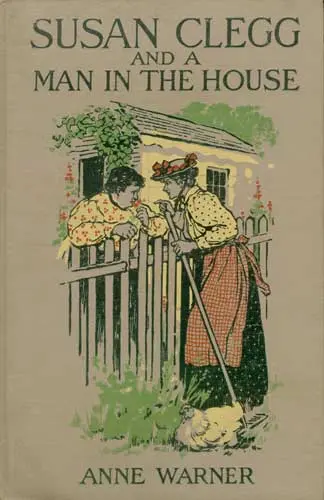
Anne Warner
Anne Warner
BEHIND THE BOOK
This eBook is for the use of anyone anywhere in the United States and most other parts of the world at no cost and with almost no restrictions whatsoever. You may copy it, give it away or re-use it under the terms of the Project Gutenberg License included with this eBook or online at www.gutenberg.org. If you are not located in the United States, you will have to check the laws of the country where you are located before using this eBook. Read the source licence.
The original source file, including credits and licence, is retained by this library. Request an original-format copy at no charge. Please include the book title and Project Gutenberg identifier #15899.
KEEP YOUR CURIOSITY GOING
Coulson Kernahan

Maurice Baring
Frances Wright
Cécile Tormay

Frederic Jesup Stimson

W. H. P. (William Henry Pope) Jarvis