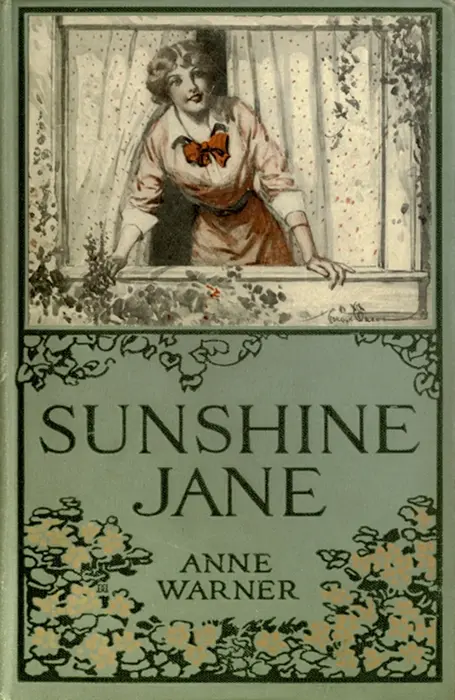
Sunshine Jane
Anne Warner
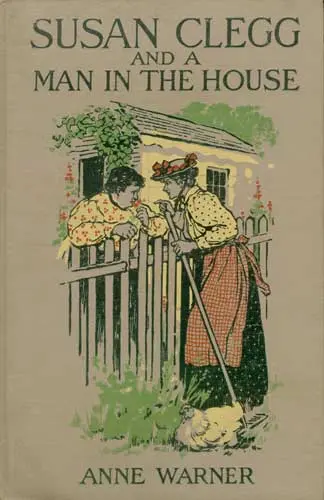
THE CLASSIC COLLECTION · 1907
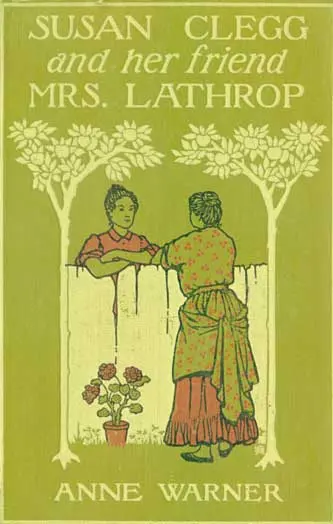
"Susan Clegg and a Man in the House" by Anne Warner is a novel written in the early 20th century." The story centers around Susan Clegg, a strong-willed woman who has lived alone since her father's death. When the proposal of a man, Elijah Doxey, moving into her home as an editor for a new local newspaper presents itself, Susan faces the complexities of allowing a man into her life, all while sharing her humorous observations about relationships and community dynamics. "The beginning of the novel introduces Susan Clegg and her reflections on men, relationships, and the potential challenges of having Elijah Doxey as a boarder." She expresses her skepticism about the happiness of married women in her community to her friend, Mrs. Lathrop, emphasizing the troublesome experiences of others. As the narrative progresses, we learn that Susan's decision to allow Elijah into her home is influenced both by her desire for independence and by the community's need for a local newspaper. These interactions set the stage for humorous and insightful anecdotes related to the men in her life and the implications of their presence, which promise to develop into further comedic situations as the story unfolds.
Introduction adapted from the source catalogue; source summaries may be automatically generated.
Free to read · English · 52,514 words · No account needed
MAKE TIME FOR A GOOD BOOK
On by default. Untick to stop anonymous reading totals. Each page counts after 10 seconds in view. How this works.
Anonymous counting is on unless you have switched it off.
"What--" began Mrs. Lathrop.
"But I don't see how the man that wrote it is ever goin' to make any money out of it," pursued her friend, "for it's pretty plain as it's every bit written about things that Americans don't want to really learn an' what the rest of the world learned long ago. If I was very patriotic I don't believe I'd have read it clear through to the end myself, but I ain't never felt any call to be patriotic since the boys throwed that firecracker into my henhouse last Fourth of July. I will say this for the hen, Mrs. Lathrop, an' that is that she took the firecracker a good deal calmer'n I could, for I was awful mad, an' any one as seed me ought to of felt what a good American was spoiled then an' there, for all I asked was to hit somethin', whether it was him as throwed the cracker or not an' that's what Judge Fitch always calls the real American spirit when he makes them band-stand speeches of his in the square. Oh my, though, but I wish you had n't reminded me of that hen, Mrs. Lathrop, her tail never will come in straight again I don't believe, an' she's forever hoppin' off her eggs to look out of the window since she had that scare."
Mrs. Lathrop frowned and looked very sympathetic.
"But about this book," Susan went on after a second of slightly saddened reflection. "I'm goin' to tell you all about it. Elijah 's goin' to write a editorial about it, too. Elijah says this business of downtreadin' our only colony has got to be stopped short right now as soon as he can call the government's attention to how to do it.
"Well, the book begins very mild an' pleasant with Hongkong an' it ends with the Philippine accounts. Seems Hongkong ain't Chinese for all it's named that an' growed there--it's English--an' as for the Philippines there's eight millions of 'em, not countin' the wild ones as they can't catch to count an' ask questions. In between Hongkong an' the Philippines the man who wrote the book runs around that part of the world pretty lively an' tells who owns it an' what kind of roads they've got an' who'd better govern 'em an' all like that. You might think from hearin' me as he sort of put on airs over knowin' so much himself, but it don't sound that way a tall in the book. It's when he finally got to the Philippines as any one can see as he really did begin to enjoy himself. He enjoyed himself so much that he really made me enjoy myself, too, although I can't in reason deny as I felt as I might not of been quite so happy only for that firecracker. The kind of things he says about our doin's in those countries is all what you don't get in the papers nor no other way, an' if the United States really feels they're in the right as to how they're actin' all they need to do is to read how wrong they are in that book where a man as really knows what he's talkin' about has got it all set down in black an' white. I don't believe it's generally knowed here in America as Dewey took Aguinaldo an' his guns over to Manila an' give him his first start at fightin' an' called him 'general' for a long time after they'd decided in Washington as how he was n't nothin' but a rebel after all. I never knowed anythin' about that, an' I will remark as I think there's many others as don't know it, neither, an' I may in confidence remark to you, Mrs. Lathrop, as that book leads me to think as the main trouble with the Philippines is as they are bein' run by folks as don't know anythin' about the place they're runnin' an' don't know nothin' about runnin' for anythin' but places. The man in the book says the Philippines ain't very well off being pacified, an' that the Americans ain't no great success pacifyin' 'em, for it seems as they made five thousand expeditions after 'em in one year, an' only got hold of five thousand natives in all. That's a expedition to a man, an' I will say, Mrs. Lathrop, as it's small wonder we're taxed an' they're taxed, with some of our new fellow citizens as hard to grab as that. To my order of thinkin' it'd be wisest to let 'em chase each other for ten or twenty years first an' then when they was pretty well thinned out we could step in an' settle with the survivors; but accordin' to the man who wrote the book you can't never tell a American nothin', an' I must say that my own experience in this community has proved as he knows what he's sayin' all straight enough. He says the Philippines is in a very bad way, an' so is their roads, but he says that all the folks in this country is so dead satisfied with their way an' poor roads that they ain't goin' to do nothin' to help either along any."
Your reading position is saved on this browser. Take it to another device with a library code. Reading pages adapt to text, rather than matching a printed edition.
Anne Warner
Anne Warner
Anne Warner
Anne Warner
BEHIND THE BOOK
This eBook is for the use of anyone anywhere in the United States and most other parts of the world at no cost and with almost no restrictions whatsoever. You may copy it, give it away or re-use it under the terms of the Project Gutenberg License included with this eBook or online at www.gutenberg.org. If you are not located in the United States, you will have to check the laws of the country where you are located before using this eBook. Read the source licence.
The original source file, including credits and licence, is retained by this library. Request an original-format copy at no charge. Please include the book title and Project Gutenberg identifier #22872.
KEEP YOUR CURIOSITY GOING
Coulson Kernahan

Maurice Baring
Frances Wright
Cécile Tormay

Frederic Jesup Stimson

W. H. P. (William Henry Pope) Jarvis