
The Game Fish, of the Northern States and British Provinces With an account of the salmon and sea-trout fishing of Canada and New Brunswick, together with simple directions for tying artificial flies, etc., etc.
Robert Barnwell Roosevelt

THE CLASSIC COLLECTION · 1884
"Superior Fishing" by Robert Barnwell Roosevelt is a sporting narrative written in the mid-19th century. This work delves into the art of fishing, particularly focusing on game fish such as striped bass, trout, and black bass found in the northern United States. The author, who is also known for other writings on fishing and hunting, aims to educate readers about fishing techniques and the unique experiences available in America's natural waters. At the start of the narrative, Roosevelt sets the scene for a fishing expedition to Lake Superior, introducing prominent characters such as Don Pedro, an elegantly mannered gentleman with a newfound itch for adventure. The beginning portrays their preparations for a camping trip, including discussions about supplies, fishing strategies, and the comforts of life they are willing to forgo in pursuit of the sport. The reader is immediately immersed in the dynamics of the journey and the natural beauty of the fishing landscapes, along with insights into the delicate balance between the sport of fishing and a sportsman's ethics. Overall, the opening section establishes not only the characters and their motivations but also the rich environment that will be explored throughout the book.
Introduction adapted from the source catalogue; source summaries may be automatically generated.
Free to read · English · 74,634 words · No account needed
MAKE TIME FOR A GOOD BOOK
On by default. Untick to stop anonymous reading totals. Each page counts after 10 seconds in view. How this works.
Anonymous counting is on unless you have switched it off.
Select a piece of stout gut a little longer than the shank; pare down the ends with a knife; double them together so that one shall extend beyond the other; insert the picker between them, bend at the top and shape it by twisting and pinching the ends. If the hook is very large it is well to take several strands of gut and first twist them together by means of a vice fastened to each end, while they are wet and before shaping them over the picker. When the gut is prepared lay it down and take a well waxed piece of silk about six inches long, and holding the hook in the left hand, wind a number of separated coils from the lower towards the upper end of the shank, but not quite to the head. If the silk is well waxed it will remain in its place while you pick up the gut with your right hand, and lay it along the under side of the shank upon these coils. Hold it there with your left while you wind firmly and closely toward the bend; catch the last turn beneath the gut or pass a half hitch, and cut off the end. Take a fresh piece of silk, always thoroughly waxed, and pass a few turns over its end so as to fasten it; then hold a piece of tinsel four times as long as the shank between your left forefinger and the further side of the hook, just projecting above it, and nearly vertical; pass three turns over it, and wind the silk in separated or loose coils towards the head and let it hang there. Fasten the spring pliers on to the lower end of the tinsel lengthways with it, and holding the shank in the right hand, with the left forefinger in the pliers, twist several turns down and then back to form the tag, covering the edges of the first turns with the second carefully and neatly; let the pliers hang; pass the hook to the left hand; unwind the silk with the right down to the tinsel; fasten off with three turns and cut the tinsel close to the hook. Unwind from the floss-spool over your right hand a dozen strands, and smoothing them evenly together and holding them against the hook with the left, tie in the ends firmly, and again coil the tying silk toward the head out of the way. You may wind the floss with either hand or with the pliers as you please; if you wind with the right hand, hold the hook in the left and press the second finger on each turn as it is passed; this is called stopping it or using the stop. After covering about one sixteenth of an inch, seize the end between your second and third or third and fourth fingers, and hold it firmly while you bring down the tying silk and pass three turns; holding the silk in that way is called using the catch, and is difficult to acquire with facility. Cut the floss off neatly, and selecting a feather from the golden pheasant top-knot, lay it on its face,--the side of the feather which lies nearest the bird from which it is taken, is the inside or back, and the contrary side the outside or face,--and secure it firmly. Stop the tying silk and take up your hackle, which should have been previously prepared by stroking back and pulling out a few fibres toward the point, and holding it by the point with the right hand, lay it on its face with the butt towards the left so that the bare spot shall come at the upper end of the floss silk tip, and pass two turns of the flying silk; insert a piece of tinsel in the same manner parallel to and just over the hackle, and having fastened it, hold the tying silk with the catch; take up the dubbing of mohair with your right hand and spin it over the tying silk towards the left, having again taken the latter into the right as soon as you have caught the end of the mohair with the stop. Shape the mohair so that the body shall taper and twist it evenly together with the tying silk towards the shoulder, using the stop all the way, and do not carry it too close to the head; pull off the superfluous mohair with the fingers of the right hand and pass the silk four turns over the upper end of the body, and winding it towards the head slip it between the gut and the hook. In this way you can always secure the tying silk when you wish to lay down your work. Spring the pliers on to the tinsel, and with the right forefinger pass four even open coils carefully and regularly; unwind the silk, and having secured the tinsel replace it. If these coils are imperfect or irregular, neatness cannot be obtained. Having cut off the tinsel, catch with the spring pliers the butt of the hackle and follow the edge of the tinsel; rolling the hackle on its back so that the fibres shall point down the shank. When you reach the shoulder pass several turns of the hackle close above one another, and bringing down the tying silk secure the butt. If one hackle is not sufficient, and it rarely is, introduce a new hackle close above the first, precisely as you did the other, only on its back, and wind a sufficient number of close coils and again fasten it. The second hackle, if weak, may be fastened in on its back by the butt, and wound with the point.
Your reading position is saved on this browser. Take it to another device with a library code. Reading pages adapt to text, rather than matching a printed edition.
Robert Barnwell Roosevelt

Robert Barnwell Roosevelt
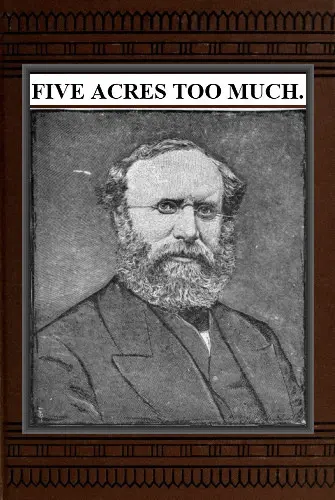
Robert Barnwell Roosevelt
Robert Barnwell Roosevelt
BEHIND THE BOOK
This eBook is for the use of anyone anywhere in the United States and most other parts of the world at no cost and with almost no restrictions whatsoever. You may copy it, give it away or re-use it under the terms of the Project Gutenberg License included with this eBook or online at www.gutenberg.org. If you are not located in the United States, you will have to check the laws of the country where you are located before using this eBook. Read the source licence.
The original source file, including credits and licence, is retained by this library. Request an original-format copy at no charge. Please include the book title and Project Gutenberg identifier #55226.
KEEP YOUR CURIOSITY GOING
Wilfrid Scawen Blunt
Wilfrid Scawen Blunt

E. W. (Edgar Watson) Howe
Francis Greenleaf Allinson & Anne C. E. (Anne Crosby Emery) Allinson
Cyrenus Cole

John Martineau